
Reviewed · ALFAMA TOURS
Full Day Lisbon Tour Baixa Chiado with Alfama and Belem
Lisbon can be a lot on your own. This tour makes it easier because someone ties the places together into a story, starting with the Age of Discoveries in Belém and then shifting into the city rebuilt after the 1755 earthquake.
What I like most is the Belém morning focus on the big monuments, especially a guided visit inside Mosteiro dos Jerónimos. I also like that the guide does more than point. With guides such as João and Fernanda (based on past tour experiences), you end up learning names, timelines, and cause and effect, so you understand why each spot matters.
One consideration: it is a long day of walking across steep Lisbon streets. Even with a moderate pace, plan for sore legs, comfy shoes, and a lunch break that actually lets you reset.
Key highlights you will care about
- Mosteiro dos Jerónimos visit with Manueline details plus time in the cloisters area
- Torre de Belém and other Belém stops that connect Portuguese maritime ambition to real places
- Original Pastéis de Belém included, so you avoid the guessing game
- Small group size (max 20) that makes the pace feel human
- Two major viewpoints, Santa Luzia and São Pedro de Alcântara, for classic Lisbon roof-and-river views
- A guided walk through Baixa’s big rebuilding story, including Praca do Comercio and Rua Augusta
Belém First: Torre de Belém to Jerónimos and the Discoveries story
The tour starts at 9:00am near Avenida Brasília, and you head out toward Belém. That early start matters because Belém is where Lisbon’s big “why we mattered” story lives. You are not just touring pretty stone, you are touring ambition, money, and geography.
Stop 1 is Torre de Belém, one of Lisbon’s most iconic landmarks, and the ticket is included. From the outside, it already looks dramatic. With the guide’s context, it becomes more than a postcard. You understand it as part of a defensive and ceremonial world along the Tagus, where ships left and returned with prestige attached.
Next you stroll through Belém along the Tagus. This is where the guide typically turns the Portuguese Discoveries into something you can picture. You get the sense of how Portugal looked outward when the sea was your highway.
Stop 3 is Padrão dos Descobrimentos, the big monument shaped like a caravel with Henry the Navigator in charge of the symbolism. You do not go inside, but you do get a good look, and you can take photos before moving on.
Then come two shorter but fun stops. Rosa dos Ventos is a wind rose square with a wide map and compass rose. It’s an easy place to connect navigation tools to the age of exploration. After that you reach Jardim da Praca do Imperio, a garden tied to the 1940 Portuguese World Exhibition. This is not the kind of stop you would naturally seek out, but it adds variety: mosaics, fountains, and a layout that borrows from Greek and Roman garden ideas.
The centerpiece is Stop 6: Mosteiro dos Jerónimos. Admission is included, and you get about an hour. The time is well spent because this is the monument that can eat your whole day if you go alone and do not know what you are looking at. With a guide, Manueline style becomes practical: you notice the shapes and details instead of just admiring and moving on.
When you leave Jerónimos, you often feel like you learned a new layer of Lisbon. The guide usually links its grandeur to the resources that came from trade with Africa and the Orient, and it fits perfectly with the Discovery Age theme that the morning started building.
More Alfama and old-town tours:
- Alfama Tour in Lisbon Old Town
★ 5.0 · 4,936 reviews - Private Lisbon Sightseeing Tuk-Tuk Tour: Alfama, Belém & More
★ 5.0 · 4,277 reviews - Lisbon: Hills, Alfama, and Mouraria Tour by Electric Bike
★ 4.8 · 3,438 reviews
Pastéis de Belém and a real lunch plan at Time Out Market
Soon after Jerónimos, you get to Pastéis de Belém. The tour includes the original pastel, which is the only way I feel comfortable with this stop. You do not want to spend your afternoon in line or second-guess what is authentic.
This is also your cue to manage energy. Belém takes more out of you than you think, because even a “short” walking tour adds up over 9 hours, and Jerónimos is worth slowing down for.
Lunch is planned at Time Out Market Lisboa. You get a 90-minute lunch break, and the meal cost is not included. I like this setup because the market gives you lots of choices. If you have one person who wants fish and another who wants something else, you can split the difference without debating.
Practical note: since lunch isn’t included, you should bring a little extra cash or card flexibility for your choices. Also plan where you want to sit, because moving between stalls and finding a spot can take a few minutes.
Terreiro do Paco to Rua Augusta: the Baixa rebuilt after 1755
After Belém and lunch, the tour moves into the historic center and shifts from exploration to rebuilding. Lisbon’s 1755 earthquake is the plot twist, and the route is set up so it does not feel like a random fact.
Stop 9 is Praca do Comercio (Terreiro do Paco). The square is massive, with 36,000 square meters and 79 arches. Before 1755 it was tied to royal power, and after, it became the stage for the Marquis of Pombal’s new city plan. That history makes the square feel purposeful rather than just grand. It also is wide and open, so it is a nice reset spot if you need a breather.
Next you hit a viewpoint moment with Miradouro de Santa Luzia. This place is famous for a reason. It looks down into Alfama’s maze of rooftops and streets, with the Tagus showing up in the background as boats cross the water. You get tiling details around the churches, and you can understand why locals and visitors like it for that romantic postcard effect.
From here, you tour through central Lisbon’s religious landmarks. Lisbon Cathedral (Sé) is Stop 11. The time is about 30 minutes, but admission is not included. Even if you do not go in, the setting helps you place Lisbon’s layers: built after Lisbon was recaptured from the Moors, later alterations after the earthquake, and earlier religious layers underneath. If you are the kind of person who reads plaques, you might want to budget a bit for entrance or quick interior time, since the tour does not include it.
Stop 12 is Church of Saint Anthony of Lisbon. This one is free on the tour, and you learn why it matters. It stands near the story of where Saint Anthony was born and includes a crypt connected to his birthplace. The church survived the earthquake and offers a calm interior contrast to the street bustle.
Stop 13, Igreja de Nossa Senhora da Conceição Velha, is another free stop and one of the best survivors for Manueline style tied to post-earthquake reconstruction. It is a short visit, about 10 minutes, but you are looking at a façade where symbols and figures mix in a way that feels uniquely Portuguese. It helps you see Manueline details are not just at Jerónimos.
Alfama streets, Casa dos Bicos, and why viewpoints matter
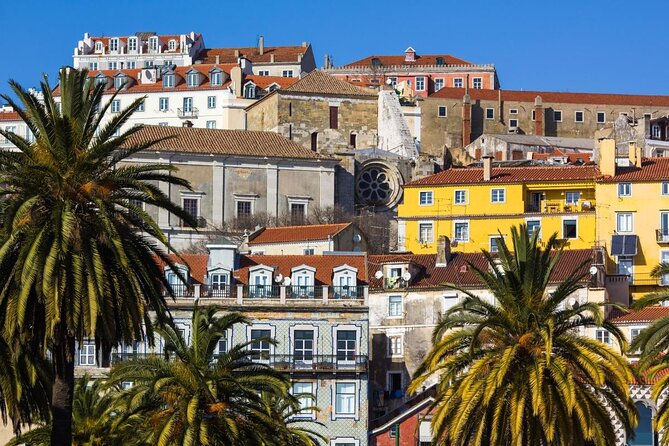
Once the route turns into Alfama, you feel the change in atmosphere. Stop 14 gives you around 40 minutes here, which is long enough to actually get the vibe. Alfama is steep, full of small shops and taverns, and the buildings survived the 1755 earthquake in ways other areas did not. The point is not to “check the box” of a neighborhood. The point is to walk through that steep web and let it sink in that Lisbon’s oldest districts have texture you cannot recreate.
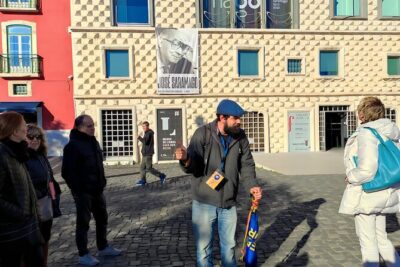
Stop 15 is Casa dos Bicos, a building with diamond-shaped stone cladding. The tour notes the José Saramago Foundation occupies it now, and admission is not included. Even without going in, you can appreciate why it stands out visually and why it is tied to Lisbon’s early 16th-century story.
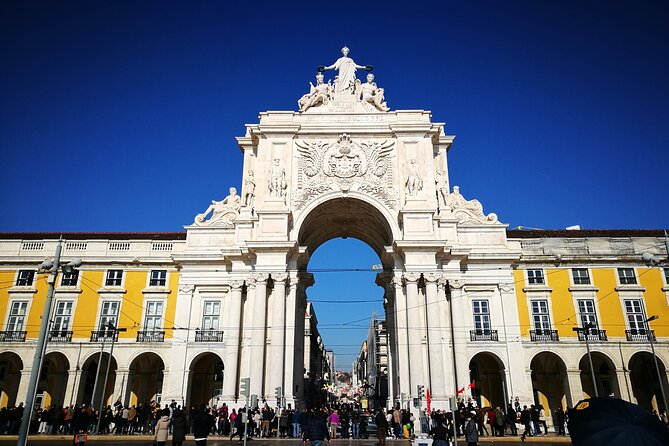
Then you pivot back toward big visual landmarks and the geography of Baixa. Stop 16 is Arco do Triunfo. Admission is included here, and the timing is about 20 minutes. I like this stop because the arch works in two ways. It is decorative, and it is explanatory. The statues and allegorical figures are tied to Portuguese identity and the people associated with the Age of Discoveries, all facing out toward the Tagus.
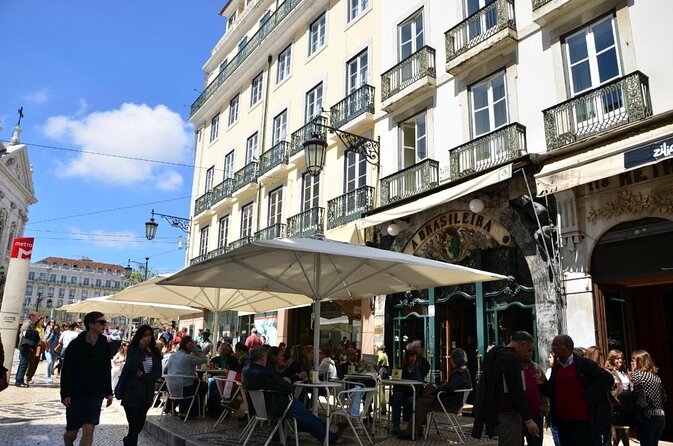
After the arch, you walk into Rua Augusta. Traffic is closed, and it’s the liveliest street in the center. You can see how the street becomes a social space, with craftsmen, street performers, and shops lining the calçada. This is the part of the tour that feels most like a stroll, even though you still earn it with earlier walking.
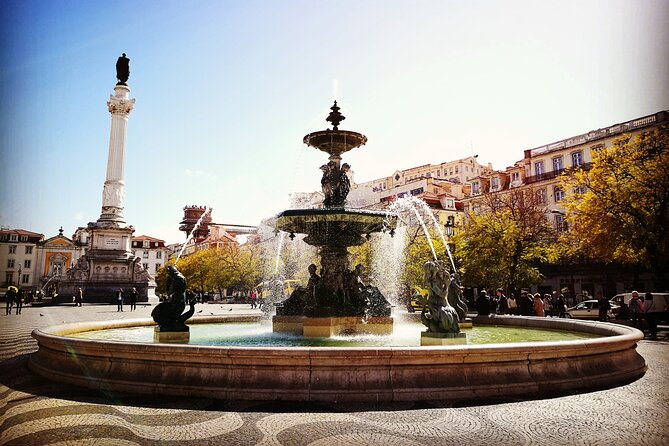
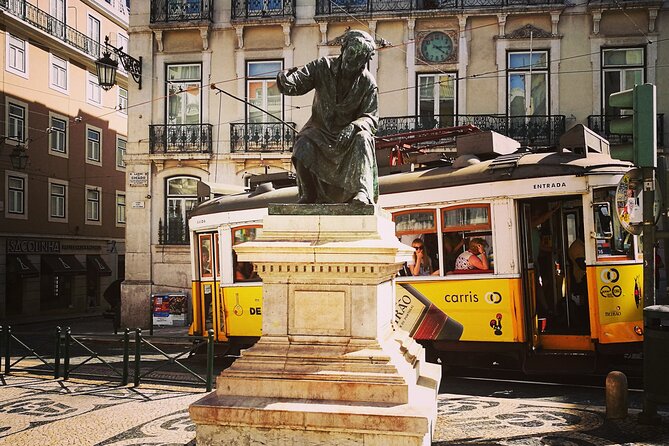
Stop 18 is Praca Dom Pedro IV (Rossio). It’s a historic public square with a big statue and a sense of older Lisbon street life. You also get the story of how it functioned as a key meeting point for fairs and festivals. The tour also mentions its role during World War II as an espionage and refugee waiting area. That kind of human history can make you look up at the buildings rather than just around.
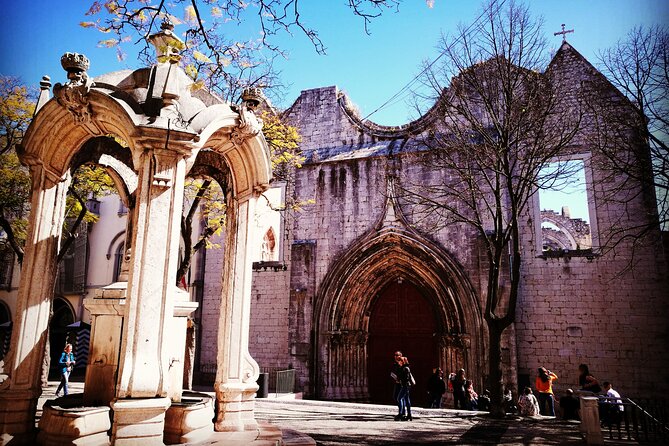
Stop 19 is Convento do Carmo, specifically the church remains and the idea of what the earthquake did to its ceiling. Admission is not included. Even so, the ruins feel meaningful because the tour frames them as part of Lisbon’s identity after 1755: what survived, what burned, what they tried to rebuild.
More Belém tours and tickets:
- Lisbon: Jerónimos Monastery Entrance Ticket
★ 4.1 · 14,164 reviews - Age of Discoveries Walking Tour in Belém
★ 5.0 · 1,513 reviews - Bike Tours Lisbon – Center of Lisbon to Belém
★ 5.0 · 686 reviews - Lisbon: Jerónimos Monastery E-Ticket and Audio Guide
★ 3.7 · 660 reviews
São Roque church and the final viewpoint at São Pedro de Alcântara
The last major religious stop is Igreja de Sao Roque at Stop 20. Admission is free on the tour. This church is one of those Lisbon places where the outside gives you almost no hint of what’s inside. The tour explains that it connects to a relic request from Venice and then grew around plague-era history. It survived the 1755 earthquake almost intact, and it includes chapels that are described as exceptionally valuable.
At Stop 21 you end at Miradouro São Pedro de Alcântara. This is where the tour lands, right near the finish point on R. de São Pedro de Alcântara 85. The viewpoint is known for tile art that identifies Lisbon landmarks such as Graça Church, São Jorge Castle, and the Cathedral. It is a smart way to end because you get one last look at the city’s layout before heading off on your own.
And yes, ending at a viewpoint is a classic move, but it works here because your brain has been building a map all day. From this hill, the map clicks into place.
What the guide experience is like with a small group
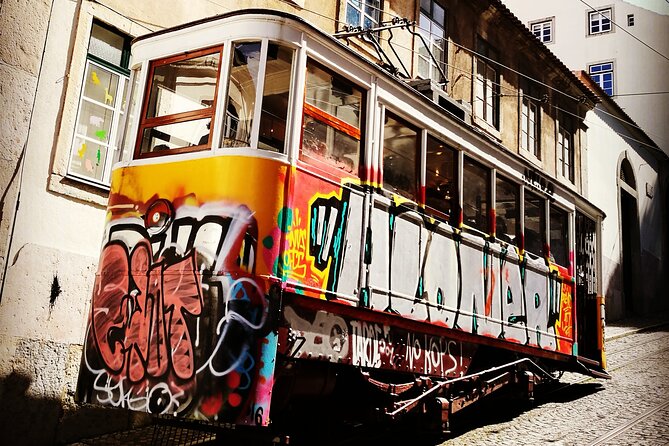
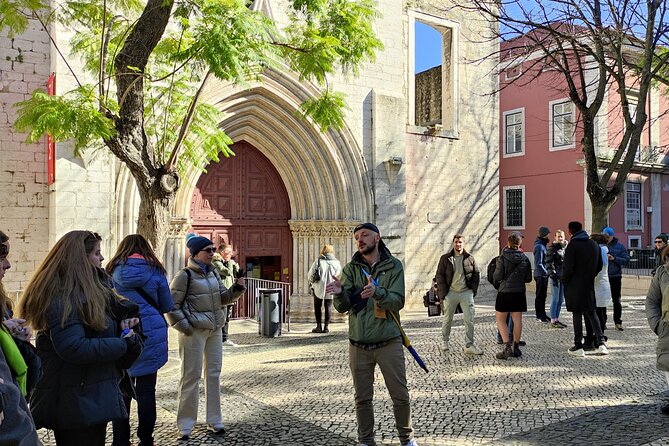
A big reason this tour scores well is the way the guide teaches. In past experiences, guides like João and Fernanda show up with a talent for turning names and dates into something you can remember. Other guides have also been praised for energy and clarity, like Teresa, and for being entertaining without losing accuracy, like Carlos or Andreas.
The group size is maximum 20 adults, which matters in Lisbon. Big groups make narrow streets feel like a parade route. Smaller groups keep things moving, and you can ask a question without shouting across the street.
One practical detail: the tour notes that in some monuments the guide is not allowed to provide info inside. So you might get explanation outside first, then a quieter moment inside where you follow at your own pace.
Price and value for a full day of admissions plus a guided story
At $110.06 per person for a roughly 9-hour outing, the value depends on what you would otherwise pay for yourself. This tour bundles several admission items that are expensive or hard to plan around.
You get included admission for Torre de Belém, Mosteiro dos Jerónimos, and Arco do Triunfo. You also get the Original Pastel de Belém included. The walking is the transportation, so you are not paying for private transfers or bus rides.
Lunch is not included, but you do get a clear 90-minute break with a strong option right where you are: Time Out Market. If you are the type who likes to eat well and avoid tourist traps, this structure helps.
If you are traveling in a group or you care about seeing a lot without arranging a timed self-guided route, this price can feel fair. If you already know Lisbon’s history cold and you mainly want photos and minimal stops, you might find it longer than you want. But for most first-timers, the guided linking of themes is the main payoff.
Practical tips so the day feels good, not just packed
Bring comfortable walking shoes. Lisbon is not a flat city, and this route hits both major districts and steep connectors between viewpoints and old streets.
Expect a moderate physical fitness level requirement. The day is long and includes steep areas in Alfama and transitions across central Lisbon.
Wear layers. The Tagus area can feel cooler in the morning, and you will be outside for hours. Also plan your bag size, because you will move through crowded streets and church areas.
For ticketing, you get a mobile ticket. That is handy, but I still suggest you keep your phone charged or bring a small power bank, because you will use it for time checks and directions if you split off later.
Finally, bring curiosity. This tour is good at connecting the dots: Discoveries in Belém, rebuilding after 1755, and how Lisbon’s viewpoints stitch the neighborhoods together in one mental map.
Should you book this Baixa Chiado plus Alfama plus Belém full-day tour?
Book it if you want a first-timer friendly day that hits the big Lisbon anchors without feeling random. You will like it if you enjoy history told with names, if Jerónimos and Belém are on your must-see list, and if you want viewpoints plus neighborhoods, not just buildings.
Skip it or consider a shorter option if you hate long walking days, if you are only in Lisbon for a quick hit, or if you prefer total freedom with no guided timing. Also think about how you feel about monuments where the guide might not talk inside, since you will have a bit of self-paced time.
For most people, though, this is a smart way to get your bearings fast, learn why Lisbon looks the way it does, and end the day with views that finally make sense of the streets you walked.
FAQ
What is the duration of the tour?
The tour runs for about 9 hours.
What is included in the price?
The tour includes a friendly, professional guide, a group excursion for up to 20 adults, the Original Pastel de Belém, entrance to some iconic monuments, and plenty of stories and local suggestions.
Is lunch included?
No. Lunch is not included, but you get a 90-minute lunch break at Time Out Market Lisboa.
Are entrance fees included for all monuments?
No. Some monuments include admission tickets, while others do not. For example, Torre de Belém and Mosteiro dos Jerónimos are included, while places like the Lisbon Cathedral and Convento do Carmo are not included.
Where does the tour start and end?
It starts at Avenida Brasília, Av. Brasília, 1400-038 Lisboa, Portugal and ends at R. de São Pedro de Alcântara 85, 1200-089 Lisboa, near the São Pedro de Alcântara viewpoint.
Do I need to be in good physical shape?
You should have a moderate physical fitness level due to the amount of walking and Lisbon’s hills.
What happens if the weather is poor?
The tour requires good weather. If it is canceled due to poor weather, you will be offered a different date or a full refund.
Newly reviewed in Lisbon
- Lisbon: Private Food Tour – 10 Tastings with Locals★ 4.8 · 73 reviews
- Lisbon: Private Custom Tour with a Local Guide★ 5.0 · 6 reviews
- Lisbon: 2 hours Private City Highlights Tuk-Tuk Tour for two★ 5.0 · 5 reviews
- Lisbon: City Sightseeing Tour★ 4.9 · 13 reviews
- Lisbon: Private Christmas Lights Tour by Eco Tuk Tuk★ 4.9 · 51 reviews
- Lisbon: Private Catamaran Charter for up to 18-People★ 5.0 · 7 reviews
- Lisbon: Private Boutique Boat Tour – Sail in Style★ 5.0 · 87 reviews
- Lisbon: Private Boat Trip, Guided Walking Tour, Bike & Tram★ 4.8 · 116 reviews
Alfama Tours, compared.
Private Lisbon Sightseeing Tuk-Tuk Tour: Alfama, Belém & More
Read our review →
Hills, Alfama, and Mouraria Tour by Electric Bike
Read our review →
Best of Lisbon Walking Tour: Rossio, Chiado & Alfama
Read our review →
Lisbon Small-Group Food Tour with 18 Tastings in Alfama District
Read our review →
Lisbon E-Bike Tour Commerce Square, Mouraria and Alfama
Read our review →
Old Town TukTuk Tour and Scenic Viewpoints in Alfama
Read our review →
Alfama Tour and Live Fado with Traditional Dinner
Read our review →Browse the lists this tour appears in