
Reviewed · HISTORICAL TOURS
Lisbon: History, Stories and Lifestyle Walking Tour
Lisbon works its magic by altitude. This 3-hour tour strings together hilltop viewpoints, historic churches, and two of the city’s most storied neighborhoods in a way that helps you read Lisbon fast. I love how the walk turns big moments like the 1755 earthquake and the 1974 Carnation Revolution into something you can picture while you’re standing in the right place. I also love the practical perks, especially the included tram ride plus coffee and cake, so it feels like sightseeing with built-in breaks.
One thing to plan for is that Lisbon is steep. You’ll be walking on uneven streets and climbing to viewpoints, so wear shoes you trust, and if rain is in the forecast, bring a rain layer too.
Key things I’d watch for
- Bairro Alto history in street level detail, starting from the 16th century and the city’s post-1755 reset
- Miradouro São Pedro de Alcântara views, the kind that make photos almost too easy
- San Roque Church inside stories, where tiles, gilding, and paintings mix Mannerist and Baroque styles
- Carmo Convent and Church as a modern history anchor, tied to the Carnation Revolution of 1974
- Santa Justa elevator viewpoints plus the Baixa “how Lisbon runs” feel, before you hop on the tram
- Alfama’s fado streets and St Anthony festival culture, ending at Lisbon Cathedral
Why This Lisbon 3-Hour Mix Works for You
If this is your first time in Lisbon, you face a choice: either wander randomly and hope the hills magically connect, or take a tight route that shows you the city’s logic. This tour does the second one. It’s built around the places where Lisbon’s past left visible marks, then it adds the payoff, big views from miradouros and that iconic tram feeling you just can’t fake.
The pacing also helps. You’re not doing a marathon march. You walk, pause, and take in viewpoints, then you switch modes with the tram. That matters in Lisbon because the streets can wear you out faster than you expect, especially if you’re stopping for photos every five minutes.
You also get a guide who can connect architecture to lived experience. In the feedback I read, people repeatedly praised guides like Paulo for story delivery, Ana for humor and warmth, Ricardo for clear local recommendations, and João for making history click without turning it into a lecture. That blend of facts and storytelling is what turns the route from a checklist into a sense of place.
More walking tours in Lisbon:
- Best of Lisbon Small-Group Guided Walking Tour
★ 5.0 · 4,869 reviews - Lisbon: Food and Wine Small Group Walking Tour
★ 4.9 · 4,082 reviews - Best of Lisbon Walking Tour: Rossio, Chiado & Alfama
★ 4.9 · 2,700 reviews
Bairro Alto: 16th-Century Streets and the Post-1755 Reset
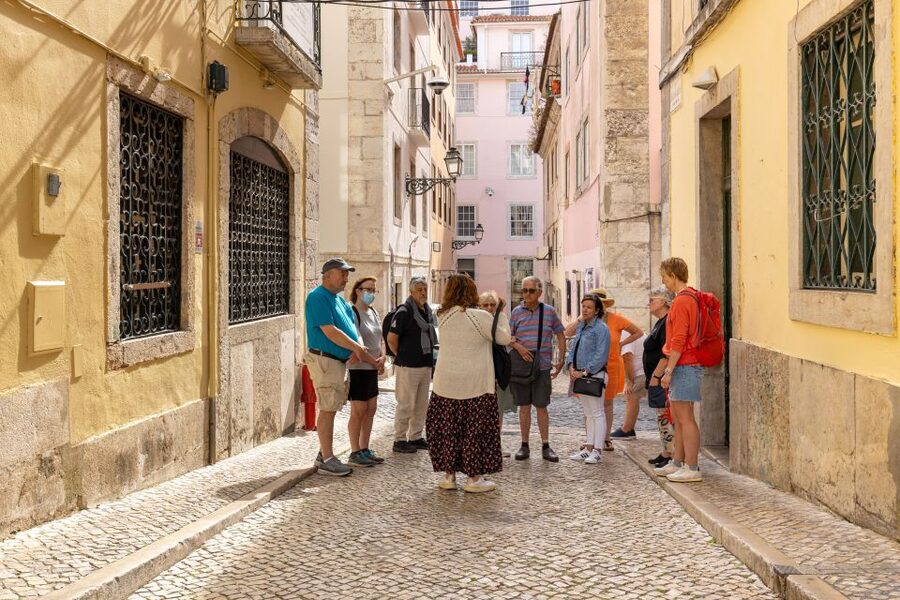
You start in Bairro Alto, a neighborhood with roots going back centuries. Even before you reach any major landmark, you get the feel of the area: hillside streets, old fabric of the city, and the way Lisbon grew in layers.
A big focus early on is how Lisbon changed after the 1755 earthquake. You’ll learn that Bairro Alto became a place where families moved in as the city renewed itself, especially from the Baixa and Bairro districts. That context helps you understand why Lisbon looks the way it does today. Buildings and neighborhoods did not evolve in a straight line. They adapted, rebuilt, and reimagined.
This first stretch is also a good reality check for your comfort level. If you’re fine with stairs and short climbs, you’ll feel confident for the rest of the route. If you tend to fatigue early, it’s better to notice that now than later.
Miradouro São Pedro de Alcântara: The View Stop That Feels Like a Reset Button
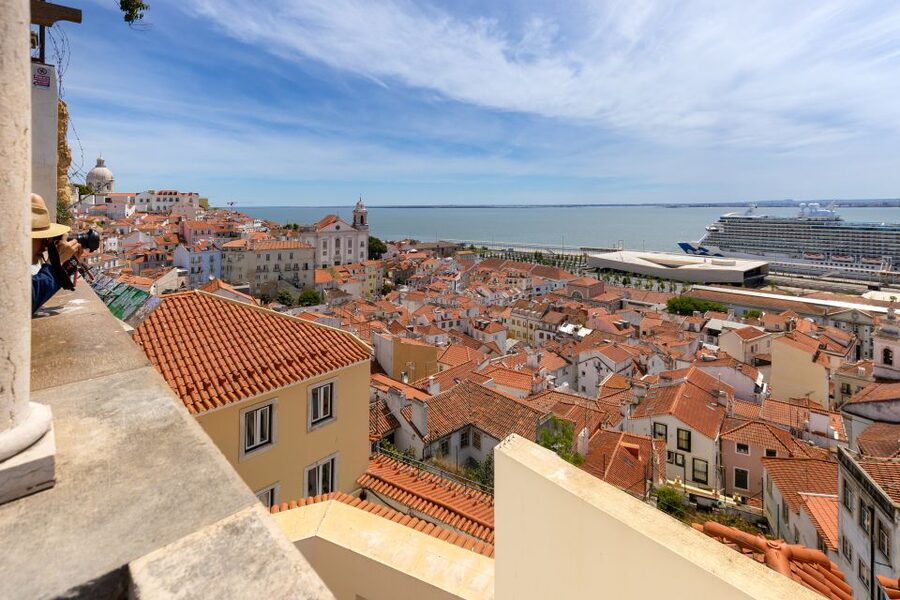
Next comes one of Lisbon’s classic viewpoint experiences, Miradouro São Pedro de Alcântara. This is where the tour earns its keep. You look over Baixa and across the south bank of the Tagus River, and suddenly Lisbon stops being abstract and starts looking like a city you can navigate.
I like viewpoint stops that come with context, not just “look at that.” When you already know you’re heading toward Baixa and the tram route later, the view becomes a map. You can spot how the hills fold into each other, which makes the rest of the walk feel less random.
Also, it’s a smart pause. Lisbon sightlines can be nonstop. A dedicated viewpoint moment gives you time to breathe, take photos, and reset your legs.
San Roque Church: Jesuit Straight Lines With Mannerist and Baroque Color
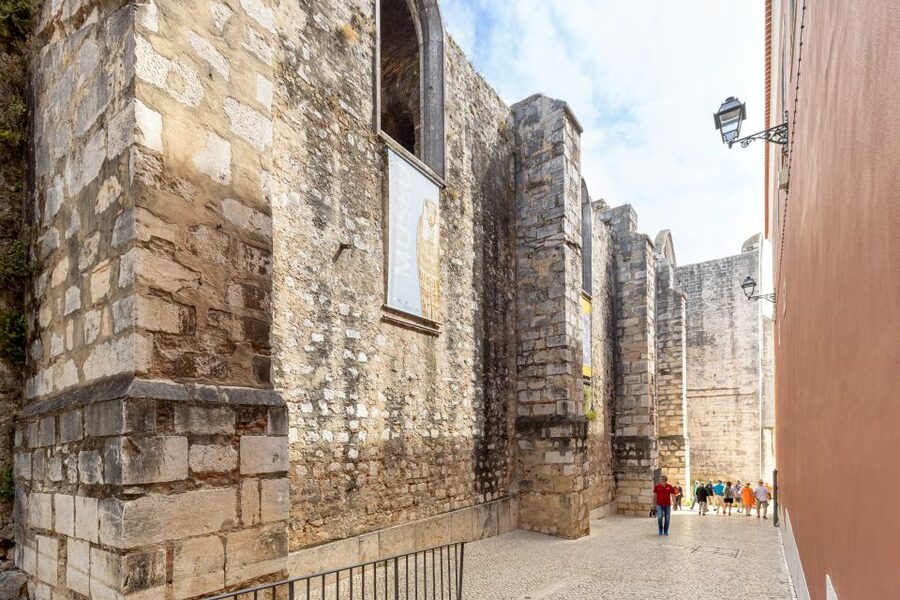
From the viewpoints, you move toward history on a quieter scale: San Roque Church. The route here is a reminder that Lisbon’s religious sites are not only about devotion. They’re also about art, power, and identity.
You’ll see the austere façade, then you go inside to the good stuff: gilding, tiles, and paintings. The combination is described as a kind of museum of Mannerist and Baroque styles, which is exactly the kind of mix you want in a short tour. You get both the contrast and the reason it matters, without spending all day bouncing between museums.
If you love interiors, don’t rush this stop. Even when churches are not huge in size, details like the tile work and ornamentation reward slow looking. If you’re more of an outdoor person, you’ll still appreciate how the décor reflects Lisbon’s taste for drama, even when the outside looks restrained.
A few other ways to do Lisbon
- Lisbon: Live Fado Show with Port Wine in Historic Center
★ 4.7 · 4,166 reviews - Lisbon: Fado Show with Wine in a Historic Venue
★ 4.8 · 1,294 reviews - Explore Lisbon by Tuk Tuk: History and Viewpoints
★ 5.0 · 840 reviews - Lisbon: Daytime or Sunset Boat Cruise with History and Wine
★ 4.9 · 819 reviews
Carmo Convent and Church: Gothic Architecture and the Carnation Revolution Connection
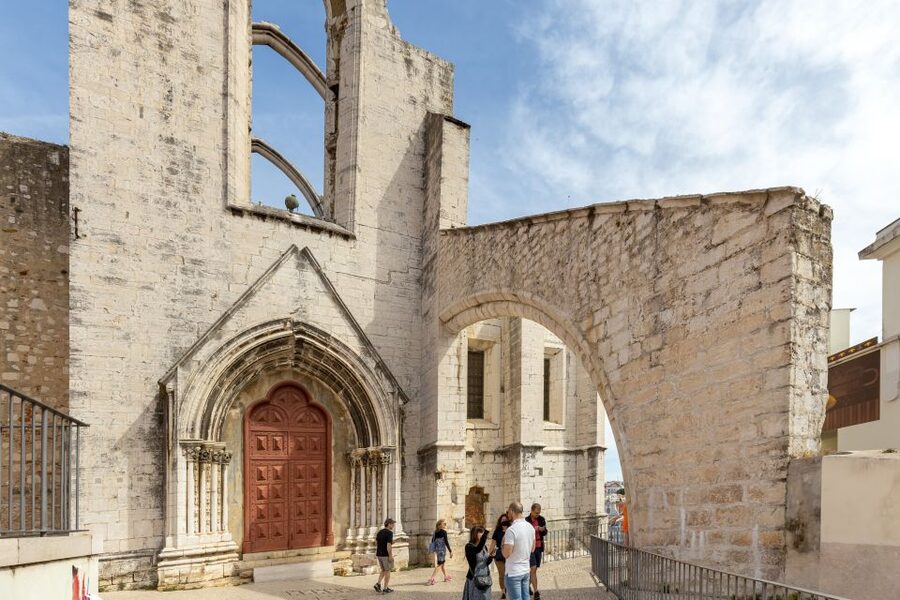
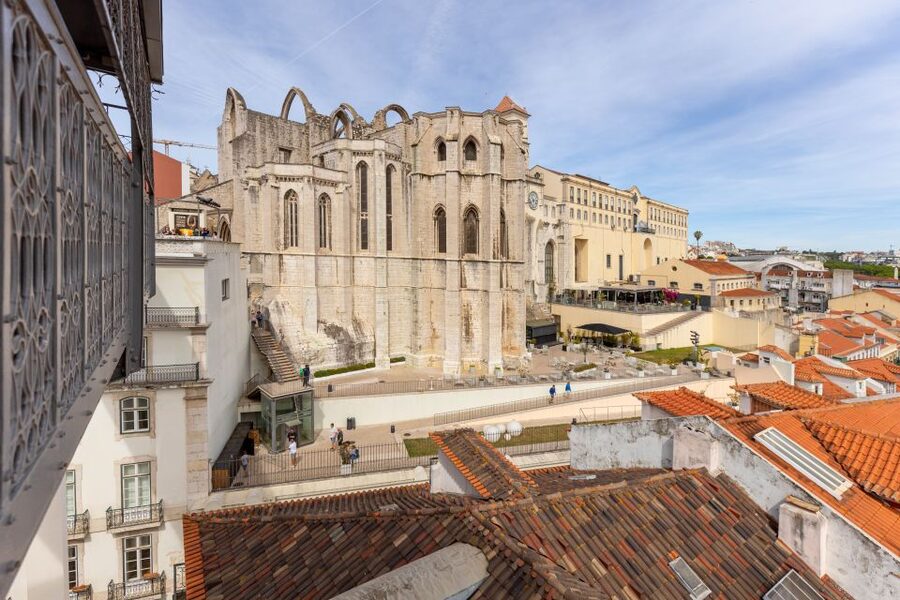
Then you head down the hill to the Carmo convent and church, known for Gothic architecture. This is one of those moments where the guide’s job becomes more than storytelling. It’s helping you understand why the place matters beyond beauty.
The site is tied to the Carnation Revolution that began in 1974, when Portugal ended nearly five decades of dictatorship. That’s big political history, but the way it’s presented makes it feel connected to the street. You’re not just learning a date. You’re learning why some buildings became symbols.
This stop is also a reminder of how Lisbon holds multiple eras at the same time. One minute you’re noticing architectural style, the next you’re linking it to modern events that shaped what Portugal looks like now.
Santa Justa Elevator and Baixa: One of the Best Viewpoints, Then the City Engine Room
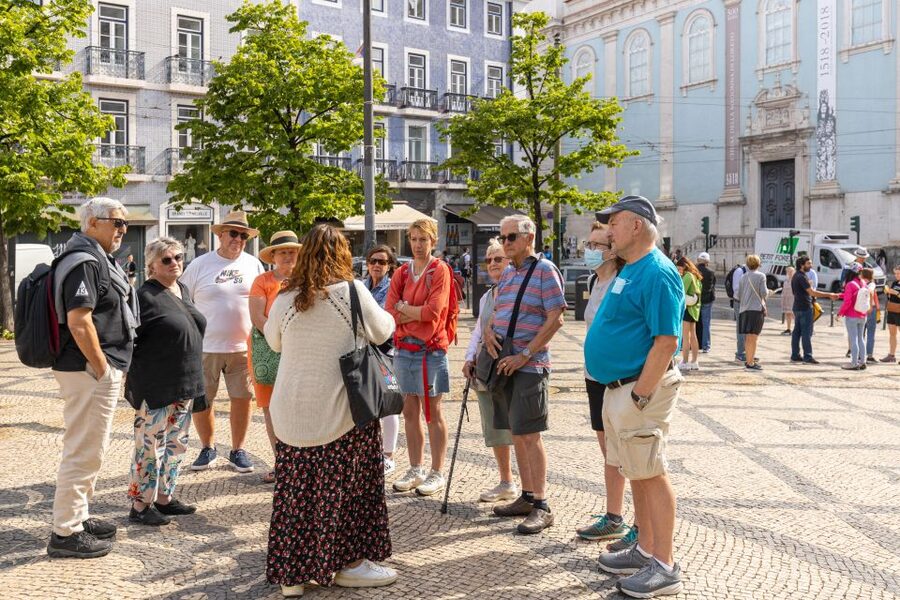
After Carmo, you reach the Santa Justa elevator, an imposing monument in the Gothic Revival style. Even if you don’t ride the elevator itself, the viewpoints around this area are a highlight. You get another high-angle view, and you also get a feel for how Baixa fits into the city plan.
Baixa is the “heart” area, where the urban grid and central landmarks give Lisbon a different texture than the older hillside neighborhoods. In this tour, it works like a transition zone. You move from steep and winding to more central and structured, which helps you understand Lisbon’s layout as a system.
There’s also a short break at this stage. That small pause is practical. By now, you’ll have climbed enough to appreciate sitting down, grabbing something to drink, and getting your bearings for the tram section.
Tram Time From the Castle Area to Portas do Sol
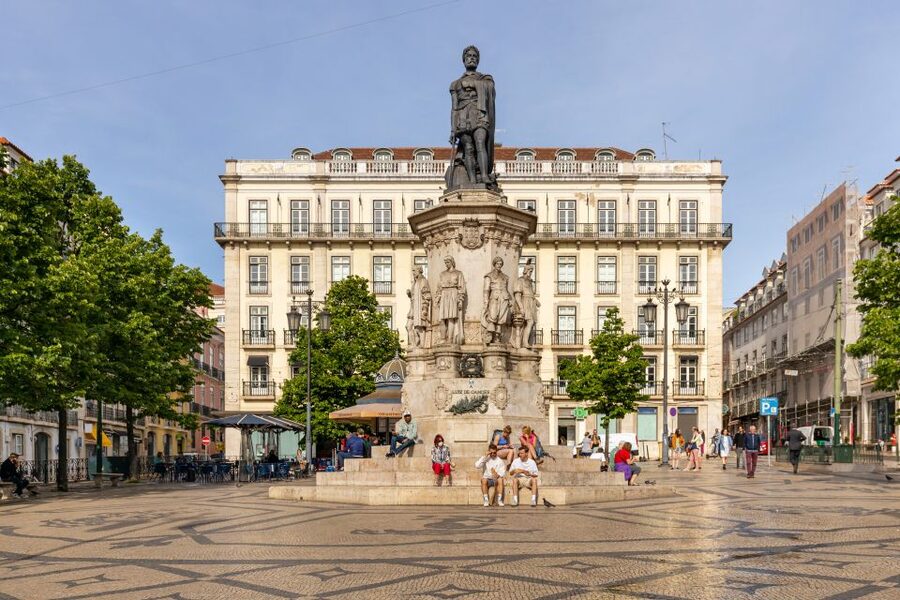
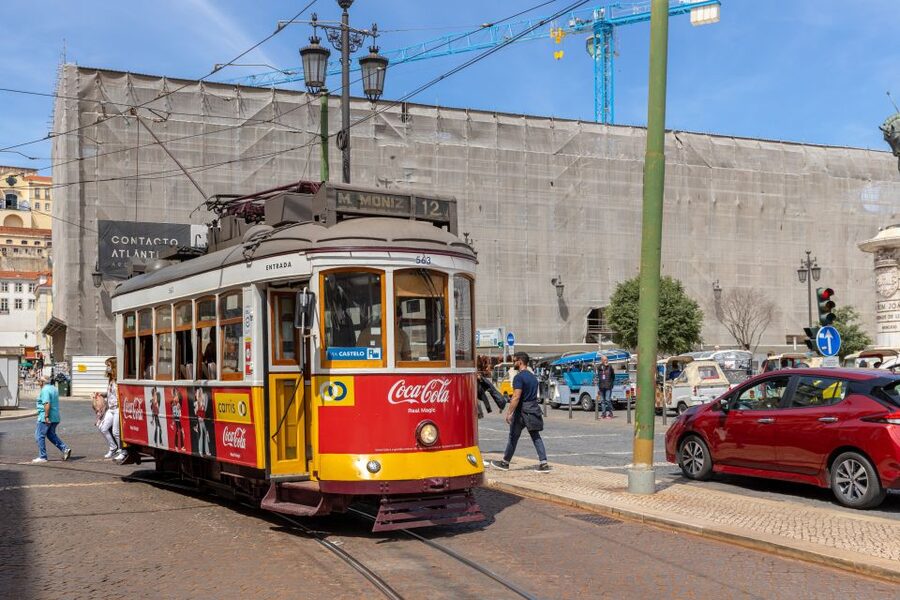
Then you take an iconic Lisbon tram ride. The route is described as going from the castle area up to Portas do Sol, which sets you up perfectly for the next neighborhood.
A tram ride in Lisbon is not just transport. It’s a moving viewpoint. The streets reveal themselves as you glide through them, and you’re not burning energy on steep walking the whole time. In the feedback, people consistently singled out the tram element as a fun break in the middle of the tour.
You’ll also likely notice how the city changes as the tram approaches Portas do Sol. This helps you connect what you saw earlier in the miradouro with what you’ll see now in Alfama, the oldest and most traditional neighborhood on the route.
Portas do Sol and Alfama: Monastery, Pantheon, and Fado-Street Atmosphere
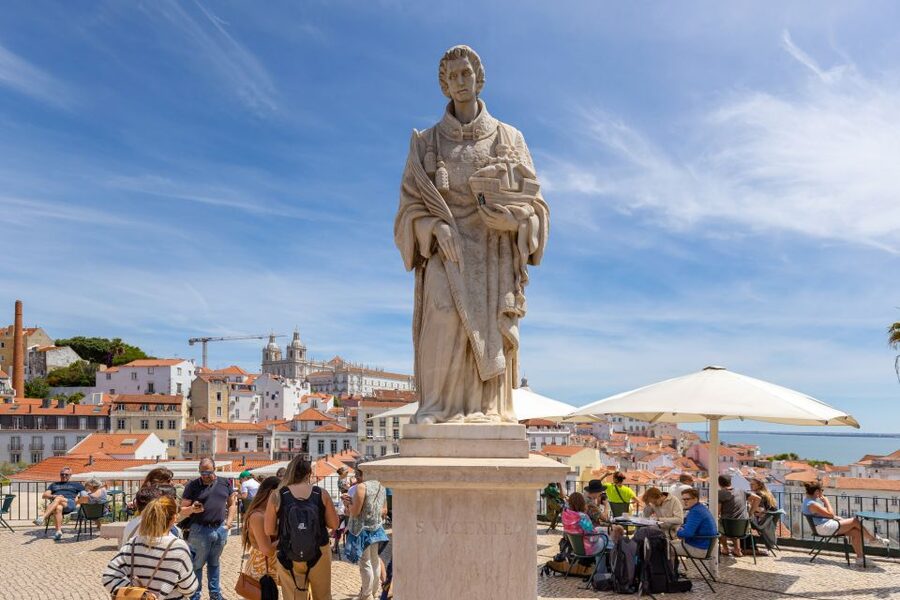
At Portas do Sol, you see a trio of anchors that shape the area: the Monastery of São Vicente de Fora, the National Pantheon, and then Alfama itself. Alfama stretches across narrow streets climbing toward the Tagus, with an atmosphere that feels lived-in, not curated.
A key cultural thread here is fado houses. You get a sense of how music ties into neighborhood identity, not just as a performance but as part of everyday storytelling.
The tour also calls out festivals of saints, especially St. Anthony. That matters because Alfama isn’t only old architecture. It’s also calendars, rituals, and community events that put rhythm into the streets.
One practical note for this section: expect more turning, more tight alleys, and more stairs than you might expect from the word walking tour. That doesn’t make it a hardship if you go in with the right shoe choice and accept that Lisbon’s hills are part of the deal.
Lisbon Cathedral Finish: Reconquest Roots and a Building That Changed Over Time
You end at Lisbon Cathedral. The guide frames it as a landmark built in 1150, about three years after Lisbon was taken back from the Moors. That reconquest context gives the cathedral immediate meaning, not just background trivia.
Over time, the cathedral saw architectural changes and became a mix of styles. That mixing is common in old European cities, but Lisbon makes it feel extra real because you’re ending the tour after seeing how the city was rebuilt and reshaped in multiple eras.
By the time you arrive here, you’ll have watched Lisbon layer itself again and again: post-1755 renewal, 1974 revolution significance, and centuries of neighborhood growth. The cathedral stop works as a finish line that ties the story threads into one place.
Tram, Coffee, and Cake: What $29 Buys You in Real Terms
At $29 per person for about three hours, the value here is the package. You’re paying for a guide who connects all these pieces, plus you’re getting a tram ride, and you get coffee and cake included.
If you were doing this alone, you could certainly see many sights, but the cost would rise fast once you add transit, entry fees you might feel obligated to pay, and the time you spend figuring out what’s worth your attention. A good guide helps you prioritize what matters and why. And in the feedback, people repeatedly praised guides like Paulo, Ricardo, and Ana for making history feel understandable and fun, not dry.
The included coffee and cake are also not just a snack. It’s a morale tool. Lisbon walking can be deceptively tiring. A break with something warm and sweet helps you keep energy for Alfama’s streets and the final cathedral stop.
Which Guide Experience You’re Most Likely to Get
You can’t control which guide you’ll get, but you can control your expectations.
In the feedback, Paulo came up again and again for storytelling. Ricardo got praised for kindness, clarity, and practical recommendations. Ana was mentioned for humor and pacing that stayed relaxed even when conditions were messy. Lucia was described as someone who loves Lisbon and shared perspective from living through the revolution era as a child. There are even mentions of smaller groups, like tours with only a few people where questions were easier to answer and the tour felt more personal.
So if you like your history with characters and context, you’ll probably enjoy the way the route is presented. If you want pure architecture only, you might find yourself appreciating the human angle more than you expected, especially once the Carnation Revolution gets explained in place.
Practical Tips So You Enjoy It, Not Just Survive It
- Wear shoes you can handle on hills and uneven stone streets. The route is designed for viewpoints, which means climbing.
- Bring a layer for weather. One person noted tram troubles and pouring rain, and the guide adjusted without making it feel chaotic.
- Plan your photo time. Miradouros and the elevator viewpoint area are built for pictures.
- If you’re traveling with mixed ages, note that the tour is designed with stopping points, and some feedback called it accessible for people who are not super fit, because the pace includes pauses.
If you’re the kind of person who loves to walk first, then pick neighborhoods to return to later, this is a strong start. It gives you mental bookmarks you can revisit on your own without guessing.
Should You Book This Tour?
Yes, if you want a fast, satisfying Lisbon orientation that connects major neighborhoods to key historical moments. This is especially worth booking on your first day or first full morning, when you most need a sense of direction.
Skip it only if you hate hills and stairs, or if you already have a deep plan for museums and monuments and you’d rather spend the same 3 hours on one long, focused site.
Otherwise, the mix of Bairro Alto, viewpoints, Jesuit and Gothic stops, a tram ride, Alfama streets, and the cathedral ending is exactly the kind of compact Lisbon experience that pays off later when you choose where to return.
Newly reviewed in Lisbon
- Lisbon: Private Food Tour – 10 Tastings with Locals★ 4.8 · 73 reviews
- Lisbon: Private Custom Tour with a Local Guide★ 5.0 · 6 reviews
- Lisbon: 2 hours Private City Highlights Tuk-Tuk Tour for two★ 5.0 · 5 reviews
- Lisbon: City Sightseeing Tour★ 4.9 · 13 reviews
- Lisbon: Private Christmas Lights Tour by Eco Tuk Tuk★ 4.9 · 51 reviews
- Lisbon: Private Catamaran Charter for up to 18-People★ 5.0 · 7 reviews
- Lisbon: Private Boutique Boat Tour – Sail in Style★ 5.0 · 87 reviews
- Lisbon: Private Boat Trip, Guided Walking Tour, Bike & Tram★ 4.8 · 116 reviews
Historical Tours, compared.

Live Fado Show with Port Wine in Historic Center
Read our review →

Explore Lisbon by Tuk Tuk: History and Viewpoints
Read our review →
Daytime or Sunset Boat Cruise with History and Wine
Read our review →
Private Tuk Tuk Tour Through Lisbon’s Historical Streets
Read our review →
Lisbon Sunset Sailing with Portuguese Wine and History
Read our review →
Guided Tuk-Tuk Tour Along the Historic Tram Line 28
Read our review →
Private Lisbon-Arrábida Wine Tour: 3 Wineries, Coast & Heritage
Read our review →Browse the lists this tour appears in