
Reviewed · LISBON
Лиссабон: сверху вниз под правдивые и вымышленные истории
This Lisbon experience is interesting because it explains how the city works top to bottom, using real places and stories you can actually see. You start with a fountain and azulejo idea of the city, then you keep moving toward the river, so the geography makes sense fast. The views are the point, and the route is built around them.
I especially like how the tour mixes stories and practical city sense. You hear legends, jokes, and real-life tales about kings, knights, and everyday people, but you also get guidance on how to travel Lisbon without wandering blindly.
One possible drawback: the walk is mostly downhill, yet it still involves cobblestones and some stairs, and it is not suitable for people with mobility impairments. Bring good shoes and expect uneven ground.
Key things I’d circle before you go
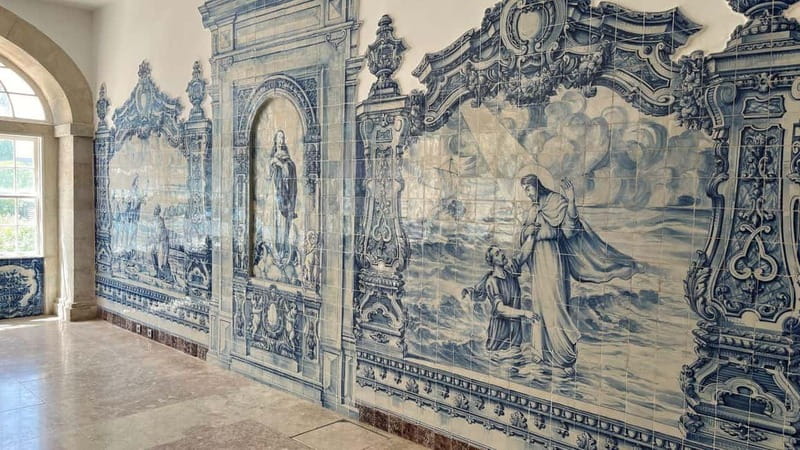
- Azulejo city-map detail: you’ll see the city’s structure shown in tiles at a viewpoint
- A secret-garden moment in a former monastery setting
- Church interiors with heavy decoration that change how you look at Lisbon’s faith and art
- Public transport as sightseeing, with funiculars and iconic lifts built into the route
- River-facing ancient views that make photos much easier
- A small group of up to 7, led in Russian by Katia Literra, with a Q&A at the end
Why a top-to-bottom Lisbon walk makes the city click

Lisbon is famous for hills, but most visitors only feel that in their legs. This tour adds a mental map, so every descent has a reason. You’ll understand how neighborhoods connect and why the city looks the way it does.
The format is simple: you walk downhill, hit viewpoints, then weave through the older center. Along the way, you learn how history shows up in streets, buildings, and even in the transport that helps locals move.
And yes, there is plenty of time for photos. The stops are timed for you to look first, then shoot, then keep going without feeling rushed.
Keep exploring Lisbon — readers rate these highly:
- Lisbon City Center Tour – The Unmissable Lisbon
★ 5.0 · 22,234 reviews - Lisbon: Sintra, Pena, Regaleira, Cabo da Roca & Cascais
★ 4.7 · 19,656 reviews - Lisbon: Jerónimos Monastery Entrance Ticket
★ 4.1 · 14,164 reviews
The 3-hour pacing, shoes, and what “easy” really means
The whole tour is about 2.5 to 3 hours, and the walking route is mainly downward. That helps. Still, it is a cobblestone and sometimes stair route, which Lisbon does to everyone, even the fit.
If you only travel with dress shoes, swap them for something grippy and comfortable. Also pack water on your own because drinks are not included. If rain is possible, bring a light rain layer or poncho, since Lisbon weather can switch quickly.
This is not a crawl. The group moves as a unit, with short guided explanations and frequent photo stops. If you like moving, this feels efficient. If you hate walking, you may find it tiring.
Start at Chafariz do Largo do Rato, then shift into Principe Real’s garden calm
You begin at the Chafariz do Largo do Rato, right by the Largo do Rato area, near the start of Rua da Escola Politécnica. The meeting point is by the yellow metro line exit for Rato, direction Rua Escola Politécnica, and your guide holds a GetYourGuide sign.
From the start, you get the sense that Lisbon’s “up and down” is part of daily life, not just a tourist challenge. This matters because the tour is built to help you see the city in motion.
Next comes Jardim do Principe Real, where you get a short guided visit and a quick walk. Even in a small garden area, the goal is not just pretty views. It’s learning how Lisbon’s quarters relate to each other, and how people escape the street noise.
Miradouro de São Pedro de Alcântara: the viewpoint that teaches you orientation

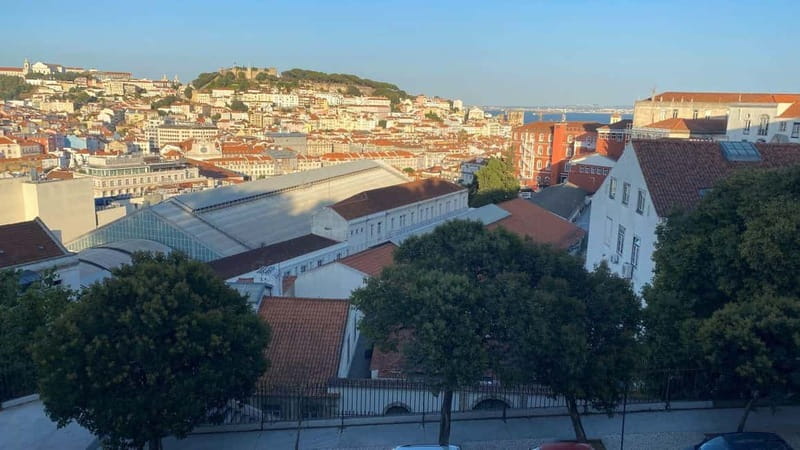
One of the smartest parts of this itinerary is hitting a viewpoint early. Miradouro de São Pedro de Alcântara is where you get a photo stop plus guided storytelling along the way.
This is the moment when the route starts making sense. Looking out over Lisbon helps you understand what you’ll later walk toward, and how the older core connects to the river side.
Bring your camera settings for bright light, and take a few minutes to look before you shoot. The guidance here helps you frame the city, so your photos look intentional, not random.
Another side of Lisbon for the same trip:
- Lisbon: History, Stories and Lifestyle Walking Tour
★ 4.8 · 10,902 reviews - Lisbon: Sunset Boat Party Cruise with DJ and Open Bar
★ 4.5 · 10,378 reviews - Lisbon: Pena Palace, Sintra, Cabo da Roca, & Cascais Daytrip
★ 4.7 · 9,981 reviews - Lisbon: Oceanário de Lisboa Entrance Ticket
★ 4.6 · 9,943 reviews
Elevador da Glória and the Santa Justa Lift: Lisbon’s vertical transport as sightseeing
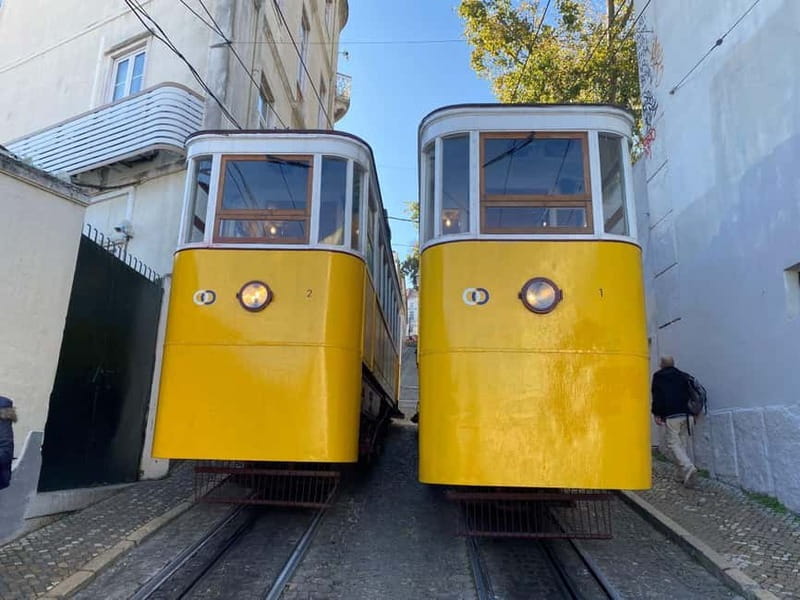
Lisbon’s lifts and funiculars are more than travel tools. This tour treats them like city landmarks, because they are also viewpoints and architectural details.
After the São Pedro de Alcântara area, you stop at Elevador da Glória for photos and guided context. The idea is to notice the lift’s role in moving people through steep streets, without losing the chance to see the city’s layers.
Later you’ll reach Santa Justa Lift, another major highlight. The stop includes guided explanation and scenic views while you move through the area. This is a good point to slow down mentally, because the lift connects the “flat postcard Lisbon” look with the real geography behind it.
If you are the kind of traveler who only checks lifts as optional rides, you’ll probably enjoy this more, because it gives you reasons to care before you buy a ticket later, or decide you can skip it.
Bairro Alto and Chiado: history in squares, churches, and the rhythm of nightlife
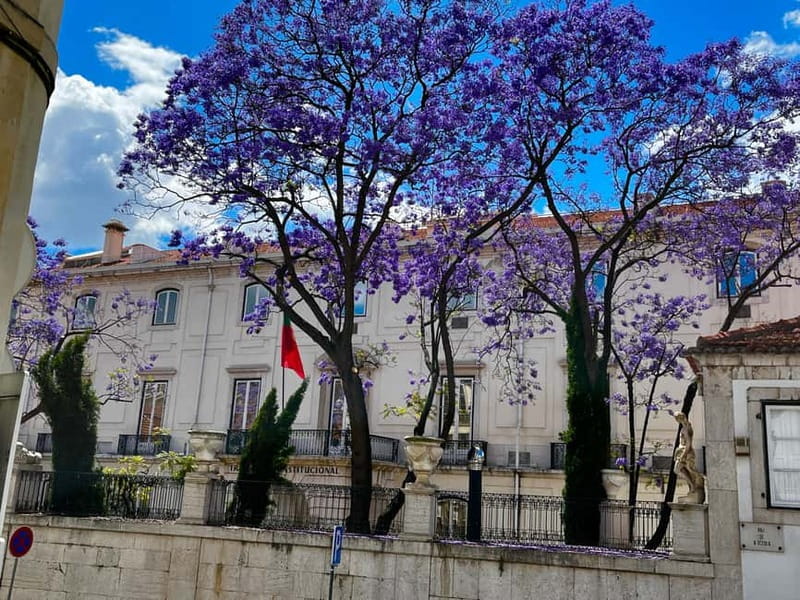
Once you leave the viewpoint zones, the tour shifts into neighborhood texture. Bairro Alto is next, with a guided visit, sightseeing time, and time to walk.
This is where Lisbon’s personality shows up. You start learning where the city feels more active, where streets feel quieter, and where the energy changes as the evening grows late. The tour guidance includes recommendations for how to use what you learned to plan your own night, including where you might want a calm evening versus a more youth-focused party vibe.
Then you get a key church stop: Igreja de São Roque. You’ll have a photo stop, guided visit, and time for self-guided exploring. Churches here are not just about religious spaces. In Lisbon, they often double as art galleries, and the interiors tend to be spectacularly decorated.
After that comes Largo do Carmo Square, with a photo stop plus coffee and a chance to try local snacks. This is a small but meaningful break. You get one organized pause in the middle of the walk, which helps you stay energized for the next stretch.
Finally, the route continues toward Chiado, with guided walking and sightseeing time. Chiado is an anchor area that often feels like Lisbon’s “connector,” linking shopping streets, theaters, and historic vibes. In this tour context, it also becomes a reference point for planning your next day on your own.
Rossio and Baixa de Lisboa: the classic core where stories meet street grids
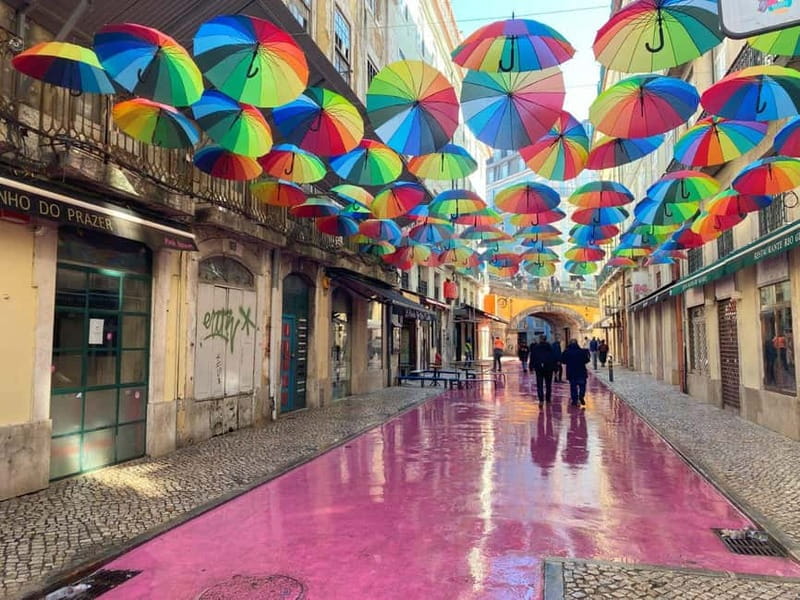
From Rossio Square, you’ll get another photo stop plus guided explanation and walking time. Rossio is a place where Lisbon feels structured, compared to the randomness visitors sometimes expect from hill towns.
Then the tour heads into Baixa de Lisboa, with a guided visit and a mix of sightseeing and shopping walk time. This section helps you understand why Lisbon’s center feels like a grid in places. You’re not only seeing streets, you’re learning what they were designed to do.
If you enjoy practical city navigation, this part is useful. It gives you mental shortcuts for walking later. And if you plan to shop or snack afterward, this is where you’ll likely feel most comfortable.
Rua da Prata and the long approach to Commerce Square
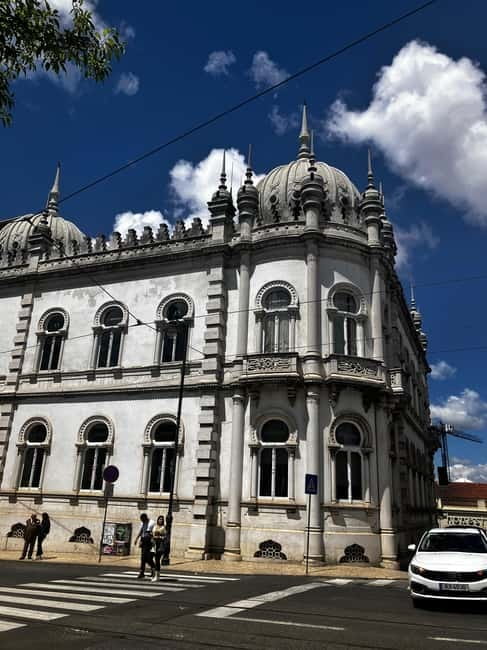
Next comes Rua da Prata, a guided visit and a walking segment focused on sightseeing. The value here is learning how street names and corridors connect different parts of Lisbon’s center. It can be hard to “read” a city like this on your first day. A guided structure fixes that.
You also pass a short stop labeled Pollux, with guided storytelling and a short walk. Even when a stop is brief, it is typically used to connect the dots between major sights, so you understand why you are going where you are going.
Then you reach the big finale: Praça do Comércio, also called Terreiro do Paço. You get a photo stop, guided sightseeing time, and scenic views on the way. The ending point is close to metro access on the blue line.
This is the moment when all the earlier viewpoint looking pays off. You can see how the city bends and funnels toward the river, and you can understand why locals built routes the way they did.
The azulejo structure idea you’ll actually remember
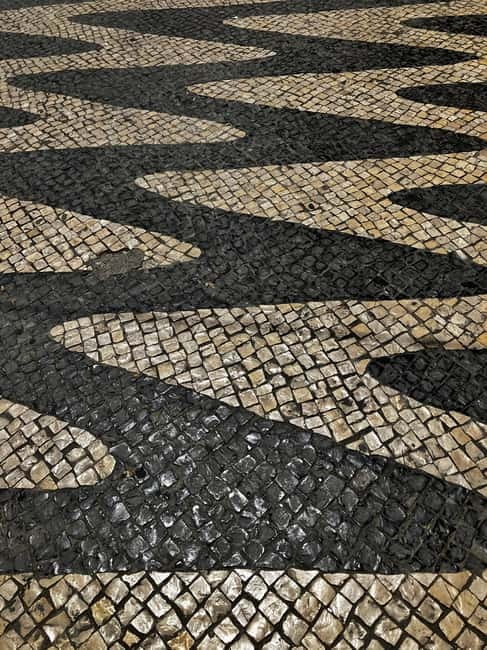
One of the clever highlights is the city structure shown in azulejo tiles at a viewpoint. Azulejo is everywhere in Lisbon, but here it isn’t just decoration. It becomes a learning tool, a visual model of the city’s form.
When you later walk on your own, you’ll probably notice tile patterns and think about the map-like way Lisbon uses art to explain space. That is the difference between seeing a tile and using it.
Secret garden energy, former monastery calm
Another highlight is a secret garden in a former monastery. Lisbon does this well, it hides quiet pockets inside old structures and turns them into small breathing spaces.
In a walking tour, these pauses matter. They give your brain room to reset while you still keep moving down the hill. You come out of the garden area with a calmer sense of Lisbon, not just a checklist of sights.
Ornate churches: why interior details change the whole trip
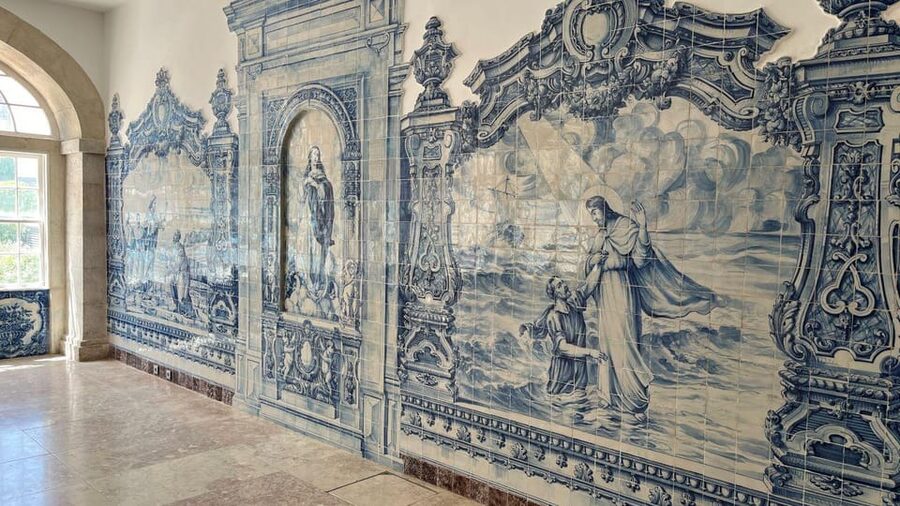
The tour includes richly decorated church interiors. You are not simply stopping at a church. You are learning to look at the interior as part of Lisbon’s identity.
Because the guided explanations come at the right moments in the route, you’ll likely find yourself noticing contrasts, like how decoration interacts with the street scenes outside. Even if you are not into church art, the visuals can shift how you read the neighborhood around each building.
Public transport as part of the story, not a separate plan
One of my favorite “value” ideas here is that the tour treats Lisbon’s transport as part of sightseeing. You’ll see and hear about unique lifts, funiculars, and trams through the areas the route touches.
This matters because public transport in Lisbon is not a boring checklist item. It is the practical answer to the hills problem, and it is also how the city keeps its everyday rhythm.
After the tour, you’ll know what to prioritize if you want to ride something later. You’ll also understand why certain lines and lift routes exist, instead of treating them like random tourist attractions.
How to use this tour for the rest of your Lisbon days
At the end, there are questions and answers plus recommendations. This is where you get the bridge from guided walking to independent exploration.
Use that time to ask about your pace and interests. If you want quiet streets, ask where to go. If you want energy at night, ask where the mood changes. If you prefer longer walks with less crowds, ask which areas feel calmer after sightseeing hours.
The tour also gives you a framework for night planning. It helps you connect what you saw in Bairro Alto, Chiado, and the center areas to how Lisbon feels after dark, so you can choose intentionally instead of guessing.
And because the group is small, it is easier to get more specific advice about where to spend time next.
Price and value: why $23 can work out well
The price is $23 per person for about 3 hours. That sounds reasonable, especially for a guided route that includes multiple viewpoints, major city highlights like Santa Justa, and several guided stops inside churches and squares.
Also, the group size is limited to 7 participants, which usually means more attention and a smoother pace. In Lisbon, where you can easily get lost on cobblestones, having someone explain the city while you walk is often better value than piecing it together with only a guidebook.
Not included are transport, water and drinks, and museum tickets. That’s normal for a walking tour, but it does mean you should budget for a bottle of water and any paid entry you choose later.
If you do only one guided piece on your trip, this kind of route is a strong candidate, because it gives you orientation and story, not just photos.
Who this tour fits best, and who should rethink it
This works best if you want a structured walk that still feels flexible. You get guided storytelling in Russian, plenty of photo time, and a route that mostly goes downhill. The pace is friendly for most people who can handle walking on uneven surfaces.
It is not suitable for children under 12 and it is not suitable for people with mobility impairments. If stairs and cobblestones are a problem for you, look for a more accessible option.
It is also best for travelers who want to learn Lisbon’s rhythm, not just “see sights.” If you enjoy understanding how neighborhoods connect and how locals move, you will get a lot out of the transport and viewpoint focus.
Should you book this Lisbon tour?
If you want Lisbon to make sense fast, I’d lean yes. The combination of viewpoints, lifts, ornate churches, azulejo city structure, and river-facing finish is exactly how first-time visitors should build a mental map.
Book it if you like walking and you want a Russian-led guide who can explain the city’s structure in a way you can keep using after the tour. Skip it if you cannot manage cobblestones and stairs, or if you prefer long museum visits over a moving street route.
FAQ
How long is the tour?
It lasts about 3 hours, with a typical walking time of 2.5 to 3 hours.
Where does the tour start?
You meet at the Chafariz do Largo do Rato, near the Rua da Escola Politécnica entrance area. The guide is by the yellow metro line exit for Rato, facing toward Rua da Escola Politécnica.
Where does the tour end?
The tour ends at Praça do Comércio (Terreiro do Paço), near the metro station with the same name on the blue line.
What language is the guide speaking?
The live guide speaks Russian.
How big is the group?
The group is small, limited to 7 participants.
Is the tour suitable for kids?
It is not suitable for children under 12 years old.
Is it accessible for people with mobility impairments?
No, it is not suitable for people with mobility impairments due to cobblestones and some stairs.
What should I bring?
Bring comfortable shoes, a sun hat, water, and rain gear. Water is not included on the tour.
Newly reviewed in Lisbon
- Lisbon Hills secrets, soul and insights all in 1 TukTuk ride★ 5.0 · 55 reviews
- 4-hour Tuk Tuk Tour of Belém, City Center, and Lisbon’s Old Town★ 5.0 · 7 reviews
- 4 Hours Private Sailing Trip to Oeiras Beach★ 5.0 · 52 reviews
- Private tour Portugal 4 days from Lisbon★ 4.5 · 3 reviews
- Nazare,Obidos, and Batalha Monastery Private Tour★ 5.0 · 3 reviews
- 4 Hours Private Tuk Tuk Tour in Lisbon★ 5.0 · 15 reviews
- 4-Day South Portugal Tour from Lisbon: Lagos, Algarve Coast, Sagres, Évora, Beja and Setúbal★ 3.5 · 8 reviews
- 3 Hours Private Tour of Lisbon’s Historic Center by Tuk Tuk★ 5.0 · 17 reviews