
Reviewed · STREET ART TOURS
Lisbon Street Art Tour
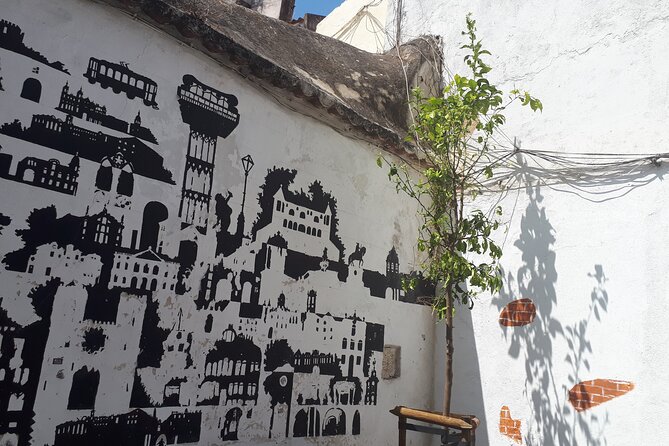
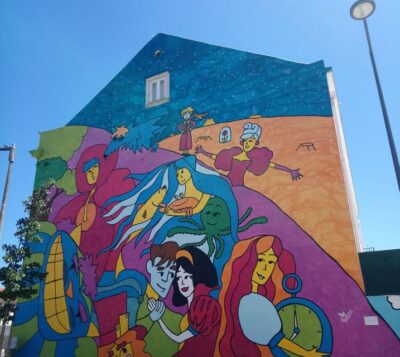
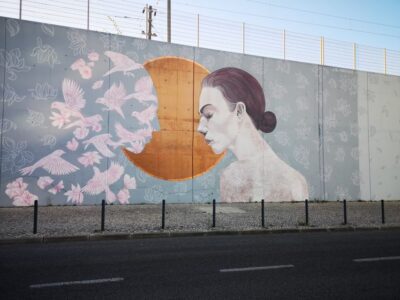
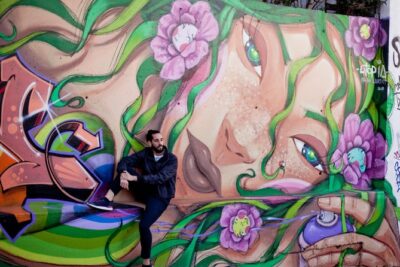
Lisbon’s street art is interesting because it is not museum stuff behind glass. Here, it is public, arguable, and political, painted on living city walls where people actually walk by.
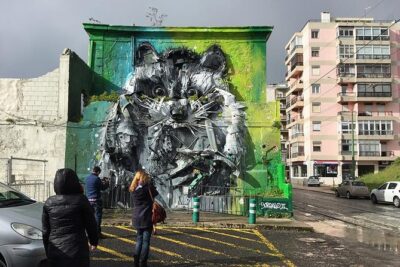
I love how you get big international names alongside Portuguese artists like Vhils and Bordalo II, including works by Shepard Fairey. I also like that the guide does not just point, you learn the techniques and the ideas behind each piece, with artists’ words when they are available.
The main tradeoff is that it is a walking tour. Wear comfortable shoes, bring water, and note it is not suitable for people with mobility impairments.
Key Things I’d Plan For
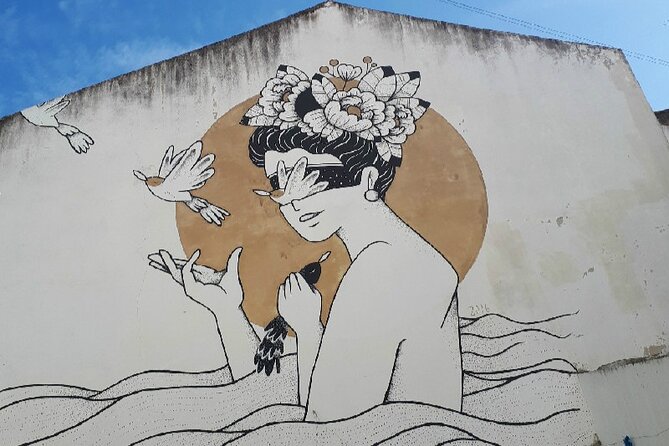
- Shepard Fairey and Portuguese street stars on the same route, so you see the global and local story together.
- Graça and Mouraria are the focus, two neighborhoods known for dense public art.
- Each stop includes artist technique + what the work is asking, not just a photo opportunity.
- You also catch tiles, sculptures, and other forms of public art, so the city looks like a gallery.
- The group stays small, limited to 8, so Peter can keep questions moving.
- A local sweet is included, usually pastel de nata or ginginha, with no coffee added.
Graça and Mouraria: How This 2-Hour Walk Stays Focused
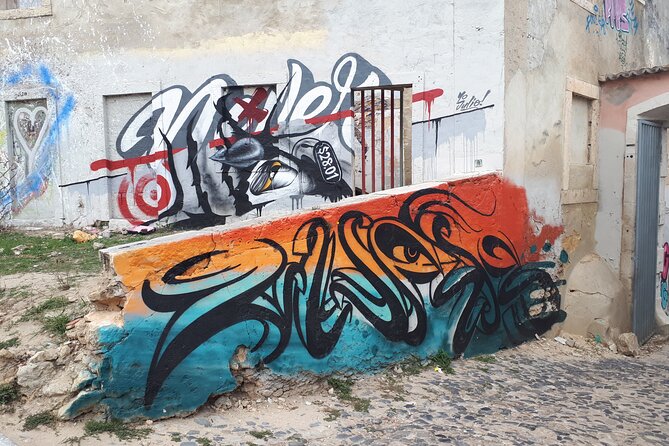
This tour is built around the simple problem of street art in Lisbon. There is so much of it that trying to cover everything would turn your day into a sprint with blurry photos and zero context. Instead, you concentrate on two neighborhoods, Graça and Mouraria, where public art shows up constantly and in many sizes.
In practice, that means you walk, you stop, and you look longer than you normally would. Street art rewards attention. A quick glance makes it feel like decoration. Slow looking helps you see the politics, the craft, and the references.
You also get a good feel for how street art changes neighborhood by neighborhood. Even when the styles differ, the themes often circle back to identity, power, and who gets to speak in public space. This is the kind of tour where you start noticing things you would have walked right past.
More street art walks in Lisbon:
- Lisbon: Street Art Tour
★ 4.9 · 1,324 reviews - Lisbon: Kickstart Street Art Walking Tour
★ 4.9 · 717 reviews - Lisbon: Street Art Tuk Tuk Tour
★ 4.9 · 372 reviews
Meeting Big Names on Real Walls: Fairey, Vhils, Bordalo II
A big reason this tour works is the mix of artists. You encounter works by Shepard Fairey, and you also learn about top Portuguese names such as Vhils and Bordalo II. That pairing matters, because it lets you compare approaches, not just admire famous signatures.
When a guide connects artists across borders, you start seeing street art as part of a larger conversation. The American street art influence is there, but the Portuguese scene is clearly its own voice, shaped by local history, local streets, and local debates.
You’ll also run into a roster of other artists mentioned in the tour, including TV Boy, Joana Vasconcelos, Andrea Tarli, Urban Solid and Utopia. The best part is not memorizing names. The best part is learning how the works are made and what they are trying to say, so each new wall feels like a chapter, not random street doodles.
Peter’s Style: Techniques and Meaning at Every Stop

The guide leading the walk is Peter, and the tour is in French. Peter’s approach is practical: you slow down, read the work, and get a commentary that turns visual noise into something understandable.
What you learn is half art history, half street-level literacy. For each piece, the guide explains the techniques, and when the artists have shared words, you get those ideas too. So you are not only looking at color or scale, you are learning the method, the materials, and the artistic decisions.
This matters because technique often explains the message. A work made through one kind of process can carry a different tone than something painted quickly. Even when two pieces both look bold, their meanings can point in opposite directions. On this tour, you get help noticing those differences without needing a background in art.
Another key theme is discussion. The guide steers questions about the role of art in society, including social and political issues, and even what people mean when they say it is art at all. That is not a lecture you have to sit through. It is a conversation you can join as you walk.
Two Neighborhoods, Two Flavors: Graça Versus Mouraria
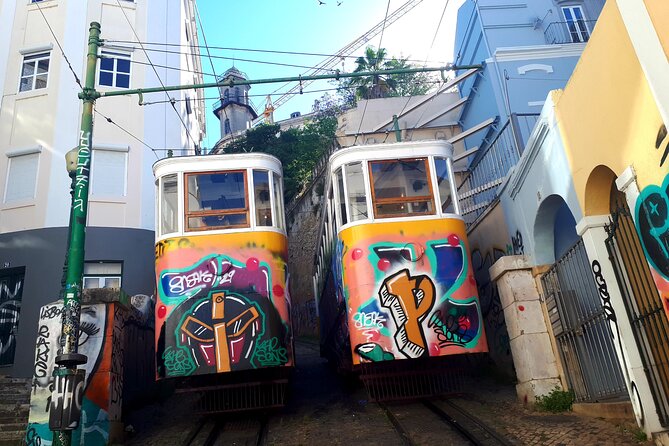
Focusing on Graça and Mouraria is not just about efficiency. It shapes what you experience, because public art tends to cluster where communities gather, where visibility is high, and where walls can carry messages in a way that still feels local.
In Graça, you can expect the feeling of a neighborhood where you notice views and street life together. The art shows up in the urban texture, and you begin to see how the city itself becomes part of the composition. You also pick up on the contrast between large mural-scale works and smaller interventions.
Mouraria often delivers a different kind of energy, with dense streets where the art does not let you zone out. That makes it a good place to learn how to spot the smaller details. When the guide points out a subtle piece and explains what it is doing, Mouraria becomes a lesson in attention.
If you only have two hours, this pairing is smart. You get variety without losing your bearings, and the route keeps you from feeling like you are repeating the same type of mural for the entire walk.
Another side of Lisbon for the same trip:
- Lisbon City Center Tour – The Unmissable Lisbon
★ 5.0 · 22,234 reviews - Lisbon: Sintra, Pena, Regaleira, Cabo da Roca & Cascais
★ 4.7 · 19,656 reviews - Lisbon: Jerónimos Monastery Entrance Ticket
★ 4.1 · 14,164 reviews - Lisbon: History, Stories and Lifestyle Walking Tour
★ 4.8 · 10,902 reviews
More Than Murals: Sculptures and Lisbon’s Famous Tiles
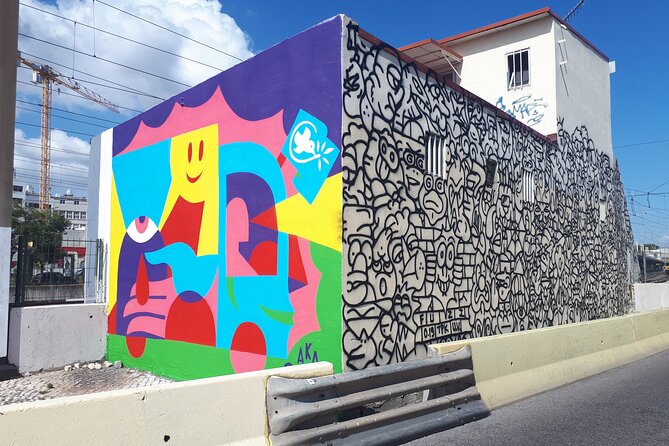
Street art in Lisbon is not only spray paint and stencils. You also encounter other forms of public art, including sculptures and Lisbon’s beautiful tiles. That sounds like a small add-on, but it changes how you see the city.
Tiles are a great comparison point. They are decorative, yes, but also historical and regional. Watching a tile motif sit beside street interventions helps you think about what is permanent in public art and what is temporary. It also makes the city’s visual culture feel continuous rather than broken into separate art categories.
Sculptures add another layer. You start to see how some works demand you slow down in a different way than a mural does. A mural can be read from the side of the street while you walk, but sculpture can pull you in closer. That rhythm shift keeps the tour from feeling repetitive.
Women in Street Art: A Topic You Actually Talk About
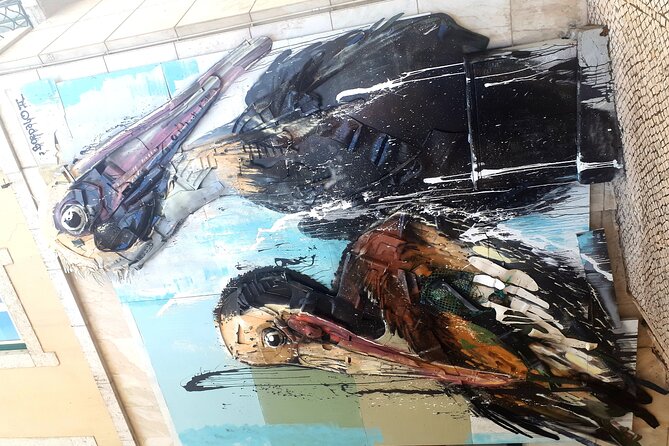
One of the tour’s stated focuses is how women are entering a traditionally male-dominated preserve. You are not just shown artworks made by many voices. You also learn to connect art choices with the social question of who gets visibility and authority in public space.
That topic is powerful because it is not abstract. It shows up in the kinds of voices that get heard, the way themes are framed, and how audiences respond. The guide prompts discussions about those differences, so the tour becomes more than street photography. It becomes a chance to think about representation in a medium that often challenges institutions.
Even if you are not a “street art person,” this part helps you understand why the works matter. It gives you a lens, so you do not reduce everything to style.
A Small Group With Real Conversation
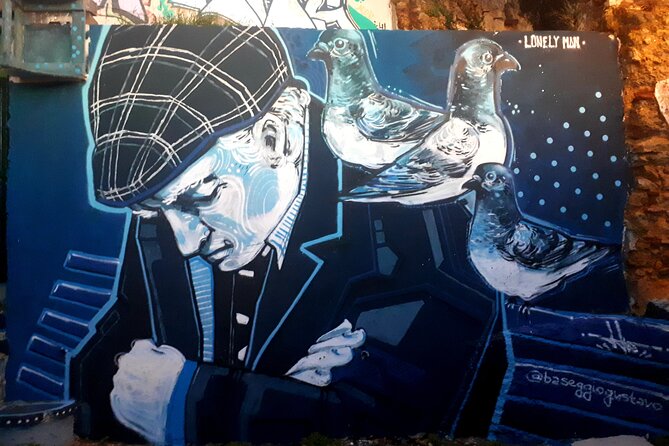
The tour keeps the group limited to 8 participants. That size is a sweet spot. It is small enough for questions, but big enough that the energy stays lively.
Because it is a walking format, small groups also help you move at a human pace. In real life, Lisbon streets can feel narrow and busy. With eight people, the guide can keep the group together without turning stops into traffic jams.
You should also know the tour is French. If you speak French at least at a basic level, you will keep up with the commentary much more easily. If you do not, you might still enjoy the visual part, but you will miss some of the technique and context, which is the core of the experience.
The Included Treat: Pastel de Nata or Ginginha
This tour includes a Lisbon specialty: pastel de nata (cream tart) or ginginha (wild cherry liqueur). It is the right kind of included extra, because it feels local and it matches the pace of a two-hour walk.
Pastel de nata is the safe, classic choice. Ginginha is more of a mood, depending on your taste and how much you want a small shot of liqueur. Either way, it gives you a simple finish that feels tied to Lisbon, not stuck on at the end like an afterthought.
One practical note: coffee and other drinks are not included. So if you tend to crave a caffeine hit, plan to buy one separately before or after.
Price and Value: Is $41 Worth It?

At about $41 per person for a 2-hour small-group tour, the value comes from what you get with your eyes and your brain, not just the walking.
You are paying for:
- A live guide who explains techniques and meaning at each work
- Coverage of multiple artists across two neighborhoods
- The included Lisbon specialty, pastel de nata or ginginha
- The small-group format, limited to 8, which supports real conversation
If all you wanted was photos, you could wander on your own. But street art in Lisbon is messy in a good way, and the city is full of it. This kind of guide-led structure saves you time and helps you avoid the trap of seeing only the obvious stuff.
I think the price feels reasonable when you want context. If you love art but hate guesswork, this is the sweet spot.
What to Bring and How to Make It Comfortable
This one is straightforward: bring comfortable shoes and water. You will be walking, and street art spotting often makes you pause, look up, and turn your head more than usual.
Also, be ready for the tour to include both large murals and smaller works. Smaller works reward good lighting and your willingness to stop and angle yourself just right. If you wear shoes that let you stand and pivot easily, you will enjoy those moments more.
If you have mobility limitations, note that the tour is not suitable for people with mobility impairments. That is not a small detail. It changes the whole experience.
Practical Details You Should Know Before You Book
You meet the guide in front of the church. The description does not specify which church by name here, so it is worth double-checking the exact location when you reserve, especially if you are arriving from another neighborhood.
Duration is 2 hours, and the guide is French. Small group means you will feel the route as one unit, not a separate scavenger hunt.
And yes, there are discussions. The experience includes questions about art’s place in society and about social and political issues. If you like thinking while you walk, you will enjoy this format. If you only want silence and scenery, it might feel a little more interactive than you expect.
Should You Book the Lisbon Street Art Tour?
Book it if you want Lisbon street art with context, not just street art with good camera angles. I’d especially recommend it if you like the idea of connecting international names like Shepard Fairey with Portuguese voices like Vhils and Bordalo II, and then learning how each work is made and what it is pushing back against.
Skip it if you want a fully independent, low-communication walk, or if mobility is an issue. Also, if you are not comfortable with French, you might find the commentary harder to follow, since French is the only language listed.
If you fall in the middle, the small-group size and the mix of neighborhoods, tiles, and sculpture make it a strong way to spend a short window in Lisbon. Two hours goes fast when you stop for real looking, and this tour is designed for that.
FAQ
Where does the tour start?
You meet the guide in front of the church.
How long is the Lisbon Street Art Tour?
It lasts 2 hours.
How big is the group?
It is a small group, limited to 8 participants.
What language is the tour guide?
The live tour guide speaks French.
What street artists does the tour include?
You will see works connected to Shepard Fairey and learn about Portuguese street artists including Vhils and Bordalo II, plus other artists listed in the experience such as TV Boy, Joana Vasconcelos, Andrea Tarli, Urban Solid and Utopia.
What neighborhoods does the tour focus on?
The tour focuses on two neighborhoods with rich collections: Graça and Mouraria.
What is included with the tour besides the walking?
You get Lisbon specialties, either pastel de nata or ginginha.
Are drinks like coffee included?
No. Coffee or other hot or cold drinks are not included.
Is the tour suitable for people with mobility impairments?
No, it is not suitable for people with mobility impairments.
What should I bring?
Bring comfortable shoes and water.
Newly reviewed in Lisbon
- Lisbon Hills secrets, soul and insights all in 1 TukTuk ride★ 5.0 · 55 reviews
- 4-hour Tuk Tuk Tour of Belém, City Center, and Lisbon’s Old Town★ 5.0 · 7 reviews
- 4 Hours Private Sailing Trip to Oeiras Beach★ 5.0 · 52 reviews
- Private tour Portugal 4 days from Lisbon★ 4.5 · 3 reviews
- Nazare,Obidos, and Batalha Monastery Private Tour★ 5.0 · 3 reviews
- 4 Hours Private Tuk Tuk Tour in Lisbon★ 5.0 · 15 reviews
- 4-Day South Portugal Tour from Lisbon: Lagos, Algarve Coast, Sagres, Évora, Beja and Setúbal★ 3.5 · 8 reviews
- 3 Hours Private Tour of Lisbon’s Historic Center by Tuk Tuk★ 5.0 · 17 reviews
Street Art Tours, compared.
3-Hour Guided Street Art Walking Tour of Lisbon
Read our review →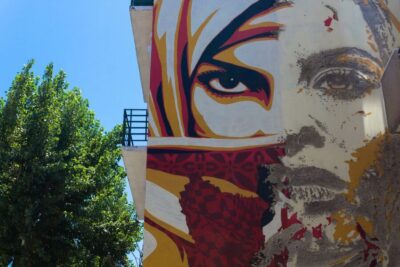
Browse the lists this tour appears in