
Reviewed · SURF LESSONS
Lisbon: Surf Experience at Costa da Caparica
Learning to surf in Lisbon is interesting because you start with fundamentals on the sand and then go right into the water where you can try standing up. This class runs from Costa da Caparica with the Portugal Surf School team, and instructors like Ari often coach brand-new surfers toward their first real wave.
I like two things most. First, you get hands-on instruction plus clear safety rules before you paddle out. Second, they handle the gear, so you can show up and learn without hunting down a board or wetsuit.
One consideration: there is no hotel pickup, so you’ll want to plan how you get to the meeting point in Costa da Caparica.
Key things that make this surf class worth your time
- Qualified instructors trained and certified by the Portuguese Surf Federation, with safety rules explained early.
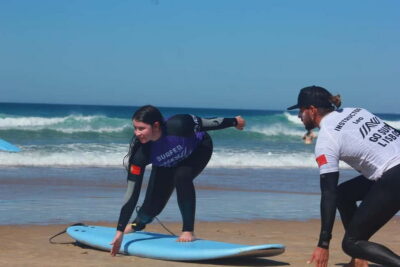
- Beach-to-water progression: warm-up on sand, then practice in a safe, shallow area.
- You learn the basics that matter fast: paddle technique, pop-up, balance, and board control.
- Equipment and insurance included: surfboard, wetsuit, and insurance are part of the experience.
- Real encouragement in the water: instructors give tips as you try your first waves.
Why Costa da Caparica works so well for first-timers
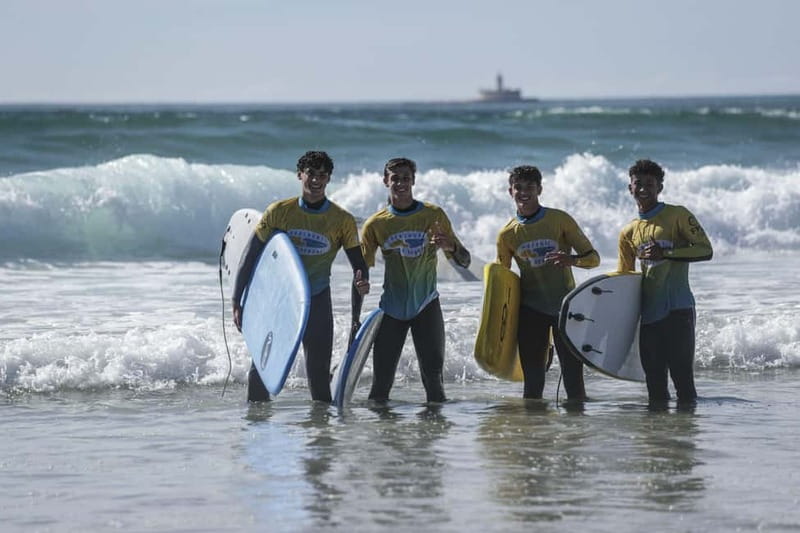
Costa da Caparica is one of the easiest places in the Lisbon area to try surfing without making it complicated. The beach setup is built for beginners, and that matters, because your first goal is not perfection. It’s staying safe, learning the body mechanics, and getting enough practice reps to build confidence.
I like the way this experience splits the learning into two clear stages. You get time to understand what to do, then you get time to actually do it. That rhythm keeps you from feeling overwhelmed.
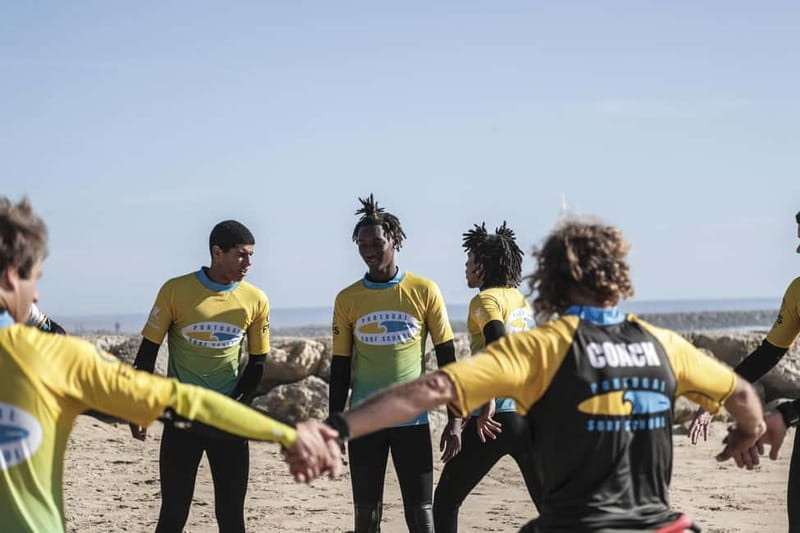
The overall vibe is also very “sport school,” not tourist show. You’ll be working with instructors right there at the shoreline, with guidance that’s meant for people who are brand new or still shaky on basics.
More surf lessons on this coast:
- Lisbon Surf Experience
★ 4.9 · 876 reviews - The Surf Instructor in Costa da Caparica
★ 5.0 · 403 reviews - Lisbon: 1.5-Hour Surf Lesson
★ 4.8 · 257 reviews
Portugal Surf School check-in, gear, and who you’re learning with
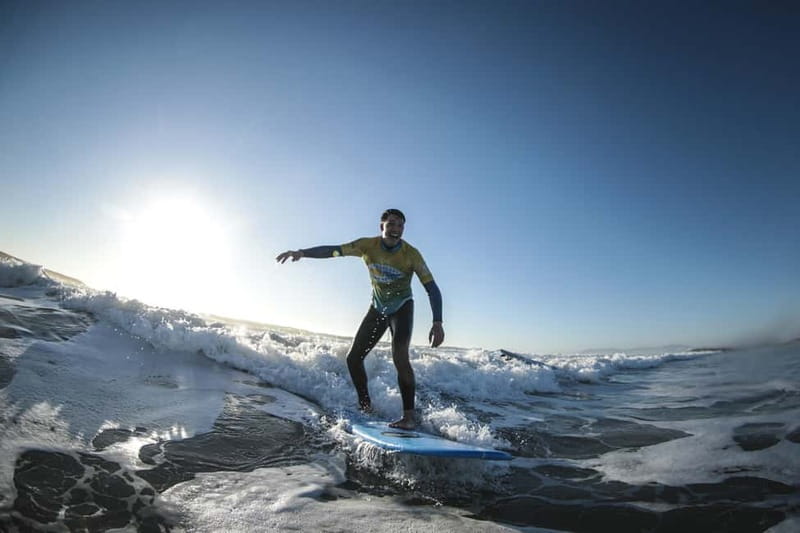
You meet at Portugal Surf School in Costa da Caparica. From there, the staff provides the core equipment you need, including a surfboard and a wetsuit, plus insurance coverage for the activity.
The big advantage here is that you’re not figuring things out alone. The instructor is qualified by the Portuguese Surf Federation, and that shows in the way they move you through fundamentals and safety rules before you spend time in the water.
You can also expect multiple language options: English, Portuguese, French, and Spanish. That makes a real difference when you’re learning something physical where small directions help a lot.
In past sessions, instructors have included people like Ari, Lucas, Lewis, Pedro, and Catarina. Different teachers bring different energy, but the common thread is clear explanations and encouragement that helps you keep trying.
What happens on the sand: warm-up and core surf skills
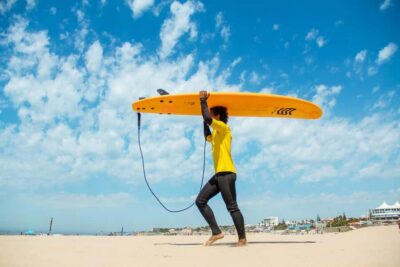
The lesson starts with a warm-up on the beach. This is not just stretching for fun. It’s where you practice the movements that decide whether you can paddle efficiently, pop up safely, and keep your balance once you’re on the board.
Here’s what you can expect to learn during this stage:
- Paddling so you can get into position instead of spinning your wheels
- Pop up (the transition from lying down to standing) with a focus on control
- Balance so your feet land in a stable stance, not a wobbly surprise
- Safety rules so you know how to behave in the surf zone
I like that they teach these basics before you’re out there in real wave conditions. If you’ve ever tried learning a sport only after getting into the hard part, you know how frustrating it can get. This lesson saves you from that.
You’ll also get time to get comfortable with the board itself. That sounds obvious, but it’s a huge deal. A surfboard that feels “wrong” in your hands or under your feet is exactly what slows down your first attempts.
The water part: shallow practice and first-wave confidence
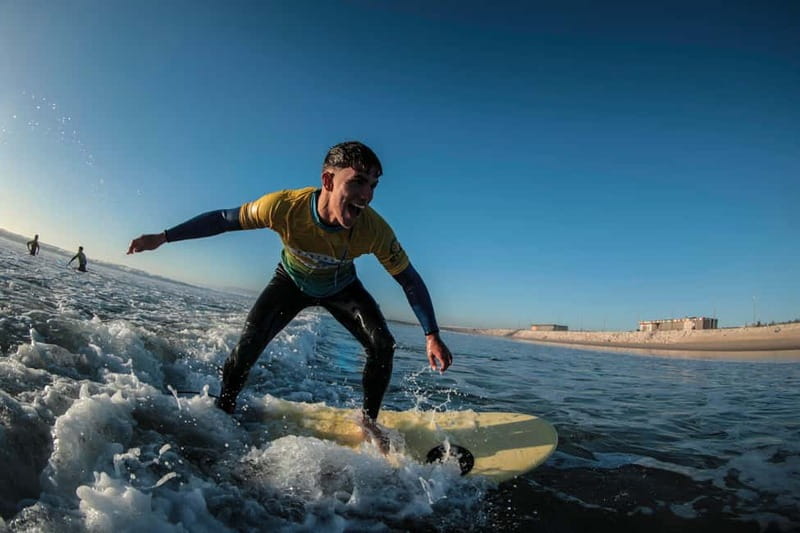
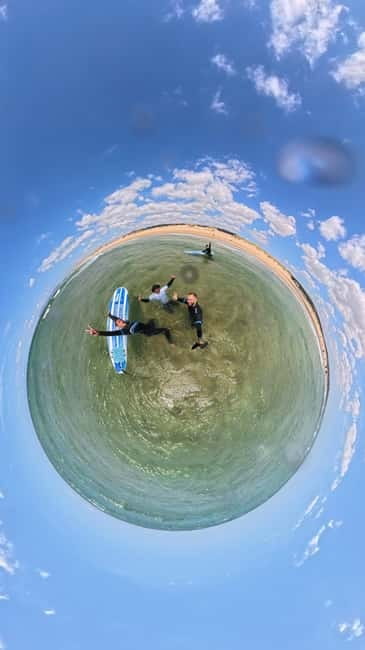
After the beach basics, you move into the water. Instructors stay close and guide you hands-on, especially during the part that scares most beginners: catching your first waves.
The good news is that the practice happens in a safe, shallow area. That doesn’t mean it feels easy, but it does mean the lesson is designed for early success. You’ll be able to try, wipe out, reset, and try again without the session turning into survival mode.
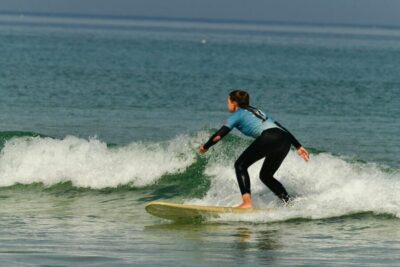
As you catch waves, your main job is to apply the sand lessons quickly. Paddle, then position. Pop up, then balance. And if it doesn’t work on the first try, you’ll get tips to fix the specific mistake, not vague motivation.
A detail I really appreciate is the “by your side” approach. You’re not left to guess. When you’re learning something new, feedback in the moment is how you turn chaos into progress.
Another side of Lisbon for the same trip:
- Lisbon City Center Tour – The Unmissable Lisbon
★ 5.0 · 22,234 reviews - Lisbon: Sintra, Pena, Regaleira, Cabo da Roca & Cascais
★ 4.7 · 19,656 reviews - Lisbon: Jerónimos Monastery Entrance Ticket
★ 4.1 · 14,164 reviews - Lisbon: History, Stories and Lifestyle Walking Tour
★ 4.8 · 10,902 reviews
How much you can improve in just 2 hours
This is a two-hour class, and that’s enough time to learn meaningful basics without pretending you’ll become a surfer by lunchtime. The goal is not mastery. The goal is to get you to the point where surfing becomes understandable and repeatable.
In a well-run beginner session, you should come away with a mental checklist:
- You know how to paddle to get into position.
- You know what a pop-up should feel like when your feet land right.
- You understand how to stay balanced and not panic when the board wobbles.
- You know the basic safety habits that keep you and others safer.
Many people leave feeling like they made a real jump in comfort. In one case, a first-timer was standing and catching waves within minutes. Even if your progress is slower, the session structure is built for you to get at least a taste of riding.
I also like that you get plenty of practice attempts. Surfing is skill plus repetition. This lesson gives you time for both.
Instructor energy and the group coaching style you’ll notice
One of the strongest themes here is supportive instruction. People mention teachers who explain clearly, stay attentive, and encourage you through mistakes without turning wipeouts into a bad mood.
You might hear specific coaching styles from different instructors. Ari is repeatedly praised for a good vibe and encouragement that keeps beginners from freezing. Lewis is highlighted as experienced and attentive. Pedro shows up in the feedback as caring and focused on helping individuals who are still unsure what to do next.
You’ll also see praise for teachers adjusting to the group. In smaller groups, it’s easier for instructors to correct technique after waves instead of doing only general advice. Even in a mixed beginner group, the instruction tends to focus on what each person needs in that moment.
If you’re the type who worries about looking silly, this is a good fit. Surfing includes falling. The coaching is designed around that reality.
Equipment and included extras that make the day easier
This lesson includes the essentials:
- surfboard
- wetsuit
- qualified surf instructor (Portuguese Surf Federation)
- insurance
The value of “gear included” is bigger than it sounds. In summer you might see people renting whatever is available and then trying to learn with gear that fits poorly. Here, you’re set up for the lesson so you can spend your energy on technique.
You’ll also want to bring a towel, since it’s listed as something you should bring yourself. After surfing, having a towel ready is one of those small things that makes the whole experience feel smoother.
One more practical point: some sessions mention having a space to change and rinse after you surf. Even if you don’t focus on this at first, it makes a post-water return to your day a lot less messy.
Price, value, and what $35 actually buys you
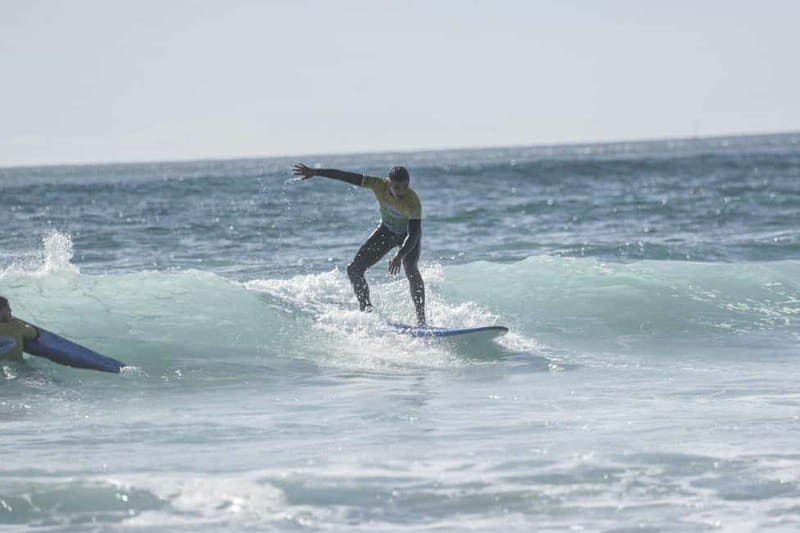
At $35 per person for a two-hour beginner lesson, the value depends on what you compare it to. If you try to learn without instruction, you’ll likely spend similar money on rentals and still leave without understanding technique or safety.
What you’re paying for here is structured coaching plus the gear and insurance. That combination is why this price can feel fair, even if $35 sounds small for a full activity day. You’re getting the core “learn to surf” package, not a half-effort demo.
The session also includes multiple languages, which is a quiet advantage. Clear instruction matters when you’re figuring out paddling and pop-up timing, and not every surf school has the staff to match your language.
If you’re traveling with limited time, two hours is also a good sweet spot. It fits into a beach day without taking over your whole schedule.
If your plans are flexible, you can also reserve with pay later and cancel up to 24 hours in advance for a full refund. That lowers the risk if the weather or surf conditions shift during your stay.
Logistics to plan: where to meet and what to bring
You meet at Portugal Surf School in Costa da Caparica. Since there is no hotel pickup, you’ll need to arrange your own way there and back.
That doesn’t make the activity difficult, but it does mean you should not build your day as if you’re being collected like a tour bus. Plan a buffer so you arrive with time to check in, get geared up, and start the warm-up without rushing.
What to bring is simple: a towel. If you’re bringing anything else, think comfort and convenience, like quick-dry clothing for later in the day. You’ll also want to arrive prepared to wear and remove wetsuit gear as part of the experience.
Age fit matters too. It’s not suitable for children under 4 years, and there’s guidance that it’s not for people over 95 years. If you’re near either age boundary, it’s worth thinking carefully about comfort in water and physical demands.
Who should book this surf lesson, and who should consider alternatives
This is ideal if you want your first surfing session to be structured and safe. If you’re a complete beginner, you’ll learn basics on sand first, then practice in shallow water with an instructor near you.
It’s also a good choice if you’ve tried surfing casually before and want a reset on technique. The teaching targets common beginner issues like paddle form and pop-up balance, so you’ll likely recognize what you were doing wrong.
If you’re an experienced surfer, this may feel more basic than you want. Your best bet is still a beginner-friendly course here, but for advanced technique goals, you might end up wanting something more specialized.
If you hate the idea of falling, decide ahead of time to treat wipeouts as part of learning. The vibe is encouraging, but surfing includes getting wet and tumbling. The coaching style is built around that.
Should you book Portugal Surf School in Costa da Caparica?
Yes, I’d book it if your priority is learning the fundamentals with qualified coaching and not wasting your first attempt. The lesson format makes sense: warm-up on sand, then shallow-water practice, with instructors positioned to help you catch waves and build confidence.
If you’re staying in Lisbon and can handle getting to Costa da Caparica on your own, this is a strong value at $35 for 2 hours. You’ll get the board, the wetsuit, safety guidance, and insurance, which turns the day into a real learning experience rather than a gamble.
Skip it only if the lack of pickup would make your day too stressful, or if you fall outside the stated age suitability. Otherwise, this is one of those “do it once while you’re here” activities that turns into a memory you’ll actually tell people about.
FAQ
How long is the Lisbon surf experience?
The session lasts 2 hours.
Where do I meet for the surf lesson?
You meet at Portugal Surf School in Costa da Caparica.
What’s included in the price?
The experience includes a surfboard, wetsuit, a surf instructor qualified by the Portuguese Surf Federation, and insurance.
What should I bring?
Bring a towel.
Are hotel pickup and drop-off included?
No. Hotel pickup and drop-off are not included.
What languages are the instructors able to teach in?
Instructors can teach in English, Portuguese, French, and Spanish.
Is this activity suitable for young children?
No, it is not suitable for children under 4 years old.
Newly reviewed in Lisbon
- Lisbon: Private Food Tour – 10 Tastings with Locals★ 4.8 · 73 reviews
- Lisbon: 2 hours Private City Highlights Tuk-Tuk Tour for two★ 5.0 · 5 reviews
- Lisbon: Private Custom Tour with a Local Guide★ 5.0 · 6 reviews
- Lisbon: City Sightseeing Tour★ 4.9 · 13 reviews
- Lisbon: Private Christmas Lights Tour by Eco Tuk Tuk★ 4.9 · 51 reviews
- Lisbon: Private Catamaran Charter for up to 18-People★ 5.0 · 7 reviews
- Lisbon: Private Boutique Boat Tour – Sail in Style★ 5.0 · 87 reviews
- Lisbon: Private Boat Trip, Guided Walking Tour, Bike & Tram★ 4.8 · 116 reviews
Surf Lessons, compared.
Peniche:Surf lessons Beginners ,Intermediate, advance level
Read our review →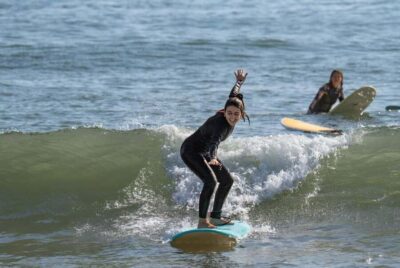
The Surf Instructor – surf lessons with transfer
Read our review →Browse the lists this tour appears in