
Reviewed · TOURS
Roman Lisbon Tour
Lisbon is one of Europe’s oldest cities, and this tour turns that age into something you can actually see, right on the street. You start with big views, then move from Roman sites above ground to archaeology under the city, where you can picture everyday life in Roman Lisbon.
I particularly like how the tour connects the Roman story to Lisbon’s modern center, so it feels like a real timeline instead of a checklist. I also like the variety of stops, from the Roman Theater to the underground garum factories, because you get both culture and daily business.
One possible drawback: it’s a compact 3 hours, and the sites involve moving around on foot, so you’ll want comfortable shoes and the energy to keep pace.
Key Highlights You Should Care About

- Portas do Sol viewpoint sets the Roman-era context before you touch the ruins
- Roman Theater inside a capital city gives you a rare kind of setting
- Lisbon Cathedral cloister reveals Roman street traces in a place most people pass quickly
- Roman bath and Temple of Cibele show Lisbon’s religious and social side
- Casa dos Bicos area adds extra archaeology like a Roman wall section and Roman-era factories
- Underground visit brings you close to upper-class houses, streets, garum factories, swimming pools, and artifacts
Portas do Sol to Start, Roman Lisbon to Follow

The tour opens with a viewpoint at Portas do Sol, one of the best ways to get your bearings fast. From here, Lisbon stops looking like a postcard and starts looking like a city built in layers, which is exactly what you’ll be chasing for the next few hours.
This first stop matters because it gives you a mental map before you get technical. When you later see Roman structures in surprising places, you’ll understand why they were positioned where they were, and how Lisbon’s importance helped them last.
It’s also a nice buffer. You’re not immediately in a tunnel of ruins. You get a quick orientation, then you transition to the more focused archaeology.
Keep exploring Lisbon — readers rate these highly:
- Lisbon City Center Tour – The Unmissable Lisbon
★ 5.0 · 22,234 reviews - Lisbon: Sintra, Pena, Regaleira, Cabo da Roca & Cascais
★ 4.7 · 19,656 reviews - Lisbon: Jerónimos Monastery Entrance Ticket
★ 4.1 · 14,164 reviews
Seeing the Roman Theater Where It Still Lives
Next up is the Roman Theater, and it’s a big deal because it’s still within the walls of a European capital. Even if you’ve visited plenty of Roman sites, you probably haven’t spent much time staring at a theater that’s basically part of a living modern city.
Here’s what I’d pay attention to: how the space feels when you imagine Roman crowds in a working city. The theater isn’t just a piece of stone, it’s a reminder that Lisbon held public culture, not only trade.
You also have an advantage because your visit includes entrance to the theater. That saves time and keeps the tour from turning into a logistics game while you’re trying to enjoy the details.
Lisbon Cathedral Cloister: Roman Streets Under the Cloister Walls

After the theater, you head to the Lisbon Cathedral cloister, where you can find parts of Roman streets. This is one of those moments that makes the city feel almost unfair, in a good way. You’re inside a famous religious space, but the ground beneath the cloister carries Roman traces.
What I love about this stop is how it changes your perception of Lisbon. Instead of thinking of history as a museum display behind glass, you start noticing how old routes, old buildings, and old infrastructure got reused or built over.
And because this part is included as an entry stop, you’re not hunting for the right corner or timing your own access. Your guide keeps the flow, so you can concentrate on what you’re looking at.
Baths and the Temple of Cibele: Daily Life Meets Belief
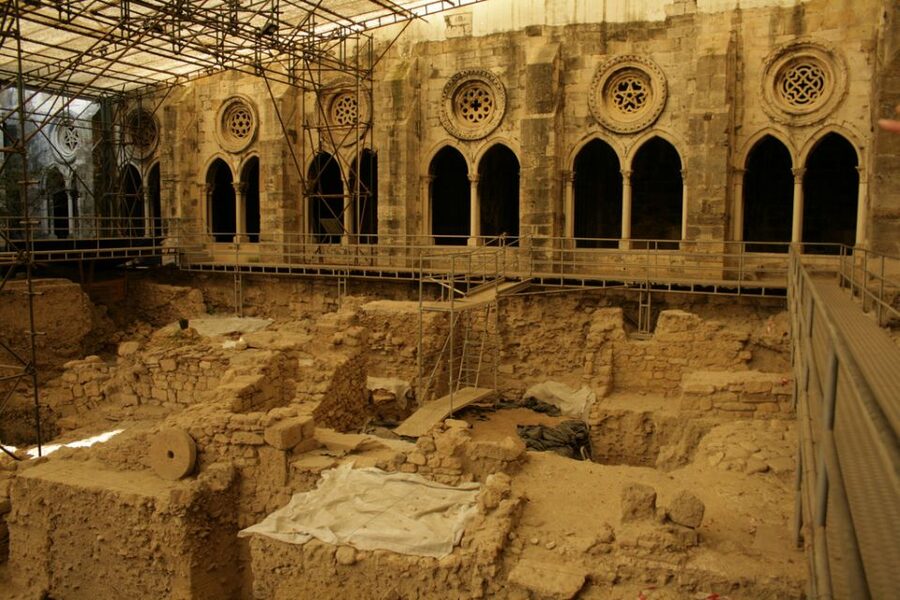
Then the tour shifts to two key Roman themes: public spaces and religious power. You’ll pass the Roman bath and the Temple of Cibele, which helps you understand that Roman life in Lisbon wasn’t only commerce and shipping.
Roman baths were social spaces. They also worked as a kind of public routine, where people gathered, cleaned up, and talked. When you see the bath archaeology, try to think about who used it and what that says about daily comfort and status.
The Temple of Cibele adds the religious layer. Cibele is tied to Roman-era worship, and seeing the site while you’re walking the city helps you connect belief to architecture. Lisbon wasn’t just a stop on a trade route. It was a place where people lived their rituals and communities too.
Another side of Lisbon for the same trip:
- Lisbon: History, Stories and Lifestyle Walking Tour
★ 4.8 · 10,902 reviews - Lisbon: Sunset Boat Party Cruise with DJ and Open Bar
★ 4.5 · 10,378 reviews - Lisbon: Pena Palace, Sintra, Cabo da Roca, & Cascais Daytrip
★ 4.7 · 9,981 reviews - Lisbon: Oceanário de Lisboa Entrance Ticket
★ 4.6 · 9,943 reviews
Casa dos Bicos and the Roman Wall, Extra Clues for the Archaeology Nerds
For more context, you’ll visit Casa dos Bicos, where you can see additional Roman archaeology, including part of a Roman Wall and Roman factories. This is the stop that gives you more of the “how did this city make a living?” angle.
Roman factories and wall traces help explain why Lisbon mattered during the Roman Empire. Trade and industry needed infrastructure. Walls protected it. Factories turned resources into products that could travel and profit.
Even if you’re not an archaeology fanatic, this is where the story becomes practical. You start to see Roman Lisbon as an organized system, not just scattered monuments.
Down in the Underground: Upper-Class Houses, Garum, and Pools
One of the tour’s standout experiences is the time spent in the underground of Lisbon. Here, archaeology isn’t presented at a distance. You move through structures and spaces where you can picture everyday routines in a Roman city.
You’ll encounter upper classes houses, streets, and a “garum” factory setup, plus swimming pools and other artifacts. That last set is important because it expands what you think a Roman city includes. It wasn’t only temples and theaters. It had production, storage, housing variety, and recreational habits.
Garum is especially memorable. If you’ve never thought about Roman food as an industry, this is the moment to connect the dots. Seeing garum factories gives you a direct link between Lisbon’s trading role and the products the Romans made and circulated.
The swimming pools and house areas also help you understand the social split. You can sense that status affected space, layout, and amenities.
What the Guide Does That Makes This Worth It
A history-trained guide changes everything on a Roman tour. This one is managed by a guide graduated in history, and it shows in how the stops connect. Instead of treating each site like a separate postcard, the guide ties it back to how Lisbon worked during the Roman era.
You’ll also benefit from the guide adapting to language needs, because the tour runs with live interpretation in Spanish, English, French, and Portuguese. That matters when you want to understand details, not just catch headlines.
The guides associated with this experience are repeatedly praised for being prepared and personable, including named guides like Ingo, Paulo, and Sandra. What you should take from that, even if you get a different guide, is the expectation of solid explanations that connect Portuguese time periods rather than keeping the story locked in one century.
If you like your tours conversational and structured, this format fits well. You get guided walking plus site-based attention, so you’re not guessing what’s important when you reach the ruins.
Meeting Point and Moving Comfortably in 3 Hours

This tour lasts 3 hours, and it runs as a private group, which usually means less time waiting and fewer awkward pauses. That matters because the itinerary is built to keep momentum, from viewpoint to theater to cloister to underground spaces.
Your meeting point is next to the entrance of the Arts Decorativas Portuguesas Museum. If you use your phone map, zoom in enough to find the museum entrance clearly. Showing up a few minutes early helps because Roman sites in city centers often have tight pedestrian areas.
What to bring is simple but important: passport or ID card and comfortable shoes. The shoes part is not optional advice. You’ll be walking between locations and spending time looking closely at archaeological spaces.
Also note the rules: no alcohol and no drugs. If you like carrying snacks, check if you can eat before or after the tour, since the experience itself does not include a meal.
Price and Value: Is $88 a Fair Deal?
At $88 per person for a 3-hour guided experience, the key value question is what you get beyond narration. Here, you’re paying for a guided history-led route plus entrance to the Roman Theater, the cathedral cloister, and other archaeological sites.
That matters because entrances can add up quickly in a city like Lisbon. When you roll those access costs into one price, the tour feels more straightforward and less stressful.
You should also consider the content density. This tour hits multiple Roman themes in a short window, including public culture (the theater), urban traces (cloister Roman streets), civic life (baths), religion (Temple of Cibele), and industry plus daily living (garum factories and underground spaces).
The tour does not include meals or drinks, so budget a snack or plan a proper meal after. If you go in expecting an all-day food and history marathon, it’ll feel too short. If you want a focused Roman highlights hit, the price-to-time ratio makes sense.
Who This Roman Lisbon Tour Fits Best
This is a strong match for people who want Roman Lisbon to feel tangible. If you like your history grounded in physical places, you’ll appreciate seeing Roman streets traces inside the cathedral cloister and the way underground areas bring the city’s past to street level.
It’s also a good fit if you already know Lisbon a little and want to go deeper without getting lost. You’ll see major sites you might miss if you’re only following top-viewpoints or a typical walking loop.
Families can enjoy it too, especially if a child is Roman-history curious. The experience is structured and guided, which helps keep attention on what matters at each stop.
If you only want outdoor ruins and wide-open views, the underground portion might take some getting used to. But it’s brief enough to still feel like part of the main story, not a separate excursion.
Should You Book This Tour?
I’d book this Roman Lisbon Tour if you want a guided route that turns Lisbon’s Roman layer into a connected story, not separate stops. The combination of major Roman sites, included entrances, and the underground archaeology gives you value for a compact 3 hours.
You should think twice if you prefer a slower pace with lots of free time, because this itinerary is designed to keep moving. And if you hate walking between city center points, make sure your shoes are truly comfortable.
For most visitors who want Roman Lisbon without the guesswork, this is an efficient, high-impact choice.
FAQ
Where does the tour meet?
It meets next to the entrance of the Arts Decorativas Portuguesas Museum.
How long is the Roman Lisbon Tour?
The tour lasts 3 hours.
What is included in the ticket price?
The tour includes a guided tour managed by a history-trained guide and entrance to the Roman Theater, the cathedral cloister, and other archaeological sites.
What languages are offered?
Live tour guide interpretation is available in Spanish, English, French, and Portuguese.
What should I bring?
Bring a passport or ID card and wear comfortable shoes.
Are meals or drinks included?
No. Meals and drinks are not included.
Is there free cancellation?
Yes, free cancellation is available up to 24 hours in advance for a full refund.
Newly reviewed in Lisbon
- Lisbon Hills secrets, soul and insights all in 1 TukTuk ride★ 5.0 · 55 reviews
- 4-hour Tuk Tuk Tour of Belém, City Center, and Lisbon’s Old Town★ 5.0 · 7 reviews
- 4 Hours Private Sailing Trip to Oeiras Beach★ 5.0 · 52 reviews
- Private tour Portugal 4 days from Lisbon★ 4.5 · 3 reviews
- Nazare,Obidos, and Batalha Monastery Private Tour★ 5.0 · 3 reviews
- 4 Hours Private Tuk Tuk Tour in Lisbon★ 5.0 · 15 reviews
- 3 Hours Private Tour of Lisbon’s Historic Center by Tuk Tuk★ 5.0 · 17 reviews
- 4-Day South Portugal Tour from Lisbon: Lagos, Algarve Coast, Sagres, Évora, Beja and Setúbal★ 3.5 · 8 reviews
Tours, compared.
Lisbon City Center Tour – The Unmissable Lisbon
Read our review →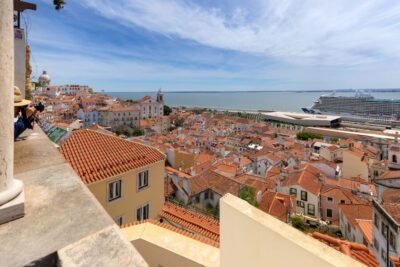

True 4Hour Private Tuk Tuk Tour: Discover Lisbon with a Local!
Read our review →
Winner 2025 Undiscovered Lisbon Food & Wine Tour by Eating Europe
Read our review →
Sintra, Pena, Cabo da Roca, Cascais Tour with Pickup
Read our review →

Best of Lisbon Small-Group Guided Walking Tour
Read our review →