
Reviewed · TUK TUK TOURS
Tour TukTuk 3 hours Lisbon Free Pick-up
This 3 hour Lisbon tuktuk loop is interesting because it gets you from hilltop viewpoints to iconic neighborhoods without making you do the full stair workout. I love how it strings together major sights in a tight time window, and I also love the viewpoint-first pacing that helps you get your bearings fast. The only possible drawback is that monument entrance tickets are not included for several stops, so bring a little extra cash or be ready to skip inside access.
For a smooth ride, the tour uses private transportation and you get an English-speaking guide with a mobile ticket. Guides such as Rodrigo and Miguel are specifically praised for being energetic, history-minded, and great drivers, so you are not just being chauffeured. Plan for short stops, not long museum time, and you will get the most value out of this format.
Key things that make this Lisbon tuktuk tour worth it
- Private tuktuk, only your group: No waiting for strangers, and the guide can steer the pace.
- Viewpoint heavy route: Miradouro das Portas do Sol, Miradouro da Graca, Senhora do Monte, and Sao Pedro de Alcantara keep the scenic payoff high.
- Major landmarks plus real neighborhood flavor: Alfama, Chafariz de Dentro, Chiado, Bairro Alto, and Praca do Comercio show different sides of Lisbon.
- Fado and football in the same place: Panteao Nacional is framed around Amalia and Eusébio, so it is not a stuffy history stop.
- Some entries are on you: Lisbon Cathedral, Miradouro da Graca, Church of Saint Vincent de Fora, and Panteao Nacional are marked as not included.
- Flexibility when the weather changes: The company has handled rescheduling for bad weather, which matters in Lisbon.
Why a 3 hour Lisbon tuktuk tour is a smart first-day plan
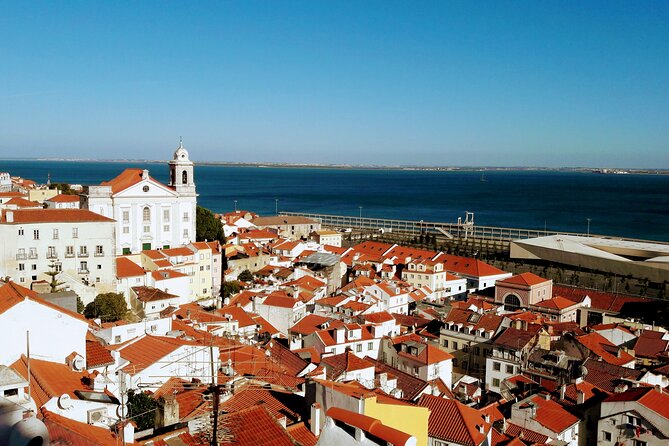
Lisbon is built on hills, and most self-guided plans quietly assume you will walk uphill at least twice. This tour is a practical alternative. In about three hours, you cover a big slice of the city using private tuktuk transport, then you walk only in short bursts to enjoy each spot.
I like the format because it is not a maze of tiny logistics. You have a single meeting point, a single route rhythm, and a guide who can explain what you are looking at while you are actually there. That helps a lot if it is your first time in town and you want to stop guessing.
You also get a “top hits” mix. You will hit viewpoints, churches, and public squares, then slide into neighborhood textures like Alfama and Chiado. If your feet are tired, this is one of the better ways to still see Lisbon’s defining angles.
More tuk tuk rides through Lisbon:
- True 4Hour Private Tuk Tuk Tour: Discover Lisbon with a Local!
★ 5.0 · 8,008 reviews - Lisbon: Private Guided Tuk-Tuk Tour with Hotel Pickup
★ 4.9 · 4,552 reviews - Private Lisbon Sightseeing Tuk-Tuk Tour: Alfama, Belém & More
★ 5.0 · 4,277 reviews
Where you start at Rua do Comercio, and how the ride moves
The tour begins at Rua do Comercio, 1100 Lisboa, Portugal. The activity ends back at the same place, so you are not left figuring out a return trip after the last viewpoint.
Even if you do not memorize the whole order, the flow makes sense. You start in the downtown, river-facing core near Praca do Comercio, then you work your way toward higher ground for the big views. After the hilltop moments, the route steps through central neighborhoods, then back down toward the river area again.
This matters because Lisbon is not just sightseeing. It is also navigation. When you let the route do the heavy lifting, you can focus on the photos, the street scenes, and the one or two questions you want answered by your guide.
Lisbon Cathedral: a quick look at the city’s oldest church in practice
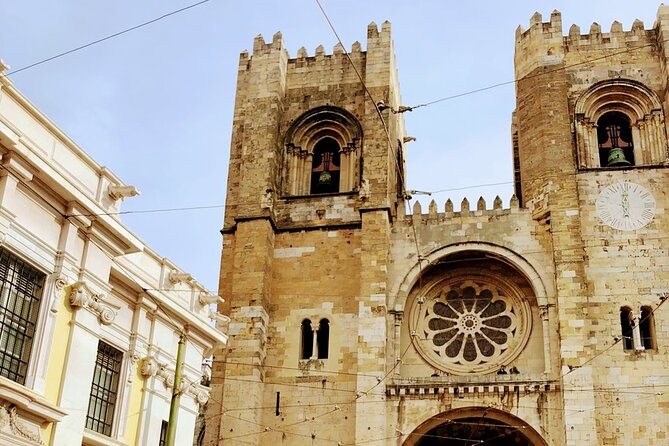
At Lisbon Cathedral, the emphasis is on context, not rushing a deep interior visit. The current cathedral began in 1147, after Lisbon was captured from the Moors, and it is considered the oldest church in the present-day Portuguese capital.
Your stop here is about 15 minutes, and the important detail is that admission tickets are not included. So you are best off treating this as a “see and understand” stop. Even if you do not go in, you still get to ground the story of Lisbon in one visible anchor.
Practical tip: because the stop is short, ask the guide what to notice most from outside, like the architecture cues that match the period described. You will learn more in those moments than you would trying to read signage while the tuk tuk is waiting.
Miradouro das Portas do Sol: river views with Moorish details
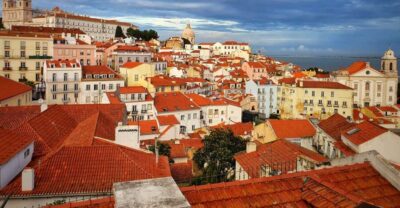
Next comes Miradouro das Portas do Sol, a classic viewpoint for a reason. The name links to an older Moorish sun doorway idea, and the area also ties into Lisbon’s Cerca Velha wall (an old wall system around the historic core). The information you get also includes the impact of the 1755 earthquake, which shaped what stands where today.
This stop is about 10 minutes, and admission is listed as free. That is good value because you can stand, frame the river, and take in the layered city without thinking about tickets.
If you want the most out of it, do a quick “pan and zoom” routine. First, look wide to understand where the river and main neighborhoods are. Then, rotate for smaller cues, like the direction of rooftops and how the old wall area sits relative to the modern streets.
Another side of Lisbon for the same trip:
- Lisbon City Center Tour – The Unmissable Lisbon
★ 5.0 · 22,234 reviews - Lisbon: Sintra, Pena, Regaleira, Cabo da Roca & Cascais
★ 4.7 · 19,656 reviews - Lisbon: Jerónimos Monastery Entrance Ticket
★ 4.1 · 14,164 reviews - Lisbon: History, Stories and Lifestyle Walking Tour
★ 4.8 · 10,902 reviews
Miradouro da Graca and the Convent of Grace area, plus Vila Berta
Miradouro da Graca sits next to the Convent of Grace, and the tour puts special attention on the tile panels you can see in that zone. The viewpoint is also tied to the story of religious orders, including the Augustinian tradition, and it references the medieval siege context around 1147, when D. Afonso Henriques camped nearby.
This stop is around 15 minutes, and admission is marked as not included. Translation: plan on viewpoint time and exterior context, not a ticketed museum-style visit.
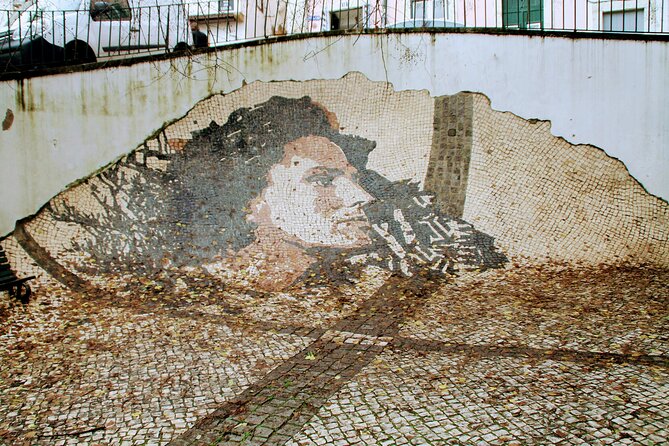
Then the route extends into Vila Berta, described as part of Lisbon’s industrial heritage. You get material details like iron and stamped tiles, plus the idea that these worker towns were built for factory laborers during the industrial period. The name and framing matter here because it shifts you from “Lisbon the postcard” to “Lisbon the working city.”
If you like Lisbon when it feels lived-in, you will appreciate this stop more than another generic viewpoint. It explains why certain buildings and materials show up where they do.
Senhora do Monte viewpoint: panoramic Lisbon and the hermitage chair legend
At Miradouro da Senhora do Monte, the views are described in full range. You can see Palha Sea, Saint George Castle, parts of downtown, the Tagus estuary, and stretches from Bairro Alto across toward Monsanto Forest Park, plus the valley around Avenida Almirante Reis.
You also have an anchor stop right beside the viewpoint: the small ancient Hermitage of Our Lady of Mount. The guide’s context includes details about its foundation in 1147, the consecration, and tradition tying it to Saint Gens. There is also a legend about a stone chair connected to childbirth, including mention of D. Maria Ana from Austria, wife of D. João V, visiting during a pregnancy.
This stop is 15 minutes and marked as free. The value here is the combination of big sky views and a very human story layer, not just geography.
Practical consideration: the viewpoint area is still a public outdoor spot. If you are visiting on a hot day or windy evening, pack accordingly for standing time. Also, keep your eye on where you are stepping, since viewpoint edges are not always flat.
Church of Saint Vincent de Fora: architectural clues and the Bragança tomb link
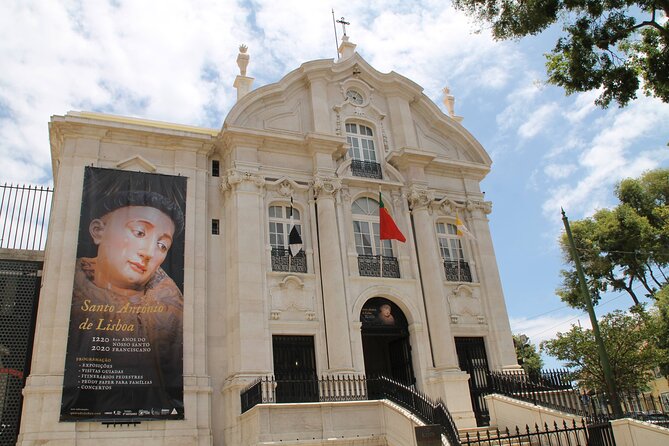
The tour includes Church of St. Vincent de Fora, but the plan is to visit from outside. Construction began in 1582, and the explanation connects it back to the older Lisbon temple story and the Saint Vincent patron theme.
The architectural mix is part of the guided narrative, with traces of Mannerism, Gothic, and Baroque. And there is a big naming hook: the Pantheon of the Dukes of Bragança, where Portuguese kings from the Bragança dynasty are buried.
Admission is marked as not included, and the stop is about 10 minutes. So again, think quick orientation. You are using the guide to learn what you are looking at, not trying to see everything inside in a short window.
If you are the type who likes “why is this here” answers, you will enjoy this. If you want long interior time, you may prefer adding separate paid visits on top of this tour.
Saint Clara market and the different fair days in Campo de Santa Clara
Between sightseeing blocks, the route points you toward Saint Clara market and the fair tradition in Campo de Santa Clara. The market dates to the second half of the 19th century. Around it, there are craft shops, and there are regular fair days linked to older traditions.
The details given include:
- A thief fair with roots in the 13th century on Tuesdays and Thursdays
- A fair in Campo de Santa Clara on Mondays and Thursdays selling old things, second-hand objects, and handicrafts
Because your time at this part is not framed as a ticketed experience, it is best used as a stroll and a chance to pick up small items or just watch local commerce in motion.
If you want to shop, ask your guide what is realistic in your remaining time. This is the one part of the tour where being efficient beats wandering without a plan.
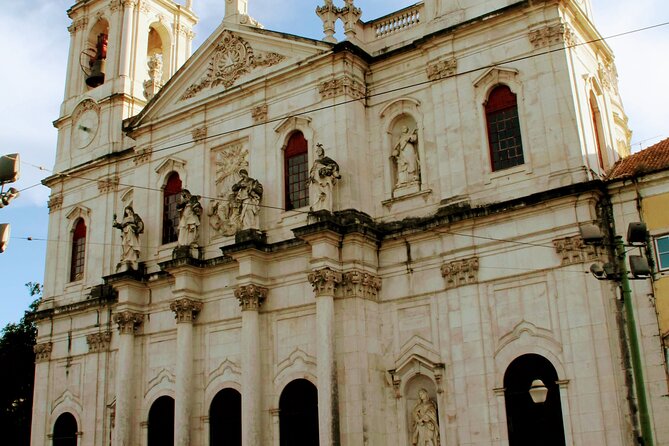
Panteao Nacional: Amalia and Eusébio, inside the long-finished Church of Santa Engrácia
Panteao Nacional is where the tour makes a strong cultural point. The pantheon is intended to honor citizens for services to the country, and the graves listed here include Amália (the fado diva) and Eusébio (the football player).
The bigger architectural story is also delivered. The pantheon is located in the Church of Santa Engrácia, and the construction started in 1682 and finished only in 1966. The long timeline, plus the church’s associated stories, gives you more to hang on to than a simple monument stop.
This is a longer stop at about 30 minutes, but admission tickets are marked as not included. So if you want the full benefit, budget time and money for entry.
This is one of those stops where you will come away feeling Lisbon’s identity through names you actually recognize, not just dates. It is a neat pairing of music and sports in one place.
Alfama and Chafariz de Dentro: Moorish water, hot baths, and fountain politics
The tour then swings into Alfama, Lisbon’s oldest neighborhood and one of its most typical. The name is explained through Arabic roots, with a connection to fountains or hot water baths. The guided context frames Alfama as a thermal area people visited for health, with spring temperatures ranging from a minimum of 20ºC up to a maximum of 34ºC.
Next is Chafariz de Dentro, one of Lisbon’s fountains that supplied the city. The narrative gets specific with dates and even consequences of conflict:
- The oldest record is given as 1285, as the Fountain of Horses
- In 1373, the Castilians took bronze heads during the sack of Lisbon
- Later, from the 17th century onward, it was known as Inside Fountain, linked to its position relative to the Fernandina fence
The tour also notes a stronger “how water worked” angle. It describes the fountain as the first public fountain in Lisbon built in the 13th century, and it ties water supply outside the Moor fence with dates like 1487.
Then comes a fascinating social detail: it says there were multiple waterspouts for different social groups, and it lists how taps were regulated for various categories in 1517, plus additions later in the 19th century.
If you like Lisbon’s practical history, this block is a standout. It turns a fountain you might otherwise ignore into a window on daily life and power.
House of Nozzles (Brás de Albuquerque) and Saramago’s Lisbon
Along the Alfama fountain theme, the route includes House of Nozzles, also called the museum building associated with José Saramago. The tour frames what you can notice:
- Roman-era salt tanks on the first-floor area near the entrance
- A medieval tower
- Mudejar pavement
- A 1523 build date at the behest of D. Brás de Albuquerque
- A facade covered in diamond-shaped stone, described as beaks with Italian Renaissance influence
This is not just a stop for architecture lovers. It is also a quick way to learn that Lisbon layers eras in the same square of street. You get Roman, medieval, and Renaissance hints in one facade story.
Because your time is short here, focus on what you can actually see from the outside, then let the guide connect the dots between the design and the era.
Nossa Senhora da Conceição Velha: Manueline roots and the 1755 reconstruction
The next church stop is Igreja de Nossa Senhora da Conceição Velha. The guided explanation ties it to the 1755 earthquake and the rebuilding that created a mix of architectural styles.
The story includes that the first church on the site was Church of Our Lady of Mercy, described as the second largest Manueline temple in Lisbon after the Jerónimos Monastery in Belém.
The time is very short here, about 5 minutes, and admission is listed as free. So think of this as another “anchor and context” stop, not a slow religious visit.
If you are trying to understand Lisbon’s timeline quickly, these church stops are useful. You start seeing how each major rebuilding event reshapes what you see today.
Praca do Comercio, Martinho da Arcada, and the river-facing Lisbon you remember
Then you land at Praca do Comercio, one of Europe’s largest squares and the site of the Portuguese royal palace for around two centuries. The tour also calls out landmarks you can recognize fast:
- Martinho da Arcada café as the famous stop inside the square
- The Triumphal Arch on the north side along Rua Augusta
- The marble steps of Cais das Colunas, associated with formal arrivals and prominent figures
The guide’s context includes examples like Isabel II of England and Gungunhana, described as the last emperor of Gaza in the territory that is now Mozambique. Even if you are not studying a timeline, it shows how this riverfront spot was Lisbon’s public face to the world.
This stop is about 15 minutes, free to visit. After viewpoints, this part helps you rest your eyes and re-anchor your map.
Cais do Sodré, Pink Street, and Chiado: when the tour shifts from monuments to mood
From Praca do Comercio, the route takes you into the energy zones:
- Cais do Sodré, next to the river, linked to nightlife and gastronomy. The old Ribeira Market opened in the 19th century, and the area is now associated with Time Out.
- Pink Street, described as a nightlife center, and noted as having been listed by The New York Times among its 12 favorite streets in Europe.
- Chiado, framed as emblematic and more bohemian, tied to writers and artists, with iconic cafes like Brasileira and a statue of Fernando Pessoa. It also mentions Largo Luis de Camões.
These stops are mostly about passing context and quick orientation, not long hangs. Still, it is valuable because it balances the “big stone” Lisbon with the Lisbon you feel when you walk into an actual street scene.
Igreja de Sao Roque: Jesuit survival story and the Saint John the Baptist chapel
Next you get to Igreja de Sao Roque, built at the end of the 16th century and described as one of the first Jesuit churches in the world, with the note that it survived the 1755 earthquake unscathed.
The guided story adds religious and social layers, including the idea that an early hermitage and pilgrimage growth happened after 1506. It also mentions chapels, mainly Baroque style, and highlights a standout chapel with Saint John the Baptist, described as a masterpiece of Italian art and unique in the world.
This stop lasts about 15 minutes, free of ticket admission.
If you are wondering why Lisbon is so full of churches, this is one answer. Even when the stop is short, the guide links architecture to religious power and to events like the earthquake, so you can place each church in the larger Lisbon story.
Miradouro Sao Pedro de Alcantara and the convent chapel that stayed untouched
A major viewpoint comes next: Miradouro Sao Pedro de Alcantara. You get east-facing views over part of downtown, and admission is free. The stop is about 10 minutes, so you will want to move quickly from one angle to the next to catch the best framing.
Right beside the viewpoint, there is also Convent of Saint Peter from Alcântara. The tour notes it was founded in the 17th century, in 1670, by D. António Luís de Menezes, 1st Marquis of Marialva. A key detail is the funerary chapel of Cardinal D. Veríssimo de Lencastre, said to have remained untouched after the earthquake.
This stop adds value because it connects the viewpoint to a specific survivor story, not just a scenic pause.
Bairro Alto, Carmo Convent, and the fountain that replaced an older one
Finally, the route circles through classic central street areas:
- Bairro Alto, described as old and picturesque with narrow cobbled streets and centuries-old houses. The tour frames it as Lisbon’s best-known nightlife area from the 1980s, with bars, restaurants, and fado clubs.
- Carmo Convent of Lisbon, founded in 1389 by Nuno Álvares Pereira, with the note that some walls remained after the 1755 earthquake and were not rebuilt to change the appearance at that moment.
- The Pombalino do Carmo Fountain right in front, said to have replaced an existing fountain at the same location in 1786.
These are short stops, and the best way to enjoy them is to let the guide connect the dots between street design, the earthquake impact, and why nightlife clusters here.
Because Lisbon neighborhoods can feel similar when you rush, even a quick explanation keeps you from losing the plot.
Price and what you really get for $48.12 per person
At $48.12 per person for about three hours, this is priced like a focused “see a lot, walk a little” Lisbon hit. You are paying for the private transportation and for guided interpretation that fits the time.
The trade-off is also clear: entrances are not included for several notable sites like Lisbon Cathedral, Miradouro da Graca, Church of Saint Vincent de Fora, and Panteao Nacional. So the real total cost depends on how many interiors you choose to enter.
If your goal is a rapid, high-quality orientation and you are fine with short stops, it is strong value. If your goal is sitting inside museums for long stretches, you may find it better to pair this with separate ticketed time on other days.
Who should book this Lisbon tuktuk tour, and who might want something else
This tour fits well if:
- You want a first-time Lisbon sampler with viewpoints and key neighborhoods
- You do not want to hike up and down hill after hill for a self-guided day
- You prefer a guided pace, with explanations while you roll past key landmarks
- Your group would enjoy a private, only-your-party ride
It may not be a match if:
- You want lots of time inside monuments or churches
- Your group includes kids under 7 (not allowed)
- You travel with large suitcases (not allowed on board)
- You want a slow food and shopping day, since several stops are intentionally brief
Also, the tour explicitly does not allow smoking or alcohol on board, which is worth keeping in mind if you are tempted to treat a tuk tuk like a mobile party.
Tips to make the most of your short stops
A 3 hour tour rewards preparation. Bring comfortable shoes anyway, because you will walk a bit at each stop. Also:
- Bring a small amount of cash or a payment method for monument entry where tickets are not included.
- Have your camera ready for viewpoints, especially at Portas do Sol and Senhora do Monte.
- Use the guide time wisely. Pick one or two questions about Lisbon’s past, like how the 1755 earthquake shaped what you see now.
- If weather is rough, be ready to reschedule, since guides and the company have shown flexibility when conditions change.
If you do this, you end the day with more than photos. You get mental anchors, names, and reasons for what you saw.
Should you book this Lisbon tuktuk tour?
I would book it if you want a smart, guided introduction that mixes viewpoints, old neighborhoods, and major landmarks without exhausting your legs. The private tuktuk format, short walking bursts, and guide-focused storytelling make it a good fit for most first-time visitors.
Skip booking or plan a different add-on if you are hoping for long museum time inside every major building. This tour is built for getting around and understanding, not for staying put for hours.
If you land on the right day for weather, this is one of the easiest ways to see Lisbon in a single afternoon, and you will feel confident about where to go next.
FAQ
How long is the Lisbon TukTuk tour?
It runs for about 3 hours.
What is the price per person?
The price is listed as $48.12 per person.
Is the tour in English?
Yes, it is offered in English.
Where does the tour start and end?
It starts at Rua do Comércio, 1100 Lisboa, Portugal, and ends back at the meeting point.
Are monument entrance tickets included?
No. Entrances to monuments are not included.
Is this a private tour?
Yes. It is a private tour/activity, and only your group participates.
Are children allowed on the tour?
No, children under the age of 7 are not allowed.
What if the weather is bad or you need to cancel?
The experience requires good weather. If it is canceled due to poor weather, you will be offered a different date or a full refund. You can also cancel for free up to 24 hours in advance for a full refund.
Newly reviewed in Lisbon
- Lisbon Hills secrets, soul and insights all in 1 TukTuk ride★ 5.0 · 55 reviews
- 4-hour Tuk Tuk Tour of Belém, City Center, and Lisbon’s Old Town★ 5.0 · 7 reviews
- 4 Hours Private Sailing Trip to Oeiras Beach★ 5.0 · 52 reviews
- Private tour Portugal 4 days from Lisbon★ 4.5 · 3 reviews
- Nazare,Obidos, and Batalha Monastery Private Tour★ 5.0 · 3 reviews
- 4 Hours Private Tuk Tuk Tour in Lisbon★ 5.0 · 15 reviews
- 3 Hours Private Tour of Lisbon’s Historic Center by Tuk Tuk★ 5.0 · 17 reviews
- 4-Day South Portugal Tour from Lisbon: Lagos, Algarve Coast, Sagres, Évora, Beja and Setúbal★ 3.5 · 8 reviews
Tuk Tuk Tours, compared.

True 4Hour Private Tuk Tuk Tour: Discover Lisbon with a Local!
Read our review →
Private Guided Tuk-Tuk Tour with Hotel Pickup
Read our review →
Private Lisbon Sightseeing Tuk-Tuk Tour: Alfama, Belém & More
Read our review →
Lisbon Highlights: Private Tuk Tuk Tour Adventure Sightseeing
Read our review →
Welcome Lisbon Tour with Local Guide in Private Eco Tuk Tuk
Read our review →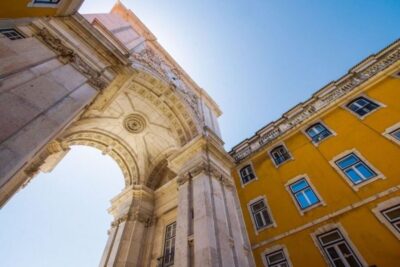
Old Town TukTuk Tour and Scenic Viewpoints in Alfama
Read our review →
Explore Lisbon by Tuk Tuk: History and Viewpoints
Read our review →Browse the lists this tour appears in