
Reviewed · ALFAMA TOURS
Alfama and Mouraria Tour – The oldest neighbourhoods in Lisbon
Lisbon’s oldest neighborhoods, Alfama and Mouraria, are the kind of place where one street can feel medieval and the next can feel like a film set. What I really like is how this tour strings together Alfama streets and major miradouro viewpoints into one smooth walk. It also has the small-group feel, with guides who know how to keep history moving while you’re still catching your breath.
My other favorite part is the way the route mixes big monuments with everyday details, from the grand Praca do Comercio to quieter corners near the Mouraria fado sites. The one thing to plan for is steep hills and lots of stairs, plus a pace that can feel brisk if you are not used to walking uphill.
Key highlights worth aiming for
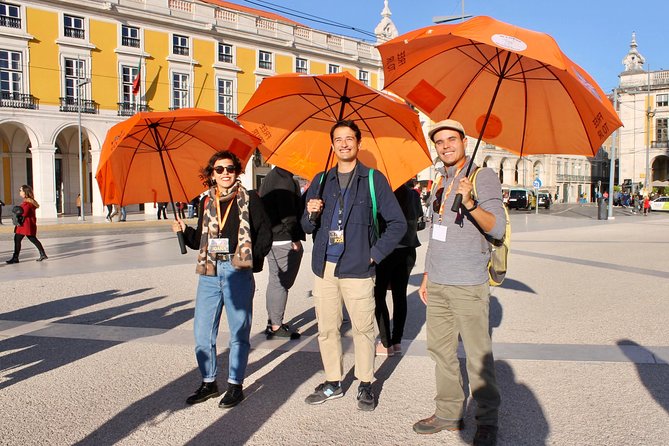
- Orange-umbrella meet-up: the guide stands between the big arch and the statue in the middle at the start.
- Viewpoints without the ticket line: Portas do Sol and Santa Luzia are built into the walk.
- Alfama on foot, not by bus: you actually move through the maze-like streets instead of just seeing it from a distance.
- Big-name landmarks, short stops: cathedral area, National Pantheon, and Castle views all fit into one route.
- Guides with real personality: lots of praise for humor, professionalism, and staging climbs (people mentioned guides like Walter, Tiago, and Hugo).
Alfama and Mouraria, the oldest Lisbon you can reach on foot
This is the kind of Lisbon walk that helps you stop thinking in postcards and start thinking in neighborhoods. Alfama feels like the city kept its old bones. Mouraria feels more lived-in, more layered, and it is tightly tied to the story of fado.
In about 2 hours 30 minutes, you cover a chunk of ground that would be annoying to string together yourself. The route also keeps giving you mental landmarks, so even if you get a little turned around in the alleys (you will), you still know where you are.
With a max group size of 20, the vibe is usually friendly. Many people appreciated meeting other participants, and you get enough time to ask questions without feeling like you are in a cattle line.
More Alfama and old-town tours:
- Alfama Tour in Lisbon Old Town
★ 5.0 · 4,936 reviews - Private Lisbon Sightseeing Tuk-Tuk Tour: Alfama, Belém & More
★ 5.0 · 4,277 reviews - Lisbon: Hills, Alfama, and Mouraria Tour by Electric Bike
★ 4.8 · 3,438 reviews
Starting at Praca do Comercio, finding your orange umbrella
The tour begins at Praca do Comercio. It is a great starting choice because the square anchors you, flat and open, before the city starts climbing.
Look for the guide with an orange umbrella between the big arch and the statue in the middle. That detail matters more than it sounds. Several unhappy moments in the feedback were about start confusion, especially when people arrived at the wrong spot or assumed the guide would be easy to locate without that umbrella.
My practical advice: arrive a little early and give yourself time to confirm you are standing in the right area. If you have a quick question, ask it immediately, before the tour moves into the hills.
The tour ends around Praca do Rossio, which is useful because it drops you near a lively transport hub and plenty of café options to regroup.
Stop-by-stop: what each part of the walk is really doing for you
Stop 1: Statue of D. Jose I, a fast lesson in Lisbon power
You start with the Statue of D. Jose I, a monument honoring King Jose I. This is the warm-up stop, quick but helpful. It sets the tone for why Lisbon looks the way it does, including the blend of royal ambition and rebuilding over time.
Even if you are not into royal names, this stop gives you a framework for what you will see later: grand spaces, major religious buildings, and big defensive architecture.
Another side of Lisbon for the same trip:
- Lisbon City Center Tour – The Unmissable Lisbon
★ 5.0 · 22,234 reviews - Lisbon: Sintra, Pena, Regaleira, Cabo da Roca & Cascais
★ 4.7 · 19,656 reviews - Lisbon: Jerónimos Monastery Entrance Ticket
★ 4.1 · 14,164 reviews - Lisbon: History, Stories and Lifestyle Walking Tour
★ 4.8 · 10,902 reviews
Stop 2: Praca do Comercio, Lisbon’s open stage
Praca do Comercio is one of the city’s most important squares. It is open, photogenic, and easy to orient yourself.
Why it works on this tour: it gives your legs a reset before you start moving into tighter streets. It also helps you understand how Lisbon’s waterfront-era grandeur links into the rest of the historic core.
Stop 3: Church of St. Anthony, local roots of a global saint
The Church of St. Anthony is tied to the place where St. Antony of Padua was born. This is one of those stops that feels small from the outside, but it adds a human anchor to the walk.
You get the sense that Lisbon’s history is not only kings and castles. It is also births, legends, and the way faith shaped neighborhoods.
Stop 4: Casa dos Bicos, Manueline style in a compact stop
Casa dos Bicos is an older house built in Manueline style. It is the kind of detail you might miss if you walk past quickly on your own.
This stop is short by design. It is a reminder that the “old neighborhood” feeling is not just street layouts, it is also the architecture hiding in plain sight.
Stop 5: Alfama, walking the streets that make Lisbon feel like Lisbon
Then you enter Alfama and simply walk. You will go through those winding lanes where directions change every few minutes, and where small squares and stairways keep interrupting your line of sight.
This is the best part if you like atmosphere, not just landmarks. The route also gives you just enough context that you can start reading the neighborhood as you go, rather than treating it like a maze you have to survive.
And yes, you should expect some serious steps. In the feedback, people repeatedly pointed out that climbs and stairs are part of the deal, but they also said pacing is often managed with frequent stops.
Stop 6: Lisbon Cathedral, the oldest church vibe
Next is Lisbon Cathedral, described as the oldest church in Lisbon. Even when you do not spend lots of time inside (it depends on what you choose to enter), the cathedral area has gravity.
What I like about putting it on the route: by the time you reach here, you are already deep in the old center, so it feels connected to everything you just walked through, not like a random detour.
One important note for planning your budget: in at least one experience, people found that entry fees applied at sites labeled as free. So I would treat outside viewing as the guaranteed part, and assume ticketed areas may cost extra if you want to go beyond the basics.
Stop 7: Panteao Nacional, a national landmark in the middle of neighborhoods
The National Pantheon of Lisbon appears briefly, but it is memorable. This is a big landmark stop where the walking tour still manages to feel purposeful.
It is also a nice contrast with the narrow Alfama lanes. You get a moment where the space opens up, and the city looks more monumental again.
Stop 8: Miradouro das Portas do Sol, where you slow down
Now you get one of the classic Lisbon viewpoints: Miradouro das Portas do Sol. This is where you stop pushing and start looking.
What makes it valuable is the timing. You are already tired from hills, so the viewpoint gives you a real payoff, and the guide can point out what to look for. People praised guides for staging climbs and keeping the pace manageable, and viewpoints like this are where that pacing shows.
Stop 9: Castelo de Sao Jorge, Moorish roots and castle energy
You also reach Castelo de Sao Jorge. The tour frames it as an old castle built by the Moors in the 8th century.
Even if you do not climb every section, the castle area does two things for you:
- It explains why Lisbon feels defensible and layered, not flat and modern.
- It gives you the high-angle perspective that makes the neighborhood shapes click.
Again, about paid entry: the tour description lists admission as free, but at least one person reported that some areas were ticketed. My advice is to keep it simple, enjoy the views, and only go deeper if you decide the interior experience is worth it on the day.
Stop 10: Miradouro de Santa Luzia, the charming viewpoint stop
Miradouro de Santa Luzia is another viewpoint, and it is often the kind that feels more intimate than the big ones. It is a great spot to take photos, catch your breath, and let the hills sink in for a second.
If you are choosing Lisbon activities, this is exactly the kind of stop that makes a walking tour feel like more than exercise.
Stop 11: Monumento Mouraria Berco do Fado, fado’s neighborhood marker
Then you transition into Mouraria and make a direct connection to fado with the Monumento Mouraria Berco do Fado.
This stop helps the walk make emotional sense. You can literally feel how a neighborhood identity sticks. It is not only about music as entertainment. It is about geography, community, and the way streets shape sound and stories.
People mentioned that the Mouraria part of the tour still keeps that same “walk-and-talk” rhythm, with friendly street-level energy.
Stop 12: Igreja de Sao Vicente de Fora, a final spiritual note
The tour finishes with Igreja de Sao Vicente de Fora, described as built in honor of St. Vincent.
This works as a closing stop because by the time you reach it, you have already covered a spread of religious and historic Lisbon. It gives you a calm landing before you walk back out into a more open area near Rossio.
The guides make or break the uphill parts
The feedback has a clear pattern: the best experiences happen when the guide balances facts with movement and handles hills intelligently.
Names that came up with strong praise include Walter, Tiago, Hugo, Jose, Claudia, Rita, and Kate. People highlighted humor, professionalism, and the ability to pace a climb in stages.
If you have stiff knees or you get frustrated by fast group movement, this is the one thing to keep in mind. A few negative comments mentioned pace issues or difficulty keeping up, and one story noted that the guide did not realize a participant had fallen behind. None of that is a reason to avoid Lisbon, it is a reason to manage expectations and communicate early.
My practical approach: if you need slower pacing, say it right away at the start. Most guides can adjust if they know.
Price, group size, and what you truly get for $1.25
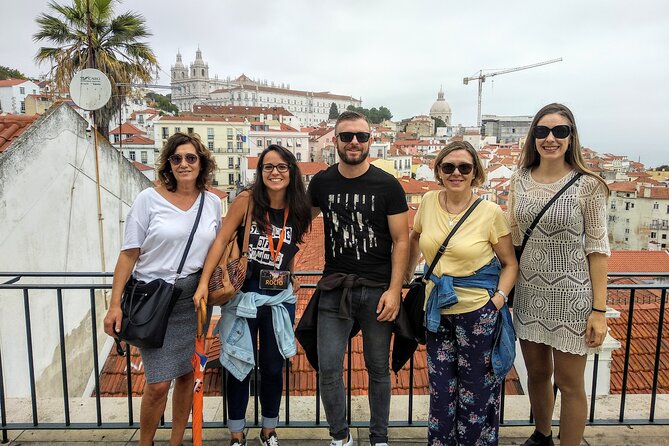
At $1.25 per person, this tour is priced like a promotional deal. Even if you treat the stop notes as flexible and focus on the guiding, the orientation, and the viewpoint access, the value can be excellent for first-timers.
A big advantage here is that the tour blends many stops without requiring you to plan tickets or figure out logistics across several neighborhoods. You also get English language commentary, which matters in Lisbon when small streets and local references can be tricky.
The main value question is not price. It is how much you care about walking uphill. If you are comfortable with stairs, and you like learning as you go, it feels like a bargain. If you want a mostly flat route with minimal climbing, this might feel like too much work for what you want that day.
Also, because some sites may have ticketed areas, I suggest you do not treat every stop as fully free in every sense. Budget a little extra for optional entry if you are the type who wants to go inside.
Who should book this Alfama and Mouraria walk
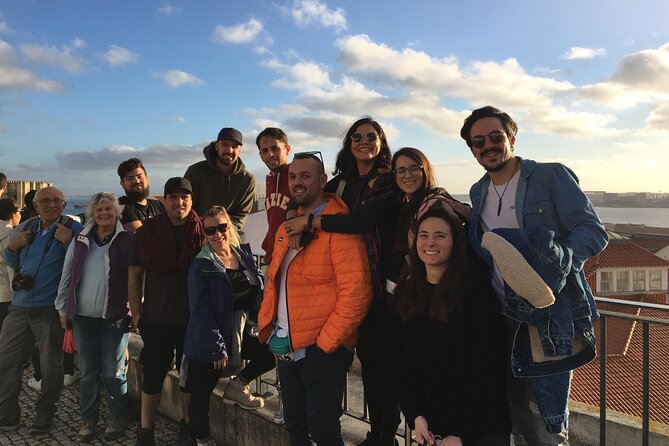
Book it if you:
- Want a first-time Lisbon orientation and a real feel for Alfama and Mouraria.
- Enjoy viewpoints and want them built into the itinerary.
- Like history told in street context, not just from a museum plaque.
- Prefer small group energy, max 20, instead of a huge bus tour.
Skip or be cautious if you:
- Need a mostly flat route with few stairs.
- Have mobility limits that make steep corners and steps hard.
- Want long interior time at major sights, because many stops are quick.
If you are traveling solo, there is a good chance you will find the group social enough to help you feel less alone, especially since meeting other participants was mentioned positively.
Tips to make the tour feel easy, not stressful
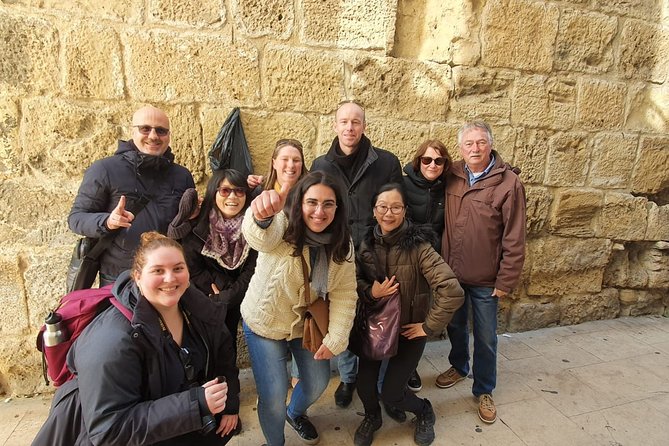
Bring comfortable shoes. You are going uphill and up steps, and the day will move faster than you think once you factor in viewpoint time.
Hydration helps. In hot weather, guides like Hugo were praised for finding shade and building in picture moments. You can still help yourself by carrying water and taking advantage of any shade stops the guide offers.
Finally, set a simple goal: use the walk to learn the neighborhood “logic.” After you leave, try to return to one viewpoint and one street you liked most. That’s when a walking tour turns into memory.
Should you book this tour?
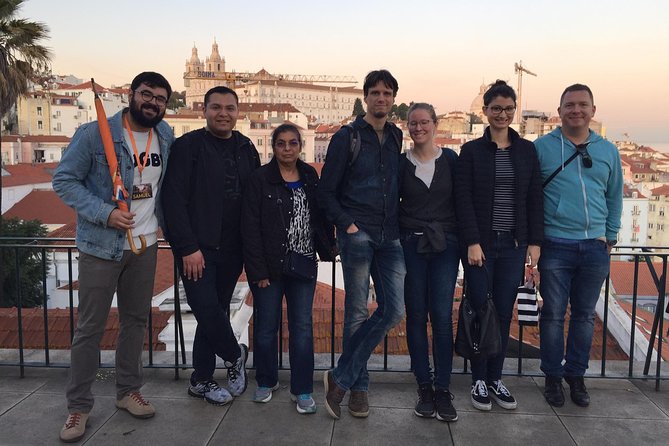
Yes, if your idea of a great Lisbon day includes hills, viewpoints, and learning why neighborhoods feel the way they do. The route packs in Alfama street time plus major viewpoint stops like Portas do Sol and Santa Luzia, and the guide quality tends to be a strong highlight, especially with names like Walter, Tiago, and Hugo showing up in top feedback.
One caution: arrive clearly at the meeting spot and be ready for stairs. If you do that, this tour is very likely to be the kind of low-stress, high-reward introduction that helps your later self-guided exploring feel confident.
Newly reviewed in Lisbon
- Lisbon: Private Food Tour – 10 Tastings with Locals★ 4.8 · 73 reviews
- Lisbon: Private Custom Tour with a Local Guide★ 5.0 · 6 reviews
- Lisbon: 2 hours Private City Highlights Tuk-Tuk Tour for two★ 5.0 · 5 reviews
- Lisbon: City Sightseeing Tour★ 4.9 · 13 reviews
- Lisbon: Private Christmas Lights Tour by Eco Tuk Tuk★ 4.9 · 51 reviews
- Lisbon: Private Catamaran Charter for up to 18-People★ 5.0 · 7 reviews
- Lisbon: Private Boutique Boat Tour – Sail in Style★ 5.0 · 87 reviews
- Lisbon: Private Boat Trip, Guided Walking Tour, Bike & Tram★ 4.8 · 116 reviews
Alfama Tours, compared.
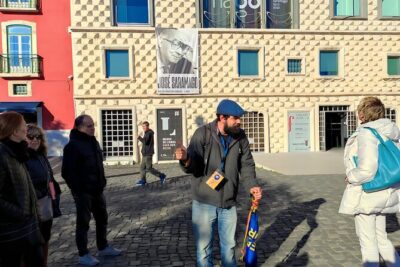
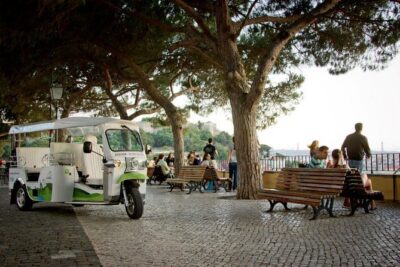
Private Lisbon Sightseeing Tuk-Tuk Tour: Alfama, Belém & More
Read our review →
Hills, Alfama, and Mouraria Tour by Electric Bike
Read our review →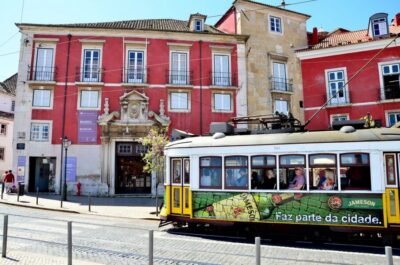
Best of Lisbon Walking Tour: Rossio, Chiado & Alfama
Read our review →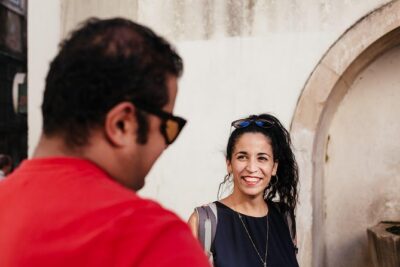
Lisbon Small-Group Food Tour with 18 Tastings in Alfama District
Read our review →
Lisbon E-Bike Tour Commerce Square, Mouraria and Alfama
Read our review →
Old Town TukTuk Tour and Scenic Viewpoints in Alfama
Read our review →
Alfama Tour and Live Fado with Traditional Dinner
Read our review →Browse the lists this tour appears in