
Reviewed · HISTORICAL TOURS
Lisbon Essential Walking Tour: History, Stories and Lifestyle
Lisbon Essential Walking Tour is interesting because it connects the big moments of Lisbon to the streets you actually walk. In about three hours, you move from Bairro Alto down through Baixa and Alfama, then finish at Lisbon Cathedral.
I love the way this route mixes famous sights with day-to-day Lisbon. Coffee and cake plus an included tram ride make the tour feel practical, and the guided storytelling ties each stop to how the city lives now. Many groups also come away with clear ideas for where to eat and when to look for fado, with guides like Paulo, Beatrice, and Ricardo sharing their own go-to recommendations.
One possible drawback: this is a walking tour with hills, and some stretches can be steep. If you have trouble with stairs or long uphill segments, you may want a different pace option.
Key things I’d mark on your mental map
- Bairro Alto to Alfama in one loop, so you get context fast instead of wandering blind
- São Roque church and museum for Jesuit art, tiles, paintings, and gilding
- Carmo Convent and Church, including the site connection to the 1974 Carnation Revolution
- A viewpoint plan with São Pedro de Alcântara and the Santa Justa area
- Included recharge stop, coffee and pastry in a local café
- Small group size (max 15), which makes questions and photo stops easier
A fast route across Lisbon’s hills and key neighborhoods
Lisbon is built on hills, so most first-time visitors feel like they are either sightseeing by stairs or sweating for no reason. This tour makes the hill work for you by stringing together viewpoints, historic churches, and the neighborhoods that shaped daily life.
You start in Bairro Alto, a district with deep roots and plenty of perspective points. From there, you head toward São Pedro de Alcântara for big views over the Baixa and across the Tagus River. Then the route keeps pulling you through Lisbon’s layers, moving from ornate religious art into the street-level energy of Baixa and Alfama.
The finish at Lisbon Cathedral is also a smart move. It anchors your walk in the city’s medieval beginnings, right after the Moors were pushed back. By the time you reach the cathedral, the city stops looking like disconnected postcards and starts looking like a single evolving story.
More walking tours in Lisbon:
- Lisbon: History, Stories and Lifestyle Walking Tour
★ 4.8 · 10,902 reviews - Best of Lisbon Small-Group Guided Walking Tour
★ 5.0 · 4,869 reviews - Lisbon: Food and Wine Small Group Walking Tour
★ 4.9 · 4,082 reviews
Value check: what $30.25 buys you
At about $30.25 per person, the best way to judge value here is to total what you would pay on your own. You get a professional guide, an included tram trip, and a coffee and cake break. You also get liability and personal accident insurance, which is the kind of boring detail that can matter.
The included stops do not just look good. Several key sites listed along the way are admission free, including the Igreja de São Roque and its museum and the Carmo church stop. That helps keep your spend predictable.
The one “watch this” item is the Santa Justa elevator area. You’ll arrive at the elevator and viewpoints, but the elevator ticket is not included. If you want the ride, you’ll need to pay separately once you are there.
For first timers, this is where the value really shows. You are not only seeing places. You are learning what to look for next when you break off on your own.
Bairro Alto and São Pedro de Alcântara, where the city shows its view
The tour kicks off at Bairro Alto, described as about five centuries old. It sits on hills, so you get both the setting and the drama right away. Your guide explains how the district evolved after the 1755 earthquake, when people began moving and rebuilding in this area as part of Lisbon’s renewal.
This opening matters because it gives you a lens. Instead of treating Bairro Alto as just a scenic neighborhood, you understand why families came back after catastrophe and how the city reshaped itself.
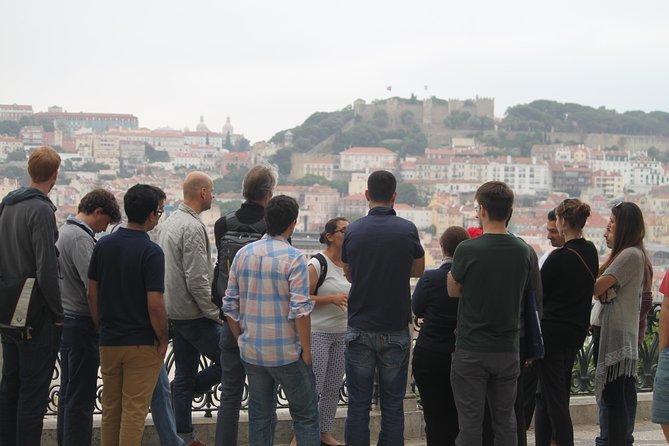
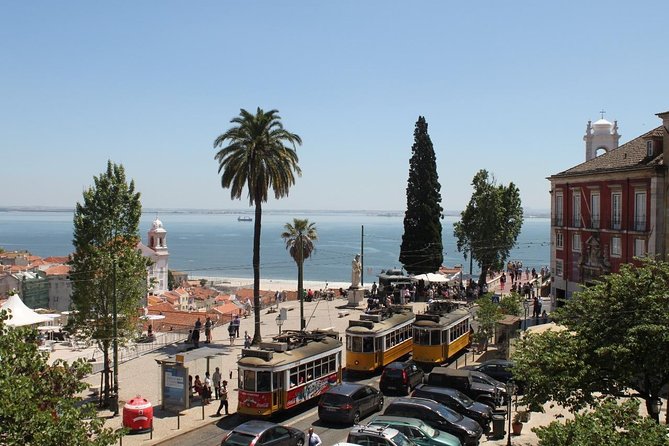
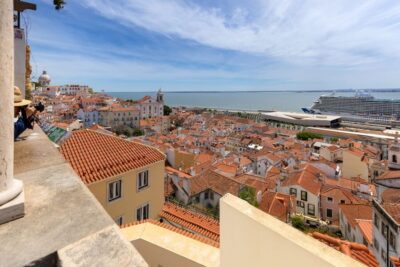
Next comes Miradouro São Pedro de Alcântara, passing through the garden before you get the view. The payoff here is practical: you see the Baixa and the south bank of the Tagus River from a high vantage point. After that, the rest of the tour feels more connected because you have a real sense of where things are.
Time is short at each viewpoint stop, about 15 minutes here. So you should come ready to take photos quickly, then listen. If you wander or talk with your group the whole time, you will miss some of the story threads.
São Roque and Carmo: Jesuit art and a revolution site
If there is one stretch that turns a walking tour into a true “how did this happen” experience, it’s the church stops.
First is Igreja de São Roque, built by the Jesuits. The key detail here is that São Roque was among the first Jesuit churches in Portugal, and also one of the first worldwide. From the outside, the façade reads austere. Step inside and the mood flips, with gilding, tiles, and paintings that bring out Mannerist and Baroque styles.
The museum angle is important too. Even if you are not trying to “collect history,” the art lets you understand what religious power looked like in different eras.
Then you head down hill to the Igreja do Carmo and its convent. This is described as Gothic architecture, and it has a special place in Portugal’s modern story. The site is tied to the start of the Carnation Revolution in 1974, when Portugal’s long dictatorship ended after nearly five decades.
The emotional shift is real. You go from crafted religious art to a landmark that marks political change. It’s a reminder that Lisbon’s history is not only old buildings. It’s also decisions people made, and lives that changed.
A few other ways to do Lisbon
- Lisbon: Live Fado Show with Port Wine in Historic Center
★ 4.7 · 4,166 reviews - Lisbon: Fado Show with Wine in a Historic Venue
★ 4.8 · 1,294 reviews - Explore Lisbon by Tuk Tuk: History and Viewpoints
★ 5.0 · 840 reviews - Lisbon: Daytime or Sunset Boat Cruise with History and Wine
★ 4.9 · 819 reviews
Santa Justa and Baixa: viewpoints plus a tram ride with your coffee
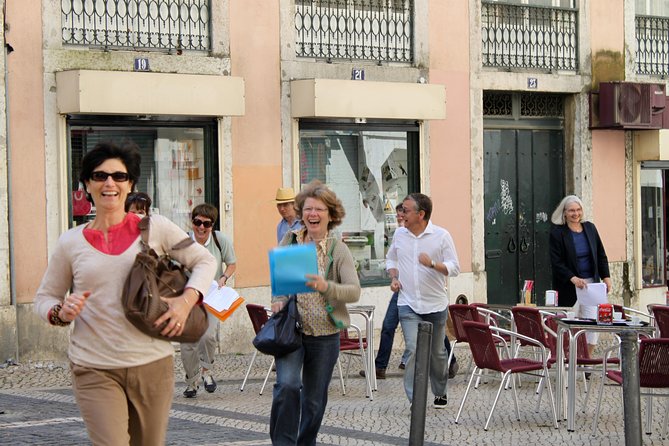
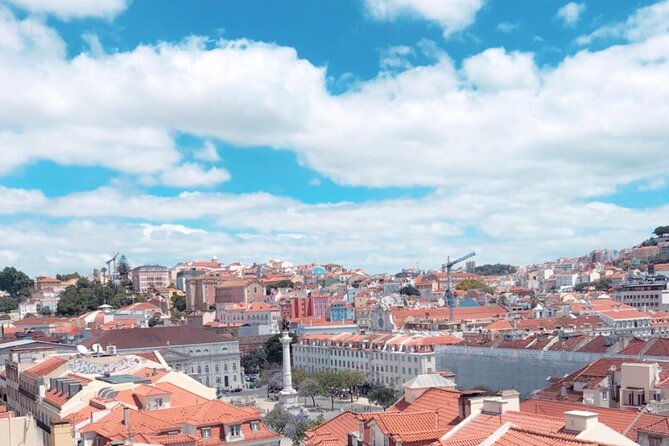
After the church stops, you reach the area around the Elevador de Santa Justa. It’s an imposing structure in Gothic Revival style, and it’s famous because it gives some of the best viewpoints in the city.
Here’s the practical part: the tour lists the Santa Justa stop with time, but the admission ticket is not included. That means you can still enjoy the area and the perspective, but if you want the elevator ride itself, you’ll pay on the spot.
From there, the tour slows down in the best way: with food. In Baixa de Lisboa, you get coffee with pastry at a local café, with the stop listed as included. This is not just a snack. It’s your energy reset before the last leg.
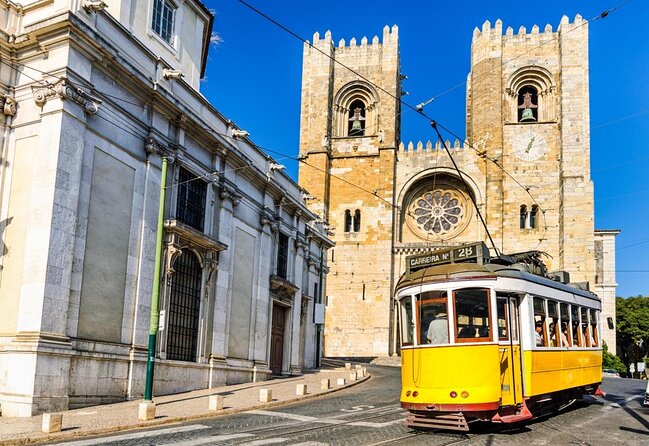
Then you head to Praça da Figueira and take a tram ride up from the castle area toward Portas do Sol. In past experiences shared by guides and groups, Tram 28 often comes up as the classic route that people end up riding, and the guide tends to help you navigate the busy points so you actually get on.
At this stage, you should look for connections. Baixa gives you the city’s more central geometry, while the tram ride shows how neighborhoods relate to each other across the slopes.
Alfama to Lisbon Cathedral: fado streets and medieval beginnings
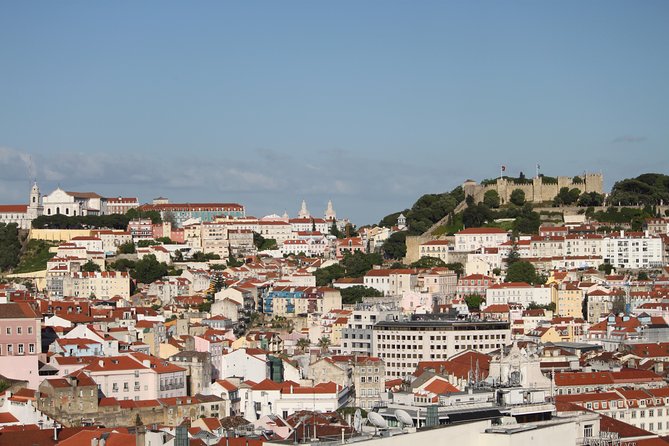
At Portas do Sol, you get your transition into Alfama’s world. You pass by the Monastery of São Vicente de Fora and the National Pantheon and then you’re walking into Alfama, a neighborhood known for narrow streets, old traditions, and fado houses.
The tour framing is helpful here: Alfama is described as one of the oldest and most traditional parts of Lisbon, and it’s also known for saint festivals, especially St. Anthony. That means you start noticing things you might otherwise miss, like how religion and community festivals shape what you see on the street.
The final stretch ends at Lisbon Cathedral, built in 1150, about three years after the city was taken back from the Moors. Over time, the cathedral’s look changed through different architectural styles, so you see Lisbon’s timeline layered into one building.
This ending works well for first timers because it is a clear “bookend.” Before you leave, you’re holding the story of Lisbon in one hand and a neighborhood map in your head in the other.
It also helps that the tour keeps you moving through short stops, mostly around 15 to 20 minutes each. That pace prevents the walk from feeling like one long slog, even though it still includes hills.
Who should book, and who should skip this walking tour
Book this if you want a strong first-day plan. The most praised part is the way the guides bring Lisbon’s history to life and also share practical tips. People often mention guides such as Paulo, Ana, Ricardo, Beatrice, Lucie, Sofia, and Joao as standouts, especially for connecting stories to what you see in front of you and for ending with useful restaurant and fado suggestions.
I also think this tour fits best if you like structure. You get a route that covers Bairro Alto, São Roque, Carmo, Santa Justa area, Baixa, Alfama, and the Cathedral, so you are not left piecing together Lisbon for yourself on day one.
Skip or adjust if your mobility is limited. The route includes steep terrain and it’s still a walking tour, even with frequent short stops. One review also called out that it is not ideal for people who struggle with walking. Bring comfortable shoes and water, and plan to move at the group pace.
One more small consideration: there is a chance the experience may feel less clear if your particular guide communication style does not click with you. In most cases, the tour is built for questions and interaction, but if you are sensitive to unclear explanations, you might prefer a private tour.
FAQ
FAQ
How long is the Lisbon Essential Walking Tour?
It lasts about 3 hours.
How much does the tour cost?
The price is $30.25 per person.
Is the tour in English?
Yes, it is offered in English.
What is included in the price?
You get a professional guide, a tram trip, coffee and cake break, and liability and personal accident insurance.
Is the Santa Justa elevator ticket included?
No. The Santa Justa elevator admission is not included.
Are any stops free to enter?
The itinerary lists several stops as admission free, including São Roque and the Carmo church stop, plus viewpoint stops like São Pedro de Alcântara.
How many people are in a group?
The tour has a maximum of 15 travelers.
Where does the tour start and end?
It starts in Lisbon, Portugal and ends in Lisbon, finishing at Lisbon Cathedral.
Is a mobile ticket used?
Yes, the tour offers a mobile ticket.
Can I cancel for a full refund?
Yes. You can cancel up to 24 hours in advance for a full refund.
Newly reviewed in Lisbon
- Lisbon: Private Food Tour – 10 Tastings with Locals★ 4.8 · 73 reviews
- Lisbon: Private Custom Tour with a Local Guide★ 5.0 · 6 reviews
- Lisbon: 2 hours Private City Highlights Tuk-Tuk Tour for two★ 5.0 · 5 reviews
- Lisbon: City Sightseeing Tour★ 4.9 · 13 reviews
- Lisbon: Private Christmas Lights Tour by Eco Tuk Tuk★ 4.9 · 51 reviews
- Lisbon: Private Catamaran Charter for up to 18-People★ 5.0 · 7 reviews
- Lisbon: Private Boutique Boat Tour – Sail in Style★ 5.0 · 87 reviews
- Lisbon: Private Boat Trip, Guided Walking Tour, Bike & Tram★ 4.8 · 116 reviews
Historical Tours, compared.

Live Fado Show with Port Wine in Historic Center
Read our review →

Explore Lisbon by Tuk Tuk: History and Viewpoints
Read our review →
Daytime or Sunset Boat Cruise with History and Wine
Read our review →
Private Tuk Tuk Tour Through Lisbon’s Historical Streets
Read our review →
Lisbon Sunset Sailing with Portuguese Wine and History
Read our review →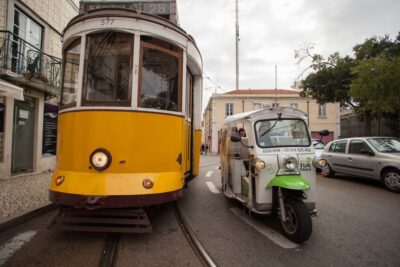
Guided Tuk-Tuk Tour Along the Historic Tram Line 28
Read our review →Browse the lists this tour appears in