

Reviewed · HISTORICAL TOURS
Half Day Historical Walking Tour about the Slave Trade in Lisbon
Lisbon sells you sunlight and stone at first glance. This half-day walk looks at the darker side of the Age of Discovery, using real street corners and Portuguese crossroads to explain how slavery shaped the city.
I really like two things about the way this tour works. First, the group is capped at 8 people, so you actually get to ask questions. Second, the guide, Rui Fernandes, teaches with documents and photos and keeps the discussion grounded in what you are standing next to.
One thing to plan for: the subject matter is heavy, and the walk is only described as moderate fitness, not easy strolling. If you have walking limits, the steep old streets could be a dealbreaker.
Key things that make this tour worth your time
- A place-based route that ties Lisbon landmarks to the slave trade, not just big-picture lectures
- Small group feel (up to 8 people) with time for questions
- Stop by stop pacing that mixes short walks with focused explanations
- Religion and commerce context so you see how slavery fit into everyday institutions
- A guide who uses visuals like photos and historical documents to support the facts
- A modern historical link to Portugal’s collapse of the colonial empire after the 1974 era
Why Lisbon’s slave-trade story needs streets, not slogans
Portugal’s maritime story is often told like a clean timeline: voyages, discoveries, trade. This walk interrupts that comfort. It asks what that trade depended on, who it benefited, and how the city’s institutions were connected.
You also get a wider historical frame than the usual Atlantic-only version. The tour connects slavery to earlier systems and to different civilizations that lived in Portugal, then brings it forward to the Portuguese role in the mid-15th-century Atlantic expansion. That makes the whole topic feel more honest, and less like a history unit in a textbook.
And you should expect a cultural angle too. The point is not just dates and ships. It is how Lisbon, as a city, was shaped by Africa and by the unequal power systems that traveled with colonization.
More walking tours in Lisbon:
- Lisbon: History, Stories and Lifestyle Walking Tour
★ 4.8 · 10,902 reviews - Best of Lisbon Small-Group Guided Walking Tour
★ 5.0 · 4,869 reviews - Lisbon: Food and Wine Small Group Walking Tour
★ 4.9 · 4,082 reviews
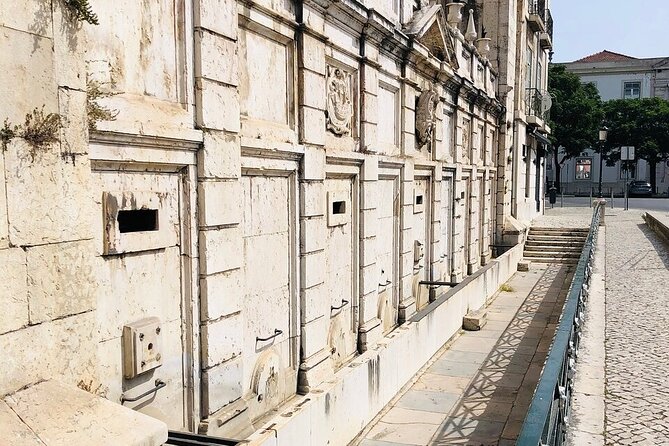
Starting at Largo do Chafariz de Dentro and easing into the theme
You meet at Largo do Chafariz de Dentro 30 (near public transportation). The first stop is short, about 10 minutes, and it is basically your on-ramp: what you are about to see, why these places matter, and what to watch for as you move through the old center.
This matters because the tour is not trying to overwhelm you at the start. It gives you a way to interpret what you will see in Alfama and later in Baixa, Rossio, and Restauradores. If you show up with a basic curiosity, you leave with a working map of the story.
You also get a practical advantage. Since the total walk is about three hours, with concentrated stops, you can mentally switch from sightseeing mode into listening mode without burning out.
Alfama, Portugal’s oldest neighborhood, and the long line of slavery
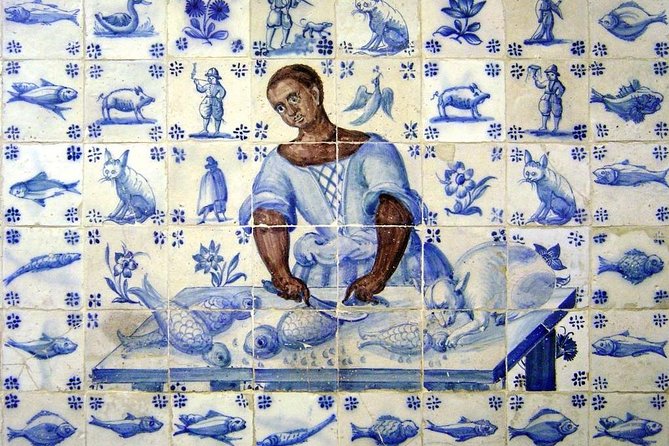
The second stop is Alfama, Lisbon’s oldest neighborhood, and it gets about 30 minutes. Here the guide connects several layers: how different groups who settled in Portugal practiced slavery, from earlier European contexts into Islamic eras, then how Portugal became involved in the Atlantic Slave Trade in the mid-15th century.
This is one of the most important stretches of the tour because Alfama is not a museum set. It is lived-in Lisbon, and it forces the history to feel physical. You are walking a neighborhood that still carries the shape of its past, and that makes the conversation harder to dismiss as distant.
A small-group format helps here. When you can ask a question in the moment, you are less likely to wonder what you missed and more likely to follow the logic. That is a big deal with a topic like this, where details matter.
Campo das Cebolas and the work of remembering victims
Next comes Campo das Cebolas, a stop around 10 minutes. The focus here is forward-looking: the location is tied to where a monument to victims of the Slave Trade will be erected in the future.
I like this kind of pause for two reasons. First, it turns the experience from pure explanation into reflection on memory. Second, it helps you notice something important about Lisbon today. The story is still being argued, recorded, and publicly acknowledged, not locked in the past.
This stop is short, but it gives the walk an emotional turn. It’s the difference between learning facts and understanding why communities still want recognition and accountability.
A few other ways to do Lisbon
- Lisbon: Live Fado Show with Port Wine in Historic Center
★ 4.7 · 4,166 reviews - Lisbon: Fado Show with Wine in a Historic Venue
★ 4.8 · 1,294 reviews - Explore Lisbon by Tuk Tuk: History and Viewpoints
★ 5.0 · 840 reviews - Lisbon: Daytime or Sunset Boat Cruise with History and Wine
★ 4.9 · 819 reviews
Praca do Comercio, Terreiro do Paco, and how trade turned into coercion
From Campo das Cebolas, the tour moves to Praca do Comercio (Terreiro do Paco) for about 15 minutes. This is the commercial heart area where the guide explains how the slave trade sat inside broader colonial commerce.
If you only think of slavery as a separate horror, you miss how it functioned as an economic system. In this part of the walk, you get the connection between ships, ports, and marketplaces, and you see how that flow supported the growth of a trading city.
One practical note: this segment is in the flatter, more open central area, so it can feel easier physically than the older lanes. That is helpful since you still have more stops after this.
Baixa, Rossio, and Restauradores, where the daily life story lands
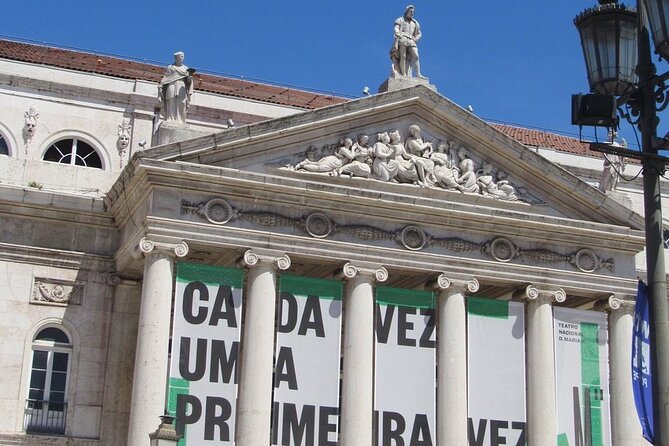
After the commerce stop, you head through Baixa, Rossio, and Restauradores for around 30 minutes. This is where the tour moves from large-scale systems to daily realities, including what enslaved captives from Africa and around the globe experienced in Lisbon.
This portion is especially valuable because it changes your mental picture. Instead of thinking only about voyages and auctions, you start thinking about schedules, streets, institutions, and routine. The guide’s emphasis is on how Lisbon’s city life was entangled with captivity.
The pacing helps. Because the group stays small and the stops are planned, you can keep attention on each explanation instead of losing it in long transitions. Also, the guide uses visuals and historical documents during these kinds of segments, which makes it easier to connect names and places.
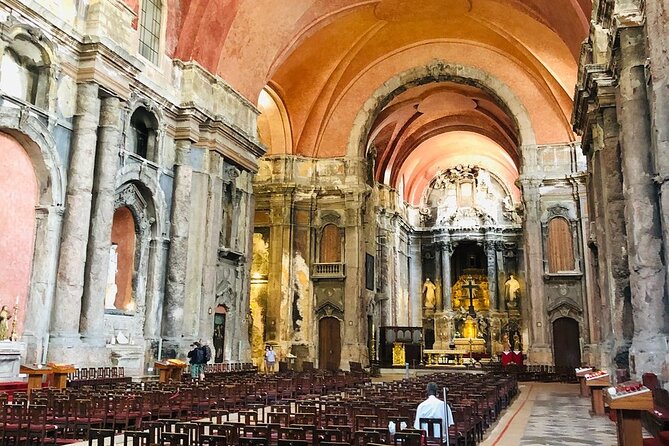
Igreja de S Domingos and religion’s complicated role
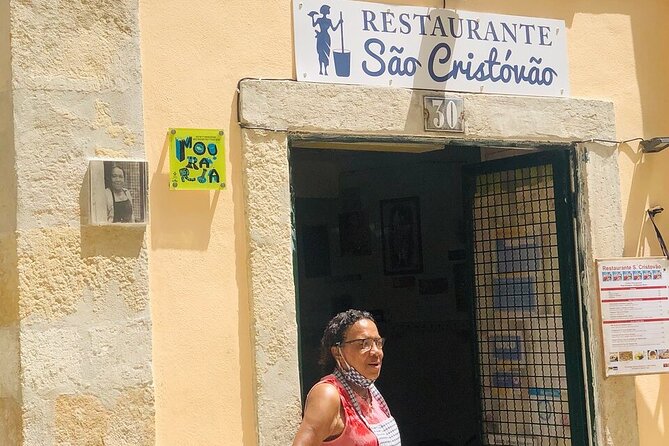
The next stop is Igreja de S Domingos, about 10 minutes. Here the guide focuses on how Lisbon’s enslaved captives interacted with the city’s religious organizations.
This is a hard topic, and the value is in the nuance. You are not being told religion is only one thing. You are seeing how belief systems, institutions, and authority could shape how slavery was justified, managed, or contested.
It also helps you understand why Lisbon’s historical identity still feels tense today. Religion was part of the social structure, and when social structures are involved, it can change everything from laws to everyday attitudes.
Largo do Carmo and Portugal’s 1970s break with empire
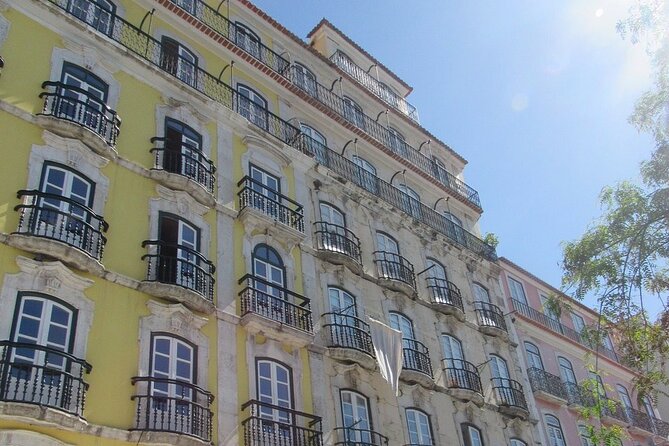
The final stop is Largo do Carmo, around 15 minutes. The guide connects the area to the 25th of April coup and to the subsequent decline of the Portuguese colonial empire in the mid-1970s.
This part of the tour does not feel like a separate lecture. It lands the idea that the slave-trade legacy did not end cleanly with the end of ships and markets. Colonial structures and the political aftermath shaped how Portugal understood itself after empire.
It is also a useful way to close. After hours of looking at institutions tied to slavery, you end with a moment of political turning. That gives your learning a timeline arc: expansion, entrenchment, and then a rupture.
What you should expect from the guide, and how to get the most out of 3 hours
The biggest strength of this tour is the guide style. Rui Fernandes is repeatedly described as passionate and extremely prepared, and the tour rhythm gives you space for real questions. People talk about how he answered questions directly and with confidence, even on sensitive or controversial parts of the history.
Another practical plus: the guide uses pictures and historical documents to support what he is saying. That matters for this subject because it prevents the talk from becoming abstract. When you can see references, it is easier to follow the reasoning and remember the places you visited.
Tips for you to make this tour work:
- Wear comfy shoes. The walk is described as moderate, and Lisbon streets can be uneven.
- Bring a curious attitude, not a debate-ready one. The guide sets a factual tone.
- If you want the most from it, ask questions early, then again if something clicks later in the walk. The structure supports that.
Since it is about three hours, you can also plan the rest of your day realistically. You are not wiped out afterward in the way a full-day tour can leave you.
Price, group size, and whether it is worth $39.78
At $39.78 per person for about 3 hours, this tour is priced more like a focused local experience than a big bus sightseeing package. You are paying for a professional guide plus local taxes, and the itinerary includes free admission at the listed stops.
The value is not just the subject. It is the format: a small maximum of 8 people, a set route with short, meaningful pauses, and English delivery. That combination is harder to get at lower prices, especially for a theme that is rarely covered with this level of specificity.
Also consider what is not included. There is no food or hotel pickup, so you should plan a snack or lunch around the time you start. If you do not, you might feel more drained than you need to, and this topic already asks for emotional energy.
Who this tour suits best (and who might want a different plan)
This is a strong match if you want more than the standard Lisbon highlights. If you are the type who likes explanations tied to streets, this will feel satisfying.
It is also a good fit if you care about understanding the long-term links between Portugal, Africa, and how power systems shaped modern society. The tour explicitly connects slavery to Portugal’s cultural and contemporary history and shows how racial hierarchy had staying power.
It may be less suitable if you have walking difficulties. The tour is not presented as wheelchair-friendly, and the physical effort is part of the deal since you cover multiple parts of the old city.
Should you book this Slave Trade in Lisbon walking tour?
Book it if you want Lisbon with fewer blind spots. This walk gives you context that helps the city make sense, not just look pretty, and it does so in a way you can question and process in real time.
I would also recommend it if you appreciate a respectful, factual approach, even when the topic is difficult. The guide’s willingness to address questions directly, and to use visuals and documents, is exactly what makes this kind of tour feel serious rather than performative.
If you are easily overwhelmed by heavy history or you cannot manage moderate walking, you might consider a lighter alternative first. But if you can handle the topic, this is the kind of tour that changes how you see Lisbon for the rest of your trip.
FAQ
How long is the Half Day Historical Walking Tour in Lisbon?
It is about 3 hours.
What does the tour cost, and what is included?
The price is $39.78 per person. It includes a professional guide and local taxes.
Is the tour offered in English, and do I need a printed ticket?
The tour is offered in English and you get a mobile ticket.
How many people are in each group?
The tour has a maximum of 8 travelers.
Where do I meet, and where does the tour end?
You meet at Largo do Chafariz de Dentro 30, 1100-605 Lisboa, Portugal, and the tour ends at Largo do Carmo, 1200-092 Lisboa, Portugal.
What is the cancellation policy?
You can cancel for a full refund up to 24 hours in advance of the experience start time. If you cancel less than 24 hours before, the amount paid is not refunded.
Newly reviewed in Lisbon
- Lisbon: Private Food Tour – 10 Tastings with Locals★ 4.8 · 73 reviews
- Lisbon: Private Custom Tour with a Local Guide★ 5.0 · 6 reviews
- Lisbon: 2 hours Private City Highlights Tuk-Tuk Tour for two★ 5.0 · 5 reviews
- Lisbon: City Sightseeing Tour★ 4.9 · 13 reviews
- Lisbon: Private Christmas Lights Tour by Eco Tuk Tuk★ 4.9 · 51 reviews
- Lisbon: Private Catamaran Charter for up to 18-People★ 5.0 · 7 reviews
- Lisbon: Private Boutique Boat Tour – Sail in Style★ 5.0 · 87 reviews
- Lisbon: Private Boat Trip, Guided Walking Tour, Bike & Tram★ 4.8 · 116 reviews
Historical Tours, compared.
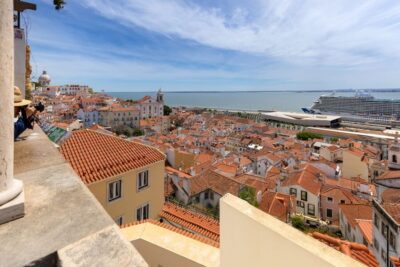

Live Fado Show with Port Wine in Historic Center
Read our review →
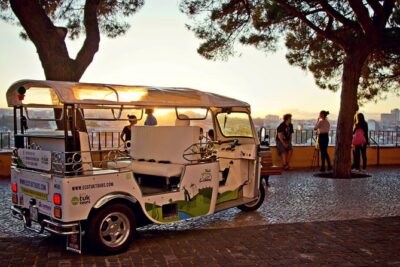
Explore Lisbon by Tuk Tuk: History and Viewpoints
Read our review →
Daytime or Sunset Boat Cruise with History and Wine
Read our review →
Private Tuk Tuk Tour Through Lisbon’s Historical Streets
Read our review →
Lisbon Sunset Sailing with Portuguese Wine and History
Read our review →
Guided Tuk-Tuk Tour Along the Historic Tram Line 28
Read our review →Browse the lists this tour appears in