
Reviewed · LISBON
Lisbon: Graça Church | Convent & Terrace viewpoint access
Graça Church is interesting because it turns a short hill climb into a mix of convent interiors and a top-of-Lisbon terrace viewpoint. You get the city in front of you, but you also get why this place mattered for centuries.
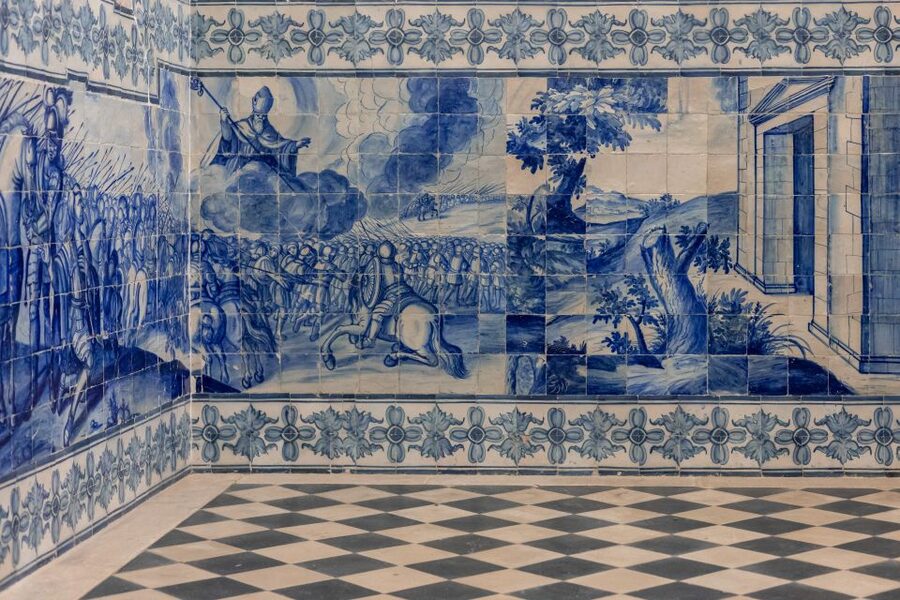
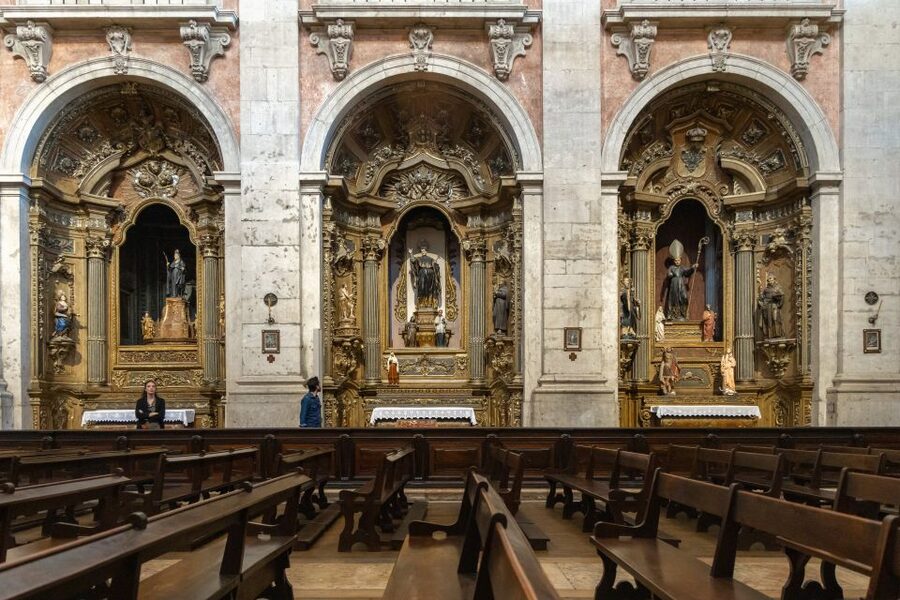
I especially like two things. First, the convent’s 18th-century tile panels and cloister make the building feel lived in, not just old. Second, inside the church you can focus on the details, like gilded woodwork and the ceiling paintings in grisaille.
One consideration: this is very much a walking experience. It is not suitable for wheelchair users, and if stairs and altitude feel like an issue, you should think twice before booking.
Key things you should know before you go
- Terrace views that map the city from St. Gorge’s Castle to the Tagus River, the old bridge, and all the way to Cristo Rei
- A one-hour visit with multiple levels included, not just the viewpoint
- You see more than the church, including the high choir and upper cloisters
- Cloister and tile panels are a major focus, with centuries of visual storytelling
- It can feel quieter in the convent area than the nearby Miradouro-style spots
Graça Church, convent rooms, and that hilltop terrace view
If Lisbon has a best-in-class habit, it is building viewpoints that make you stop mid-sentence. The Graça terrace does that, because you look out over the river, the bridges, and the spread of neighborhoods without needing to guess what you are seeing.
What makes this ticket more satisfying than a quick photo stop is that you start inside. You work through the convent and church spaces first, where the details actually explain the viewpoint. When you finally step out, you can connect what you saw indoors with what you see outside.
The visit is designed to fit into a short window. Plan on about an hour, and you will likely use that time on three priorities: walking through the convent rooms, taking in the church art, and getting your terrace viewing time before the light shifts.
Keep exploring Lisbon — readers rate these highly:
- Lisbon City Center Tour – The Unmissable Lisbon
★ 5.0 · 22,234 reviews - Lisbon: Sintra, Pena, Regaleira, Cabo da Roca & Cascais
★ 4.7 · 19,656 reviews - Lisbon: Jerónimos Monastery Entrance Ticket
★ 4.1 · 14,164 reviews
Inside the convent complex: a place shaped by centuries
The Convent of Nossa Senhora da Graça started with construction in 1271, when the site was then called Almofala. It began as an Augustinian convent, and later the dedication changed to Nossa Senhora da Graça. The church and convent were built in the 13th century, then rebuilt in the 16th century, and then hit hard by the 1755 earthquake.
That long timeline matters because you can feel it in what you see. The convent complex is not one single style frozen in time. It is layers, and you are walking through those layers.
You also get the sense that this was not only a religious site, it was part of Lisbon’s leadership and public life. The convent complex is described as having touched the lives of kings and queens, statesmen and soldiers, and of course the monks and priests who lived the daily rhythm of the place.
The church details: gilded woodwork, grisaille ceilings, and quiet focus
Once you are in the church, you can slow down. The standout features highlighted here are the gilded woodwork and the grisaille paintings on the ceiling.
Those two elements play well together. Gilded woodwork catches your eye quickly. Grisaille gives you something to work for, because it is not all about shine. It rewards you for looking a little longer, and it is a nice change from the usual rush of city sightseeing.
A practical bonus: this area can feel calmer than the busiest nearby viewpoint spots. That means you can spend real time inside without feeling like you are constantly dodging people for photos.
Cloister time and the 18th-century tile panels
If you only have an hour, prioritize the cloister and the tiles. The convent cloister and the 18th-century tile panels are described as a big highlight, and that is good advice. Tiles in Lisbon are not just decoration. They are a way buildings teach you how to look.
In the Graça complex, the tiles help make the space feel specific. They add texture, color, and story, so you are not just touring a corridor system. You are moving through an atmosphere that was meant to guide devotion, daily life, and memory.
When you are short on time, tiles also give you a built-in photo strategy. You do not need the perfect skyline shot yet. Instead, capture close views first, because you can do that comfortably indoors and you will likely have better control of lighting.
Another side of Lisbon for the same trip:
- Lisbon: History, Stories and Lifestyle Walking Tour
★ 4.8 · 10,902 reviews - Lisbon: Sunset Boat Party Cruise with DJ and Open Bar
★ 4.5 · 10,378 reviews - Lisbon: Pena Palace, Sintra, Cabo da Roca, & Cascais Daytrip
★ 4.7 · 9,981 reviews - Lisbon: Oceanário de Lisboa Entrance Ticket
★ 4.6 · 9,943 reviews
High choir and upper cloisters: what is included and why it matters
Your ticket includes access to the high choir and the upper cloisters. That is the difference between seeing Graça as a viewpoint and seeing Graça as a working convent complex.
The high choir area tends to shift your perspective. It is like stepping into the geometry of the church, where you start thinking about how the space was used during ceremonies. Even if you are not reading every plaque, you can get the layout logic in your head fast.
Upper cloisters add another layer to that. You get more of the building’s vertical feel, and you also get a better sense of how the convent’s rooms connect. It is a good use of time because it is not just waiting around. You are actively exploring different parts of the site in the hour you paid for.
Terrace viewpoint over St. Gorge’s Castle, the Tagus, and Cristo Rei
Then comes the outdoor payoff: the terrace facing one of Lisbon’s most beautiful viewpoints. From here, you get sweeping views that include St. Gorge’s Castle, the Tagus River, the old bridge, and far into the distance the Cristo Rei Christ Statue.
This is a strong viewpoint because it gives you multiple reference points at once. When you can see the castle massing, the river line, and the bridge structure, you stop thinking in vague postcard terms. You can start building a real mental map of Lisbon.
Bring binoculars if you have them. The view is wide, and binoculars help you pick out details in the distance without needing to zoom your camera until it turns fuzzy.
Also, consider the weather. One of the most practical lessons from the experience is that cold wind can make outdoor time uncomfortable. Dress in layers, and if it is windy, take your photos quickly and then head back inside so you do not freeze halfway through your visit.
How to pace your 1-hour visit so you do not feel rushed
Because this is a one-hour experience, your pacing matters. Start by planning a simple order in your head: interiors first, terrace second.
A smart approach is:
- Spend enough time in the church to actually look at the ceiling and woodwork
- Then move into the cloister and tiles, because you can do slow looking there
- Finish with the terrace viewpoint so you are outside at your best photo light
If you are tempted to spend all your time outside, you will miss the included church and convent spaces. And those are where you get the reason this viewpoint exists in the first place.
Price and value: what $7 gets you in Lisbon
At $7 per person for entry to the convent and church of Graça, including the terrace climb plus access to the high choir and upper cloisters, the value is strong. You are not paying just for a view. You are paying for a compact cultural route inside a historic complex.
The only clear downside on value is that drinks are not included. If you like to sit with something cold or warm, bring a plan. Also, there may be merchandising at the site, but it is not included in your ticket cost.
In a city where paid viewpoints can be pricey, this one feels balanced. You get a lot of physical variety for a small ticket price: indoor art, cloister tiles, and then a major skyline vista.
Logistics that can trip you up (and how to avoid it)
This is one of those experiences where a small detail can save your time. You must present your voucher at the ticket office and exchange it for an entrance ticket. Do that before you try to enter any rooms.
The entry is valid for 1 hour from first activation. That is not a lot of buffer, so once you start, keep your pace steady and avoid long breaks that eat into your terrace time.
The host or greeter uses Portuguese and English. If you want quick answers about where to go next inside, you should be able to get them.
Who this experience suits best
This is a good match if you want a Lisbon viewpoint but hate the idea of paying for only a skyline photo. You will enjoy Graça more if you like art details, historic buildings, and places that feel connected to religious and civic life.
It also suits you if you are trying to do a meaningful stop without a long time commitment. With a one-hour duration, it works as a mid-morning or afternoon break in an itinerary that includes neighborhoods and viewpoints.
But skip it if stairs are a problem for you. It is not suitable for wheelchair users, and it is also not suitable for people with altitude sickness.
Should you book the Graça Church convent and terrace access?
Book it if you want the best of two worlds in one short stop: a serious, walkable historic complex and a terrace view that reaches from the castle area to the Tagus and out toward Cristo Rei. The included access to the high choir and upper cloisters makes it feel like more than a quick photo detour.
Skip it if you need step-free access or you know stairs and outdoor exposure can trigger health issues for you. Also, if you hate cold wind, bring layers or plan your timing carefully so the terrace stays enjoyable.
If you are doing Lisbon as a mix of neighborhoods plus viewpoints, this one belongs on your list. It is compact, specific, and worth your time even if you only have an hour to spare.
FAQ
How long is the Graça Church convent and terrace access experience?
The duration is 1 hour.
How much does it cost?
The price is $7 per person.
What is included with the ticket?
Entry includes access to the Convent and Church of Graça, climb to the terrace, access to the high choir, and upper cloisters.
What should I bring?
Bring a camera and binoculars.
Is it wheelchair accessible?
No. It is not suitable for wheelchair users.
What locations are visible from the terrace?
The terrace viewpoint includes views over St. Gorge’s Castle, the Tagus River, the old bridge, and far into the horizon Cristo Rei.
Newly reviewed in Lisbon
- Lisbon: Private Food Tour – 10 Tastings with Locals★ 4.8 · 73 reviews
- Lisbon: Private Custom Tour with a Local Guide★ 5.0 · 6 reviews
- Lisbon: 2 hours Private City Highlights Tuk-Tuk Tour for two★ 5.0 · 5 reviews
- Lisbon: City Sightseeing Tour★ 4.9 · 13 reviews
- Lisbon: Private Christmas Lights Tour by Eco Tuk Tuk★ 4.9 · 51 reviews
- Lisbon: Private Catamaran Charter for up to 18-People★ 5.0 · 7 reviews
- Lisbon: Private Boutique Boat Tour – Sail in Style★ 5.0 · 87 reviews
- Lisbon: Private Boat Trip, Guided Walking Tour, Bike & Tram★ 4.8 · 116 reviews