Reviewed · GUIDED
Alcobaça: Discover the Monastery with a Local Guide Tour
This experience is interesting because Alcobaça is not just pretty stone. It is where religion, politics, and art all shaped each other, and you can still read that story in the buildings. I especially love the early Gothic church layout and the royal tombs of Pedro and Inês, because they turn history into something you can actually see and stand inside. One consideration: it is a working religious site, so you need modest dress and you cannot eat or drink inside.
A good local guide makes the difference here. In some groups, guides like Ana and Wilson are known for clear, precise explanations, plus a little humor to keep things moving. Expect a focused 1.5-hour visit, not a slow museum marathon, so come with curiosity and good shoes.
If you are short on time in central Portugal and want one stop that explains a lot, this is a strong choice. If you want deep silence and long wandering, you may feel slightly guided the whole way.
Key things to look forward to
- Portugal’s early Gothic masterpiece in a Cistercian setting, with a church design that is rare for its time
- Pedro and Inês tombs in the Royal Pantheon, where carved details carry a tragic love story
- Cistercian ideas made visible, from simplicity in architecture to strict monastic life
- Afonso Henriques and Bernard of Clairvaux, connected through land, promise, and political legitimacy
- Quiet spaces like the Cloister of Silence, plus working monastery rooms such as the kitchen and refectory
- A live guide in English or Portuguese, with a tour pace that fits the 1.5-hour format
Why the Monastery of Santa Maria de Alcobaça hits different
The Monastery of Santa Maria de Alcobaça is one of those rare places where you do not have to guess what mattered. The shapes, the rooms, and even the way the site is organized all point back to the Cistercians and what they believed.
The monastery grew out of a specific order and a specific moment in Portuguese history. The Cistercians emphasized discipline and simplicity, and that shows in the architecture. Then kings and powerful patrons turned the monastery into something bigger than a spiritual outpost. You see that push and pull in the Royal Pantheon, in the political story tied to King Afonso Henriques, and in how art and authority were allowed to exist inside a strict worldview.
What I like most is that you are not treated to random facts. The tour connects ideas. You hear why the land donation to Bernard of Clairvaux mattered, how the monastery helped shape the Crown’s legitimacy, and how the monks helped transform the region into farmland through practical techniques. Even the tragic love story of Pedro and Inês has a purpose. It is not just drama. It is how the past used stone to keep memory, status, and emotion in place.
One practical note: because it is religious, you need to plan your outfit and your expectations. This is not a casual walk-through in shorts and a tank top. Also, food and drinks are not allowed inside, so you will want to arrive ready to enjoy the tour without snacking mid-visit.
A few other ways to do Lisbon
- Best of Lisbon Small-Group Guided Walking Tour
★ 5.0 · 4,869 reviews - Lisbon: Private Guided Tuk-Tuk Tour with Hotel Pickup
★ 4.9 · 4,552 reviews - From Lisbon: Fátima, Nazaré, Batalha, and Óbidos Guided Tour
★ 4.7 · 3,060 reviews
Meeting at the church entrance and setting the right expectations
The meeting point is straightforward: the guide waits in front of the entrance to the church of the monastery. That helps you get oriented fast. You are not guessing where the tour starts, and you can immediately begin with the parts that matter most for understanding the rest of the site.
The tour lasts 1.5 hours, which is a good length for a place like this. Long tours can be tiring in a complex site. Short tours can feel rushed and leave you with questions. Here, you get a clear path through the most important sections, including areas that many independent visitors miss.
Your guide will lead you through the grand façade first, then into the interior spaces where the architecture and the monastic routine make sense as one story. If you are the type who enjoys asking questions, this is a strong match. In past groups, guides such as Ana and Wilson have been noted for answering questions beyond the planned narration. That is a big deal when you want more than the standard script.
Also remember the languages: tours run in English or Portuguese. So if you are traveling with someone whose comfort level is higher in Portuguese, you have an option to keep the whole group engaged.
The grand façade and the Gothic space inside the church
The first wow moment is the façade, because it signals that this is not just a small chapel. It is a statement. You are looking at a wall that carries centuries of devotion and craftsmanship, and it frames the idea of sacred power.
Then you step inside and the design explains the Cistercian mindset. The church is described as a unique three-aisle church and noted as the only one of its kind from the 12th and 13th centuries. That matters because it is not just a style trend. It is a specific architectural choice tied to the order’s values.
Cistercians were known for simplicity and spirituality, and you can feel that in how the interior is structured. The tour focuses on how the layout supports that spirit. You are not just staring at details, you are learning why the space is shaped the way it is.
A practical tip: in an early Gothic church, light can shift as clouds pass and as you move between sections. If you like photos, plan a couple of slow stops rather than shooting while walking. The point of this tour is understanding, but you will still want a few images of the key spaces, especially once you see the church’s form and how it changes your sense of scale.
The Cistercian story, from Bernard of Clairvaux to King Afonso Henriques
One of the best parts of this tour is how it explains why the monastery became so politically important without losing the religious context.
You hear about King Afonso Henriques donating land to Bernard of Clairvaux in 1153. The key theme is a promise made during the Reconquest. That is a reminder that the monastery was tied to national events, not just local devotion.
From there, the tour connects monks, agriculture, and legitimacy. The Cistercians were not only thinkers. They were managers of land. The monks transformed the region into one of Portugal’s most fertile agricultural areas, using practical techniques. In other words, holiness and work were connected here. You can often feel that logic in the way the tour later moves through working spaces like the kitchen and the refectory.
This is also where the Crown gets its story. The monastery helped provide spiritual and political legitimation for the Portuguese Crown. That can sound abstract until you see the Royal Pantheon and the tombs. Then it clicks. This was where authority could be displayed through art, memory, and religious meaning.
Another side of Lisbon for the same trip:
- Lisbon City Center Tour – The Unmissable Lisbon
★ 5.0 · 22,234 reviews - Lisbon: Sintra, Pena, Regaleira, Cabo da Roca & Cascais
★ 4.7 · 19,656 reviews - Lisbon: Jerónimos Monastery Entrance Ticket
★ 4.1 · 14,164 reviews - Lisbon: History, Stories and Lifestyle Walking Tour
★ 4.8 · 10,902 reviews
Royal Pantheon: kings, queens, and the carved grief of Pedro and Inês
The Royal Pantheon is a major highlight for a reason. It is where the monastery stops being only about order and becomes a place of public memory.
You see the resting place of kings and queens, and then the focus turns to Pedro and Inês. Their tragic love story is carried through their intricately carved tombs. The tour emphasizes the details because those details are the language of the story. It is not just the fact that they are there. It is the craftsmanship and the message the carvings preserved across centuries.
This section of the tour is often the moment when people slow down. You start looking at shapes, patterns, and the way the tombs are positioned. The romance and the tragedy might be familiar in outline, but you get a different feeling when you are standing in the same designed space meant to hold that emotion.
If you want the most out of this stop, take one minute longer than you think you should. Look first for composition, then for details. The carvings reward patience, and the guide’s explanation helps you know what you are seeing.
Cloister of Silence and the Chapter Room: where monastic life shows up
After the Royal Pantheon, the tour turns to how monks lived, not just who they were.
The Cloister of Silence is exactly what the name suggests, a calm space designed for meditation. Even if you do not think of yourself as a spiritual traveler, this part gives your mind a reset. It is a pause in the story, and it helps you understand why a monastery like this needed quiet spaces as part of its daily function.
Then you move to the Chapter Room. This is where the tour makes monastic discipline feel real. You learn about the monks’ vow of poverty and how, even with that vow, they managed a vast and productive estate. That tension is the point. The monastery is not only about lack. It is about structure, priorities, and labor done with rules.
If you are the kind of traveler who usually rushes, this is a place to slow down. Chapter rooms are about decision-making and accountability. Standing there while a guide explains the logic behind the routine makes the stone feel less like decoration and more like a working system.
Kitchen and refectory: medieval engineering and austere meals
One of the reasons this tour earns its price is that it does not stop at the big scenic highlights. It also moves into the practical areas that show monastery life.
You get access to spaces such as the kitchen, and the tour highlights the medieval hydraulic engineering there. Even if you are not a history geek, this is fascinating because it shows the monks were problem solvers. Water systems were essential for daily life. They were also essential for running an agricultural estate.
Next comes the refectory, where spiritual and physical nourishment meet. The guide explains the austere diets, which helps you understand the monastery as a full lifestyle, not a set of impressive rooms. You are learning a rhythm: what mattered, what was allowed, what was denied, and how that discipline shaped community life.
One practical reminder: no food or drinks are allowed inside the monastery. That is normal for religious sites, but it matters for your comfort. Plan to rely on breaks outside the building for anything you need.
Monks’ dormitory and library access, plus what to notice
The tour includes access to the monks’ dormitory and the library. That can be easy to miss when you do a quick stop on your own, so I like that this tour gives you more of the monastery’s everyday face.
In the dormitory area, you can get a better sense of how monks lived within the order’s rules. The goal is not to make it feel like a hotel. It is to show the reality of austerity and routine.
In the library, you get a different kind of value. Monasteries were knowledge centers as well as prayer centers. The tour does not turn it into a lecture hall, but you get context for how monastic life connected to learning and preservation.
What to notice across these rooms is the consistent theme: function shapes form. You are seeing how the order’s values influenced the spaces, and how the monastery operated as a real institution with real logistics.
Price and timing: is $47 worth 1.5 hours?
At about $47 per person for roughly 1.5 hours, this tour is priced like a high-value guided experience rather than a casual add-on. You are paying for two things: a guide who connects the dots, and access to multiple interior areas tied to monastic life.
If you were to visit on your own, you might see some highlight zones, but you would likely miss the story thread that makes the monastery feel coherent. This tour intentionally links the façade, the church architecture, the political legitimacy story, and the tombs, then brings you into cloister, chapter room, and working spaces like the kitchen and refectory. That’s a lot of meaningful coverage in 90 minutes.
Is it a splurge? It can be, depending on how many guided tours you plan in Portugal. But if you are trying to pick one guided stop in the Alcobaça area, this is one of the better “value per minute” choices because it covers both the big art moments and the practical monastic life pieces.
Who should book this tour, and who should skip it
This tour fits best if you:
- Care about architecture and want to understand what Cistercian simplicity looks like in real design
- Like story-driven history, especially the tragic romance connected to Pedro and Inês
- Want a guide who can answer questions, not just read a script
- Prefer a focused visit, around 1.5 hours, rather than a half day
It may be less suitable if:
- You travel with children under 6, since the tour is not intended for that age group
- Mobility is a concern, because the activity information is mixed about wheelchair use. The site is listed as wheelchair accessible, yet it is also marked as not suitable for wheelchair users. If you fall into that category, confirm details directly with Open Roads Portugal before booking.
Should you book the Alcobaça monastery with a local guide?
If you are choosing between a quick self-guided stop and a guided hour-and-a-half, I would lean toward booking this tour. You get the major sights, plus the parts that explain how the monastery actually worked, including the kitchen engineering, the refectory routine, and the monks’ daily spaces like the dormitory and library access.
The biggest reason to book is the way the tour connects themes: Cistercian ideals, royal patronage, and personal tragedy all living in the same stone layout. If that sounds like your kind of travel, this is a strong use of time in central Portugal.
If your goal is purely relaxed wandering without structure, then you might feel boxed in by the guide pace. But for most people, this is a clean, value-heavy way to understand Alcobaça in a short visit.
FAQ
How long is the Alcobaça monastery guided tour?
The tour lasts 1.5 hours.
How much does the tour cost?
The price is $47 per person.
Where do we meet the guide?
You meet the guide in front of the entrance to the church of the monastery.
What languages are the tours offered in?
The live tour guide is available in English and Portuguese.
Is the monastery tour private?
Yes, private group options are available.
Is there free cancellation?
Yes. You can cancel up to 24 hours in advance for a full refund.
Is reserve and pay later available?
Yes. You can reserve now and pay later.
What is included in the tour?
You get a guided tour of the Monastery of Santa Maria de Alcobaça, plus access to the monks’ dormitory, kitchen, and library.
Are food and drinks allowed inside the monastery?
No. Food and drinks are not allowed inside.
Is this tour suitable for children or for wheelchair users?
It is not suitable for children under 6. For wheelchair use, the information is mixed: the activity is listed as wheelchair accessible, but it is also marked as not suitable for wheelchair users, so you should confirm before booking.
If you want, tell me your travel dates and whether you prefer English or Portuguese, and I can help you plan what to pair this with in Alcobaça and nearby stops in the Viseu District.
Newly reviewed in Lisbon
- Lisbon: Private Food Tour – 10 Tastings with Locals★ 4.8 · 73 reviews
- Lisbon: Private Custom Tour with a Local Guide★ 5.0 · 6 reviews
- Lisbon: 2 hours Private City Highlights Tuk-Tuk Tour for two★ 5.0 · 5 reviews
- Lisbon: City Sightseeing Tour★ 4.9 · 13 reviews
- Lisbon: Private Christmas Lights Tour by Eco Tuk Tuk★ 4.9 · 51 reviews
- Lisbon: Private Catamaran Charter for up to 18-People★ 5.0 · 7 reviews
- Lisbon: Private Boutique Boat Tour – Sail in Style★ 5.0 · 87 reviews
- Lisbon: Private Boat Trip, Guided Walking Tour, Bike & Tram★ 4.8 · 116 reviews
Guided, compared.
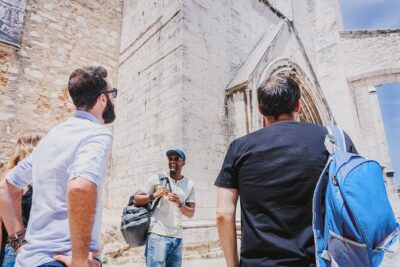
Best of Lisbon Small-Group Guided Walking Tour
Read our review →
Private Guided Tuk-Tuk Tour with Hotel Pickup
Read our review →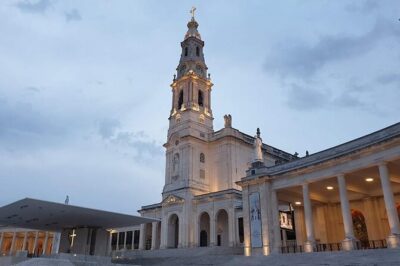
Fátima, Nazaré, Batalha, and Óbidos Guided Tour
Read our review →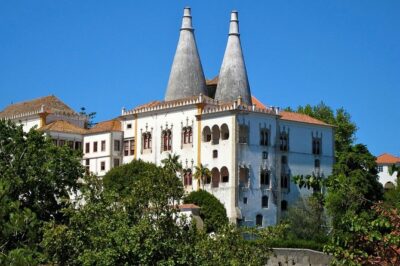
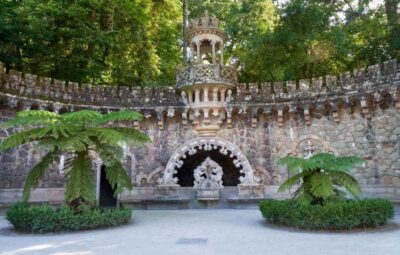
Guided Tour to Sintra, Pena, Regaleira, Cabo da Roca and Cascais
Read our review →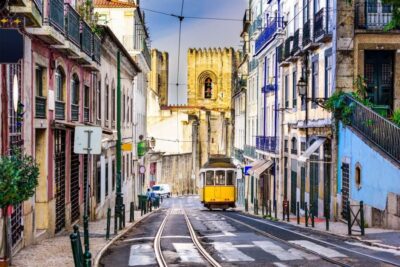
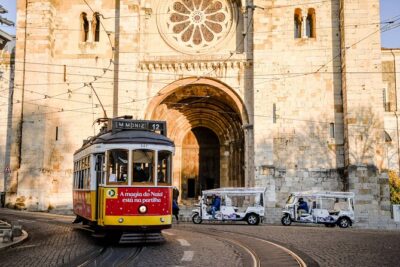
Welcome Lisbon Tour with Local Guide in Private Eco Tuk Tuk
Read our review →