Reviewed · WALKING TOURS
Best of Lisbon Small-Group Guided Walking Tour
Lisbon works best when you walk it. This is an easy way to connect the dots between major squares, neighborhoods, and viewpoints in just 3 to 4 hours, with a small group and a local guide steering the story.
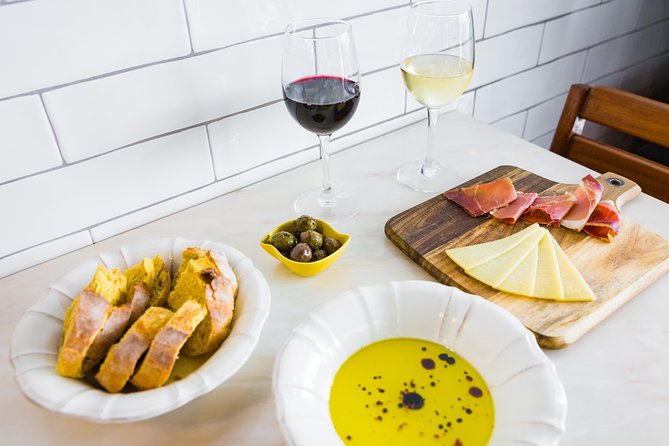
I especially like two things. First, you get real food time built in, including a classic pastel de nata and an included wine tasting and tapa/snacks. Second, the route helps you understand how Lisbon was shaped, from the big earthquake rebuild in Baixa to the political turning point at Carmo Square, so you are not just sightseeing, you are making sense of the city.
One possible drawback: if you already know central Lisbon well and want deeper, church-by-church coverage, you might feel you only touch the highlights. For example, one common request like the Sé Cathedral is not part of this walk.
Key things I’d plan around
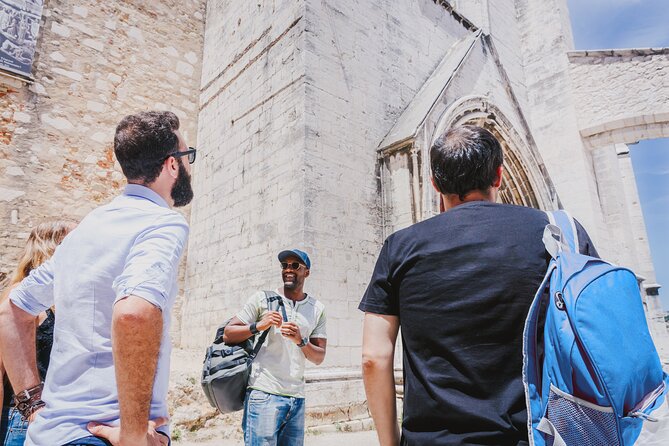
- Small group, up to 14 people, so it stays conversational rather than chaotic
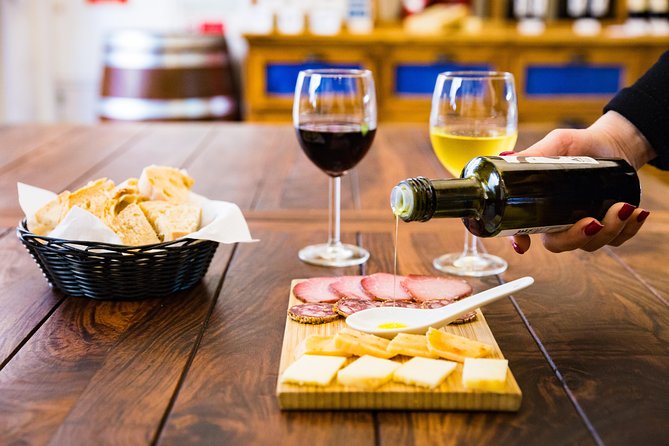
- Food included: pastel de nata plus wine tasting and a tapa or snacks during the route
- A route that stitches neighborhoods together, from Baixa to Alfama to Chiado, not just one area
- Frequent famous stops without museum lines, since monument and museum entries are not included
- Guides like Felipe, Maria, and Jose tend to answer questions well and keep the pace friendly
- Half-day walking with uphill sections, so comfortable shoes matter
Why this Lisbon walking route feels like a greatest-hits mix
This tour is designed for orientation. You start in the middle of the city and gradually move through the neighborhoods most people list on their first day, but with context that makes those places click.
Lisbon is layered. You can stand in a square and understand Portuguese independence, then within the same morning you are walking toward the city’s waterfront welcome area. The guide’s job is to keep those connections clear, and the small-group size helps you actually ask questions without feeling rushed.
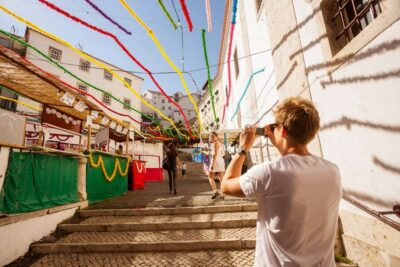
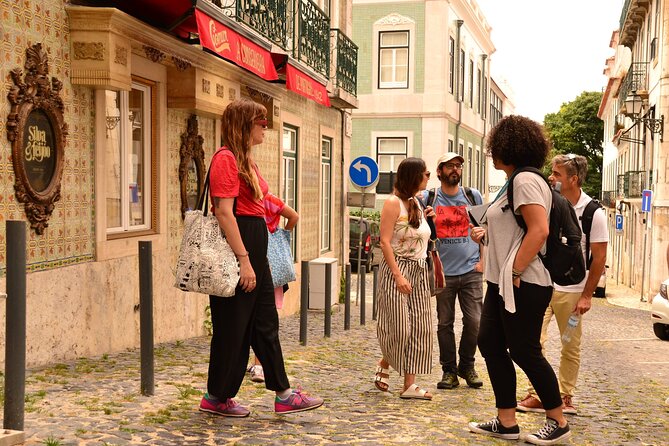
Also, it is active in a practical way. You are not just shuffling between viewpoints, you are walking the streets that locals use, including the lanes that make Alfama feel like a different world once you arrive.
More walking tours in Lisbon:
- Lisbon: History, Stories and Lifestyle Walking Tour
★ 4.8 · 10,902 reviews - Lisbon: Food and Wine Small Group Walking Tour
★ 4.9 · 4,082 reviews - Best of Lisbon Walking Tour: Rossio, Chiado & Alfama
★ 4.9 · 2,700 reviews
Value check: $23.94 for guide, pastry, wine tasting, and early orientation
At about $23.94 per person for a guided half-day, the real value is not the sights alone. It is the combination of: a professional local guide, built-in food stops, and a logical path through multiple neighborhoods.
Most city tours either cover history but skip food, or they do food but leave you guessing where everything is. Here, you get the classic pastel de nata, plus a wine tasting and tapa/snacks included, so you can keep your energy up while you walk.
The other part of the value is time. If you only have a short stay, this kind of route is a fast way to learn the city’s layout. Once you finish at Praça do Comércio, you are ready to explore on your own without getting stuck in the wrong direction.
Start at Praça Dom Pedro IV, then Rossio Square and Igreja de São Domingos
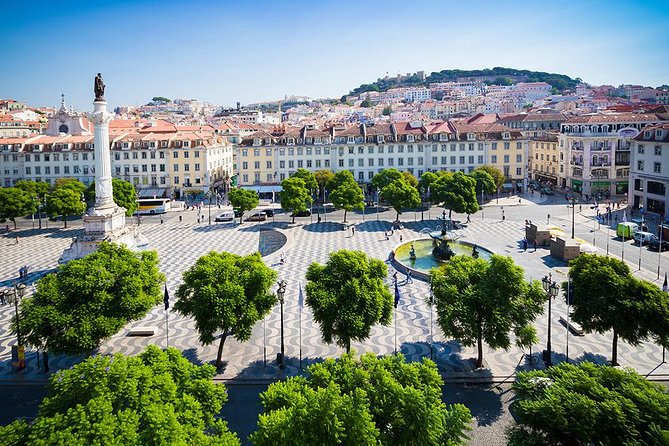
The tour kicks off at Praça Dom Pedro IV (Rossio area), right where you want to be if you are trying to get your bearings fast. From here, the walk focuses on the urban heart of Lisbon, which is a smart start because nearly everything you do later connects back to this zone.
One of the first places you look at is the big public space of Rossio Square, also known as Praça D. Pedro IV. The square is a key nerve center in Baixa, so it sets the stage for what Lisbon looks like at street level.
Right after that, you spend a short moment at Igreja de São Domingos on São Domingos Square. Even though it is a brief stop, it is useful as a reminder that Lisbon’s central blocks are packed with layers. The guide’s storytelling helps you see these buildings as part of the same living city, not isolated photo spots.
Restauradores Square and the independence obelisk, then Rossio Station
Next comes Praça dos Restauradores, dedicated to the restoration of Portuguese independence in 1640 after decades under Spanish rule. In the middle, an obelisk points the story upward, with names and dates tied to battles from the Portuguese Restoration War. It is a quick stop, but the symbolism lands.
From there, you move to Estação do Rossio, the historic train station building that many people recognize from Lisbon postcards. The exterior is inspired by Manueline architecture, which gives it that ornate, distinctive Portuguese feel even before you get inside anywhere.
You also hear the connection between Lisbon and nearby places like Sintra through the tunnel route story. Even if you never take that exact train that day, it helps you plan what to do next, because Sintra is a top add-on for many itineraries.
A few other ways to do Lisbon
- Lisbon: Private Guided Tuk-Tuk Tour with Hotel Pickup
★ 4.9 · 4,552 reviews - From Lisbon: Fátima, Nazaré, Batalha, and Óbidos Guided Tour
★ 4.7 · 3,060 reviews - Guided Tour to Sintra, Pena, Regaleira, Cabo da Roca and Cascais
★ 5.0 · 2,978 reviews - Lisbon: São Jorge Castle E-Ticket and Audio Guide
★ 4.3 · 2,182 reviews
Largo do Carmo and the Carnation Revolution connection
At Largo do Carmo, you hit one of Lisbon’s most meaningful political landmarks. This square is tied to the convent area and, more importantly for modern history, to the Carnation Revolution in 1974.
If you want to understand Lisbon beyond royal streets and viewpoints, this is a key moment. The guide explains how Portugal’s dictatorship collapsed after 48 years, turning a square into a memory you can carry while you keep walking.
The practical benefit is that you start noticing the city differently. After this stop, squares do not feel like backdrops. They feel like decision points.
Elevador de Santa Justa and why Lisbon is easier with a plan

Then you work your way toward one of the city’s most famous structures: the Elevador de Santa Justa. Even when you do not ride it, the area around it is where Lisbon’s different elevations start to feel real.
This is where you notice why the tour’s pace matters. Some people are surprised by how hilly Alfama can be, but the guide can use public elevators and escalators when available to keep the walking comfortable. You feel the climb without it becoming a grind.
This stop is also a photo moment. You can take in views from the historic center area and get that instant sense of how Lisbon wraps around its hills, before you head into the more winding streets later.
Chiado, Rua Augusta, and Baixa after the 18th-century earthquake

Next, you enter Chiado, one of Lisbon’s classic neighborhoods for shopping and culture vibes. It was developed in the 19th century for the city’s intellectual and wealthy elites, and the facades still give you that time-travel feeling as you move along.
The guide keeps the walk grounded with what you see in front of you: boutiques, theaters, bookstores, and older café culture. If you like people-watching, this is one of the best areas in central Lisbon to do it.
You then pass through Rua Augusta, described on this route as the city’s most expensive and fancy avenue. It is a shorter segment, but it is a good street to understand how Lisbon’s center flows toward the river.
After that, you reach Baixa de Lisboa, Lisbon’s downtown, rebuilt after the 18th-century earthquake. The guide explains the rules of urbanism and anti-seismic architecture used after the devastation, plus the idea that the solutions were innovative for their time. Baixa can look orderly compared to Alfama, and now you know why.
This is also one of the most practical stretches for your day. Baixa is flatter than many other areas, so it balances out the earlier walking and helps you conserve energy for Alfama.
Miradouro views and Alfama, where fado lives between the walls
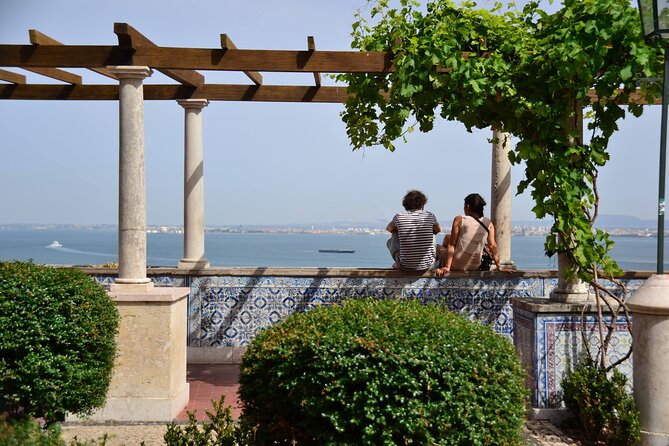
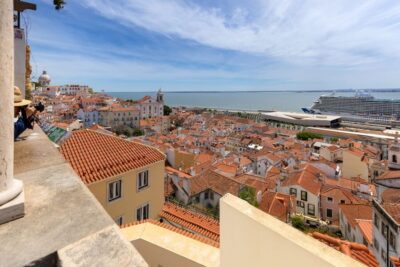
You take a breather for a panoramic moment at Miradouro Chao do Loureiro. Even if you are not a big viewpoint person, this stop helps your brain map the city. You get a sense of where you are in relation to the river and the hills you are about to walk into.
Then comes Alfama, the oldest Lisbon quarter, known for Moorish heritage and, of course, fado music. You walk past fado restaurants tucked into alleys and winding streets, and the guide explains how this melancholic music connects to Portuguese identity and everyday life.
This is where you should slow down. Alfama rewards unhurried wandering. The streets are narrow, and the corners are the point, not just the big sights.
The tour’s timing here is what matters. You get enough time to enjoy the feel of the neighborhood, but it is still managed so you arrive at the finish with energy left.
Praça do Comércio, the Atlantic welcome hall, and finishing with a plan
Your walk ends at Praça do Comércio, also called Terreiro do Paço because it was once the site of the Paços da Ribeira royal palace until the 1755 earthquake destroyed it. After that, the square was remodeled as part of the rebuilding of Pombaline downtown.
Why this ending works: you reach the river-facing side of Lisbon after you have already walked the interior story. Now the city feels complete. The guide explains how this was a reception hall for travelers arriving from the Atlantic, which makes the space feel like more than a pretty plaza.
Once you finish here, you can keep exploring on your own. You are positioned for waterfront walks, river views, and easy navigation to other central areas.
Pace, photos, and the shoes question you should actually answer
This is a moderate-walking tour. Lisbon’s hills are not theoretical, they are physical. The good news is that guides often keep things friendly with timed stops, and they may use elevators or escalators where possible to make the route easier.
That said, wear comfortable shoes. One heavy rain story did come up, and the point is simple: you will be outside for a few hours, so plan for weather and uneven sidewalks.
Photo strategy tip: do not treat this like a checklist where you stop only for the perfect shot. In places like Alfama, stop for the moment, then move on. The best angles in these neighborhoods appear after you walk a few steps and let the street shape work for you.
Who this tour fits best, and who should look elsewhere
This tour is a strong fit if you are:
- Visiting Lisbon for the first time and want a guided overview across multiple neighborhoods
- Short on time and want to understand the city’s layout fast
- Interested in independence history and the Carnation Revolution context, not just architecture
- Happy with a walking tour that includes hills, but stays manageable
You might want a different option if you:
- Are already very familiar with central Lisbon and you crave deeper stops in fewer areas
- Want a lot of museum time or specific monument entry, since those are not included
- Prefer a tour that focuses on one neighborhood in depth rather than a highlights mix
Should you book Best of Lisbon Small-Group Guided Walking Tour?
If you want a smart first-day orientation with pastel de nata, a wine tasting and tapa/snacks, and a route that connects Baixa, Chiado, Alfama, and the riverfront, I think this is a good booking. The small group size (up to 14) also makes it feel like a real morning with a guide, not a big production.
I would book it early in your trip, especially if you want to plan the rest of your days with confidence. After you finish at Praça do Comércio, you will know where you are, and that makes every later decision easier.
FAQ
How long is the Best of Lisbon Small-Group Guided Walking Tour?
The tour lasts about 3 to 4 hours.
Where does the tour start and end?
It starts at Praça Dom Pedro IV, 1100 Lisboa, Portugal and ends at Praça do Comércio, 1100-148, Portugal.
What food and drinks are included?
The tour includes a classic pastel de nata pastry and a wine tasting with a tapa and snacks.
What language is the tour offered in, and how big is the group?
The tour is offered in English, and it has a maximum group size of 14 travelers.
Are museum or monument entry tickets included?
No. Entry to museums and monuments is not included.
What is the cancellation policy?
You can cancel for a full refund up to 24 hours in advance. If you cancel less than 24 hours before the start time, the amount paid is not refunded.
Newly reviewed in Lisbon
- Lisbon: Private Food Tour – 10 Tastings with Locals★ 4.8 · 73 reviews
- Lisbon: Private Custom Tour with a Local Guide★ 5.0 · 6 reviews
- Lisbon: 2 hours Private City Highlights Tuk-Tuk Tour for two★ 5.0 · 5 reviews
- Lisbon: City Sightseeing Tour★ 4.9 · 13 reviews
- Lisbon: Private Christmas Lights Tour by Eco Tuk Tuk★ 4.9 · 51 reviews
- Lisbon: Private Catamaran Charter for up to 18-People★ 5.0 · 7 reviews
- Lisbon: Private Boutique Boat Tour – Sail in Style★ 5.0 · 87 reviews
- Lisbon: Private Boat Trip, Guided Walking Tour, Bike & Tram★ 4.8 · 116 reviews
Walking Tours, compared.


Best of Lisbon Walking Tour: Rossio, Chiado & Alfama
Read our review →
Sintra & Cascais Day Tour with Pena Palace Entry and Gardens Walk
Read our review →
Lisbon Roots – Small group Food & Culture Walking Tour w/tastings
Read our review →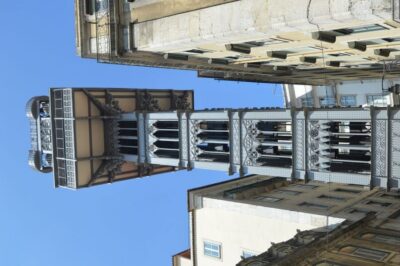
Starter Walking Tour to the highlights in German
Read our review →