
Reviewed · ÉVORA DAY TRIPS
Évora Unforgetable Sidecar Tour
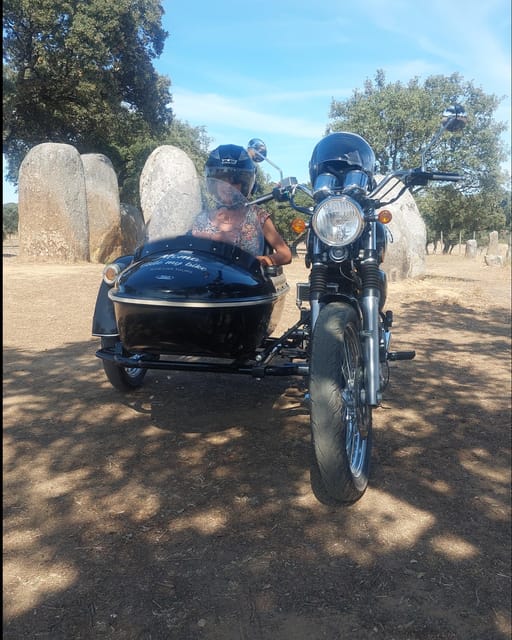
A sidecar motorcycle tour is a great way to see Évora because you cover ground fast, yet the guide keeps the story clear. What makes it special is the route, which runs through the city’s Celtic, Roman, and Visigothic to Muslim layers, not just the postcard sights.
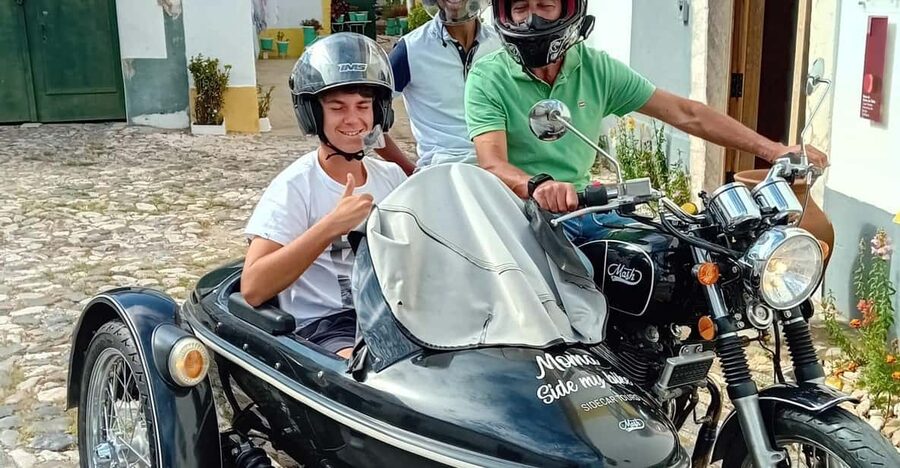
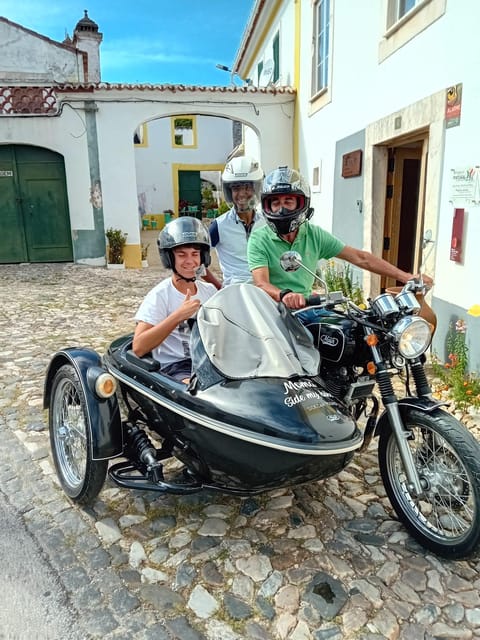
I especially like the live guide approach, with Paulo running the show like a moving encyclopedia and explaining how each era changed what you see. I also love the ride style, since the sidecar feels comfortable and the open-air speed makes the streets and viewpoints more fun than a standard walking loop.
The one thing to keep in mind is that this is mostly an exterior sightseeing route, not a buildings-from-inside tour. If you want long interior visits at multiple monuments, you might feel a bit limited compared with a full-day walking tour.
Key highlights you will feel right away
- Celtic-to-Roman-to-Muslim storyline that keeps you oriented as the city changes by century
- Windmill viewpoint start near Alto de São Bento for an early bird’s-eye look
- Comfort and safety built in, with helmets and Bluetooth headset communication
- City walls, towers, and fortifications in a single loop, so the defensive layout makes sense
- Capela dos Ossos and major squares handled efficiently with smart stops
- A classic 20th-century style cafe finish, plus a memorable peacock moment in the end gardens
How this Évora sidecar ride connects three civilizations in one loop
Évora is one of those rare places where you can literally track time by where the buildings sit and how the streets are shaped. You see it here through a ride that moves from early settlement areas to Roman monuments, then into the older citadel layers linked to Visigothic and Muslim influence.
The sidecar format matters. You are not stuck in a slow, stop-and-start walking pace, so the guide can keep the timeline moving. That means the city’s layout feels less like a random list of sights and more like a real map of power and community.
And because the tour is private, Paulo can adapt the pacing to your questions, your language, and what you want to focus on. You can ride for the fun of it and still come away with a clear sense of what you just saw.
More motorcycle sidecar rides in Lisbon:
- Private Tour: Best of Lisbon by Sidecar
★ 5.0 · 377 reviews - Lisbon: Sidecar Tour
★ 5.0 · 123 reviews - Lisbon: Belem Motorcycle Side-car Tour
★ 5.0 · 48 reviews
Meeting points, pickup flexibility, and what the ride setup means
You have two common start options: Capela dos Ossos or Jardim Público. In practice, the operator also offers pickup and drop-off in hotels across Évora and even the outskirts, which is a big help if you are trying to avoid dragging bags back to a central corner.
Safety is handled with proper helmets and Bluetooth headset connection, so you can hear the guide while you ride. That small detail makes a surprising difference, especially when you are moving between viewpoints and tighter streets where you would normally struggle to hear a guide over traffic.
The tour lasts about 3 hours, so it is not rushed, but it is also not a slow wandering crawl. You will be moving through a lot of Évora’s key areas, and the time pacing helps prevent the “I saw a bunch of places, but I forgot what any of them meant” feeling.
Starting near the windmills at Alto de São Bento: Eborones on the hill
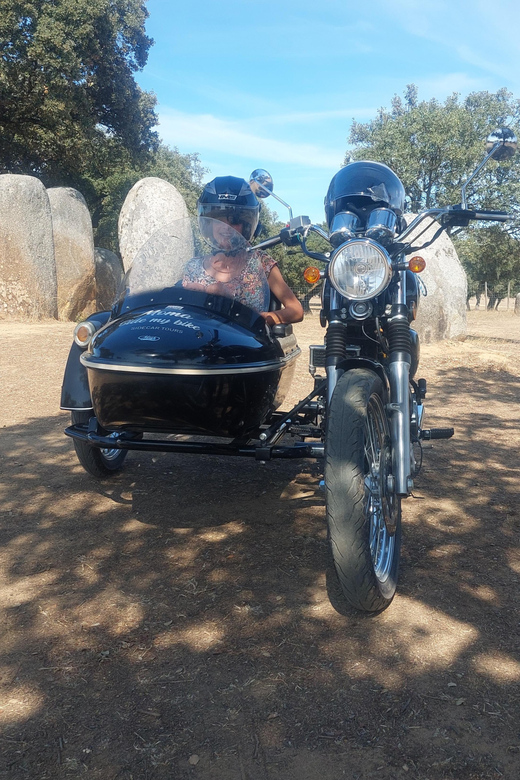
Your ride begins near the windmills in Alto de São Bento, and the timing is smart. You start on higher ground to get a bird’s-eye sense of where Évora spreads out, so the later views inside the medieval core feel more meaningful.
This is also where Paulo frames the earliest settlement link, the Celtic people called the Eborones. Instead of treating early history like a footnote, the guide uses this hilltop start to set up why the location mattered.
Then you head down and around, which keeps the storyline in motion. You are not just looking at monuments, you are watching how the terrain and the city structure shape what gets built where.
Roman Évora, explained on the move: Temple, Sertório Tower, and Liberalitas Julia walls
Once the route swings into the Roman areas, you start noticing that Roman Évora was not only about big monuments. It was also about organization, walls, towers, and how people moved through space.
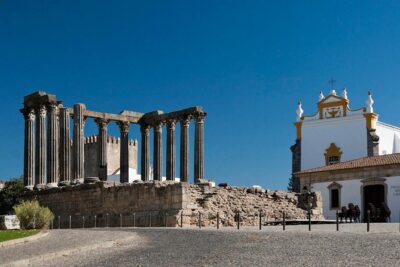
Key sights in this phase include the Roman Temple and Tower Sertório. You also get brought into the bigger defensive picture with the ancient battlement walls associated with Ébora Liberalitas Julia, the Roman-era name tied to the city’s identity.
What I like about doing this part by sidecar is perspective. From the street and angles you reach quickly by car and motorcycle, you can connect the monument with the surrounding fortification logic. Walking the city alone can work, but it often turns defensive walls into “just another wall.” Here, they get explained as infrastructure, not decoration.
More Évora day trips:
- From Lisbon: Évora and Monsaraz Day Tour with Wine Tasting
★ 4.8 · 279 reviews - From Lisbon: Évora Wine & Heritage Tour
★ 4.1 · 93 reviews - Évora: Private tour with entrance tickets to main monuments
★ 5.0 · 57 reviews - Évora: Tales and Legends Guided Walking Tour
★ 4.7 · 37 reviews
Inside the old citadel layers: Visigothic to Muslim Yeborah and the 1166 Foral moment
The city’s older core shifts again as you move into the citadel. Paulo connects the Visigothic and Muslim legacy to the name Yeborah, and you begin to understand why Évora’s cultural identity kept re-forming over time.
A big moment is being placed near the landmark of 1166 A.C., when the first Foral of Évora is connected to the city’s official development. You may not feel paperwork history sounds exciting, but this is where the guide’s storytelling pays off.
From here, the route helps you understand why Évora becomes a layered capital of sorts. You see enough of the urban fabric to guess how authority, trade, and religious power influenced everyday life.
The Cathedral area and the two-style architecture lesson you can actually spot
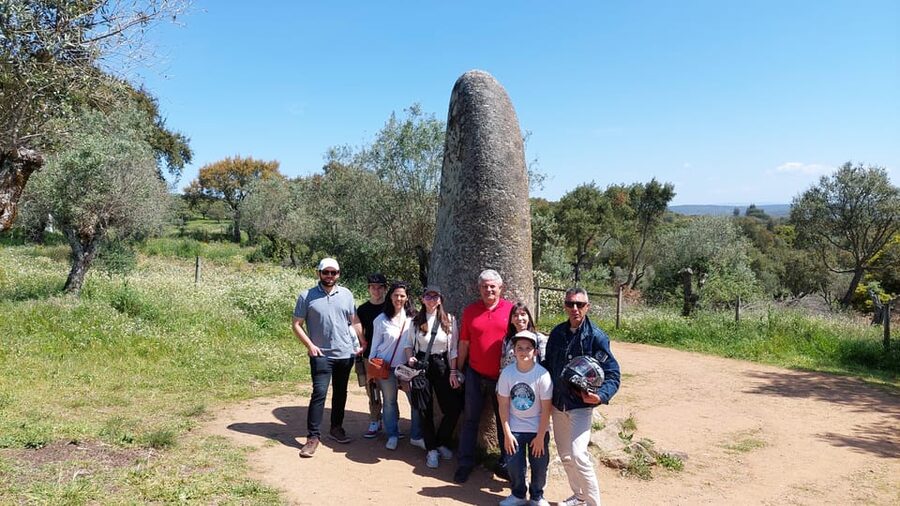
As the ride turns toward the Cathedral area near the 13th century, you get a very practical architecture lesson. The Cathedral is described as having Romanesque-Gothic influence on the outside, and Paulo helps you look at what that means in real visual terms.
This part is also where the tour helps you orient around squares. In Évora, the public spaces are like stage sets, and the monuments are the actors. When you get the squares in the right order, your brain starts to map the city without trying too hard.
You also get a cluster of named monuments you can anchor on mentally, which makes later self-guided strolling easier. Even if you do not enter, you still leave knowing what sits where and why those spots matter.
Templo Diana, Lóios Monastery, and the Évora Museum stop that saves time
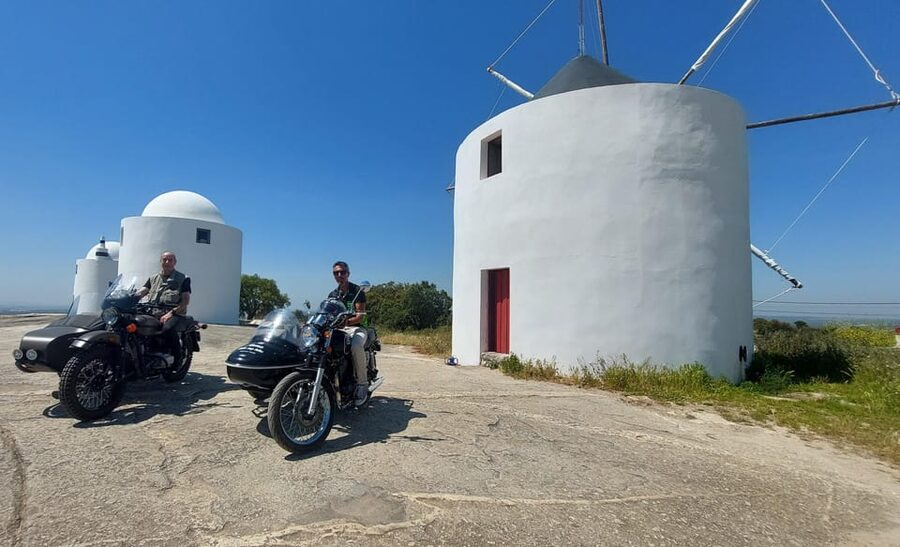
This is one of the most useful parts of the experience if you like to balance seeing with learning. You pass by or stop for Duana Temple (often referred to as Diana in Évora) and Lóios Monastery, both key markers that help you keep the Roman and medieval threads separate in your mind.
The Évora Museum is a bright payoff. The experience includes free museum entrance for two and also notes skipping the ticket line, which means you spend more time inside and less time stuck in queues.
One more detail that helps: since the tour is focused on a sidecar loop, the museum stop works like an organized break. You get a chance to slow down, compare what the guide explained to what you see up close, and then rejoin the ride with your questions already formed.
Around the medieval walls and towers, plus 17th-century fortifications
A standout feature of this tour is that you are not limited to the “pretty center.” You also get brought around the medieval walls and towers, and you see the later 17th-century fortification work that shows how defense thinking changed.
This matters for your understanding. When you only see monuments, you can mistake a historic city for a theme park. Seeing fortifications in context helps you realize Évora was built for real survival, and later generations kept upgrading what they already had.
You also get stops and points where the city structure becomes obvious. Those views are why the sidecar is such a practical choice. You see big-scale walls and towers, then quickly transition into squares and gates without spending half your time doing uphill navigation on foot.
D. Manuel Palace and the Golden Portugal Age angle that ties it together
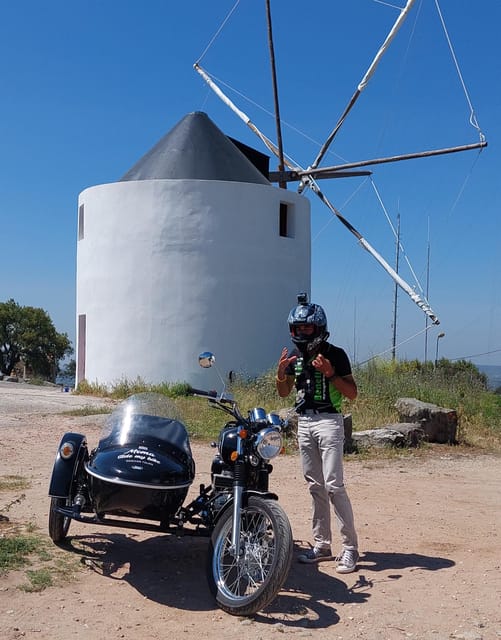
When the ride reaches the D. Manuel Palace, Paulo connects the visit to the “Golden Portugal Age” idea and Manuelino style design cues. This is the part where the tour shifts from defensive architecture and older religious structures into a more official, prestige-oriented city image.
The palace moment is not just about admiring a façade. It is about understanding how wealth, politics, and Portuguese identity showed up in stone. Once you hear that framing, you start looking at details you might otherwise skip.
From there, the ride keeps moving through city symbols like Giraldo Square and Portas de Moura, so you get a sense of how power, ceremony, and movement through gates all connect back to one another.
Giraldo Square to Portas de Moura, then aqueduct and fountains
This section is a strong example of why the tour works for first-timers. You get the central squares, then the functional infrastructure, all in the same flow.
You will see Giraldo Square, Portas de Moura, and the Silver Aqueduct with its fountains. Paulo’s commentary makes the aqueduct more than a pretty line in the distance, because water infrastructure is what allowed the city to grow beyond immediate needs.
You also get Tower Sisebuto on the route. For me, towers are like chapter headings. They signal a change in era and purpose, and they give you a mental bookmark you can remember later when you are mapping Évora on your own.
Cork-crafts, old and new architecture on foot, and the cafe finish
One of the most charming parts of the experience is the mixture of riding and small walking moments. You get a little walk in the old city so you can understand the relationship between older and newer styles, rather than only absorbing the city through car windows.
You also get to see shops and crafts linked to local production, including products made in cork and other materials. If you buy anything, this is the place to do it while the craft story is fresh in your mind.
The tour ends in a cafe environment styled like the beginning of the 20th century, which gives you a nice emotional landing after all the architecture. It is also where you wrap up with information about gastronomy and wines, so the evening plan feels easier.
A final detail worth mentioning from what people experienced: the ending garden includes peacocks, and that moment is genuinely memorable because it is unexpected and photogenic without feeling like a gimmick.
Value for $53 per group: what you really get in 3 hours
At about $53 per group for a 3-hour private tour, the value is mainly in three things: time, access, and interpretation.
First, you are covering a lot of Évora without the energy drain of constant uphill walking. Second, you get a live English, Spanish, or Portuguese guide who ties the sites to a real timeline, so you do not leave with a pile of names. Third, you get at least some interior time at Évora Museum with free entrance for two, plus the note about skipping the ticket line, which helps on a timed experience.
Because it is private, you can also think of it as paying for less waiting and more tailored pacing. If you are traveling as a pair, the “per person” value can look especially good compared with several separate paid entrances and long self-guided wandering.
The only cost consideration is mental. If you prefer slow, quiet museum-style pacing and full interior visits everywhere, you may want a different format. This tour is built to show you how Évora works as a whole.
Who should book this sidecar tour, and who might prefer something else
I think this tour suits you if:
- You want a first-time grasp of Évora that feels organized, not random
- You enjoy a bit of adrenaline and prefer a fun ride over walking the whole day
- You like guided explanations that connect architecture to history instead of reciting dates
- You are short on time but still want the major districts and monuments covered
You might prefer a different tour if:
- You want frequent long interior visits at multiple buildings
- Motorcycle riding is not your thing, even with helmets and Bluetooth communication
- You prefer a strict walking route where you can stop and read for as long as you like
Should you book this Évora Unforgettable Sidecar Tour?
If your goal is to get oriented fast and understand why Évora looks the way it does, this is a smart booking. The route stitches together Celtic roots, Roman landmarks, and later citadel layers with a guide who keeps the story clear, and the sidecar format makes the city feel lively rather than tiring.
Book it if you want a short, high-impact outing with a private feel, comfort, and a classic cafe finish. Skip it if you are chasing maximum interior time and slow museum pacing.
If you do book, do two things: wear something comfortable for the ride, and go in ready to ask questions. Paulo’s whole job is turning what you see into a timeline you can actually remember.
FAQ
How long is the Évora sidecar tour?
The tour is about 3 hours.
Where can I start the tour in Évora?
You can start at either Capela dos Ossos or Jardim Público. Pickup is also described as available anywhere in Évora, and drop-off can be anywhere in the city or outskirts.
Do you visit the inside of monuments during the tour?
The experience is described as seeing the important monuments, but not going inside buildings as a general approach. Évora Museum has free entrance included for two travellers.
What safety and audio gear is used on the sidecar?
You will ride in a motorcycle sidecar with helmets that are connected by Bluetooth.
What languages is the live guide available in?
The live guide is available in English, Spanish, and Portuguese.
Can I cancel for a refund, and can I pay later?
You can cancel up to 24 hours in advance for a full refund. You can also reserve now and pay later.
Newly reviewed in Evora
- Lisbon: Private Full Day Evora & Alentejo Wine Tour★ 5.0 · 3 reviews
- Golden Era of Évora walking & the portuguese wine tasting.★ 4.3 · 19 reviews
- From Lisbon: Évora Wine & Heritage Tour★ 4.1 · 93 reviews
- Full-Day Private Cultural Tour in Evora and Monsaraz★ 4.2 · 5 reviews
- From Montemor or Évora: Guided Hike to Almendres Megalithic★ 4.8 · 9 reviews
- From Lisbon: Évora Private Historic Discovery Tour★ 4.7 · 7 reviews
- From Lisbon: Évora, Monsaraz, Wine Tasting & Cristo Rei★ 4.5 · 10 reviews
- Évora Tour: Private and Customized tour Full and Half day★ 3.8 · 3 reviews
Évora Day Trips, compared.

Évora and Monsaraz with Regional Wine Tasting from Lisbon
Read our review →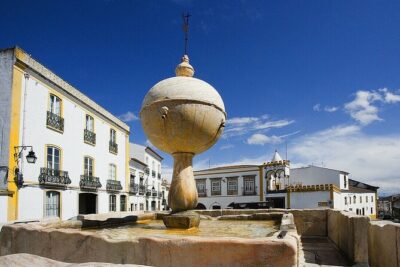
Private walking tour with tickets to main monuments
Read our review →
Private tour with entrance tickets to main monuments
Read our review →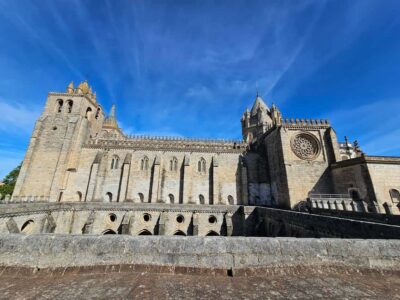
Évora (with Sé & Bones), Evoramonte & Arraiolos: From Lisbon
Read our review →
Browse the lists this tour appears in