Reviewed · WALKING TOURS
Lisbon: Jewish Quarter Guided Walking Tour
Lisbon’s Jewish quarter story is interesting because it lives in the city’s street plan, not in one big monument. This is a guided walk that links medieval Lisbon to the later centuries when communities were pushed, hidden, and scattered.
I love two things about it. First, I like how the tour anchors you at Praça do Comércio, then works outward through the neighborhoods where Jewish life, segregation, and forced conversions shaped daily reality. Second, I like that the guide, often Amber, is clear and sharply organized, so the history actually sticks while you’re moving through Lisbon.
One consideration: physical evidence is limited, so you will be relying on explanations more than on preserved Jewish landmarks. If you prefer only places with obvious remains, you might feel a little tug of realism as you walk.
Key highlights to look for
- Praça do Comércio as the starting point tied to the Exodus story
- Alfama and medieval segregation in the streets of the Castle Hill zone
- Baixa and forced conversions that changed identities under pressure
- Rossio and the 1506 Pessah massacre presented in Lisbon’s public space
- IIWW refugees in the 1940s showing a more modern layer of Jewish presence
- A small group with a guide who answers questions so you can steer what you want to focus on
Entering Praça do Comércio: the Exodus in the middle of modern Lisbon
Most Lisbon first-timers start with views. This tour starts with meaning. You meet at Praça do Comércio, one of Lisbon’s great open squares, and the guide sets the tone by tying the area to the Exodus origin story.
From the start, you’re not just collecting facts. You’re learning how Lisbon’s layout reflects waves of migration, policy, and survival. It’s a smart approach, because the neighborhoods you’ll walk through are where the story happened.
The meeting is easy to spot. Your guide will be with a dark red umbrella or a visible sign, and you confirm details by contacting the number linked to your voucher via WhatsApp or iMessages. The tour ends back at the meeting point, which makes planning the rest of your day simpler.
More walking tours in Lisbon:
- Lisbon: History, Stories and Lifestyle Walking Tour
★ 4.8 · 10,902 reviews - Best of Lisbon Small-Group Guided Walking Tour
★ 5.0 · 4,869 reviews - Lisbon: Food and Wine Small Group Walking Tour
★ 4.9 · 4,082 reviews
A route through Praça do Município, Rua do Comércio, and Casa dos Bicos
After Praça do Comércio, the walk threads into the connected city core. You pass Praça do Município and Rua do Comércio, then move toward Casa dos Bicos, a famous building in the area that’s impossible to ignore once you’re close.
This stretch matters because it bridges the open, ceremonial space of Praça do Comércio with the tighter street life around it. You feel the contrast, and the guide uses that shift to explain how Jewish presence and later New Christian life fit into the daily rhythms of Baixa and nearby streets.
You continue toward Ribeira, where the riverfront energy is different again. Even if you are not a “look at every wall” person, these transitions help you understand why different Lisbon neighborhoods carried different pressures and different kinds of community life.
Ribeira to the Resistance museum: moving from community to survival
One of the most useful aspects of the tour is that it does not stop at the medieval period. You head toward the Resistance museum, which helps connect the earlier stories of identity and persecution with later Lisbon realities.
It’s also where the tour starts to broaden beyond a single theme. The guide talks about how Jewish presence in Lisbon shifts over time, including the later layer of IIWW refugees in the 1940s.
That WWII era detail is valuable because it gives you continuity. Lisbon is not only a “past city.” The same streets that framed earlier divisions also became routes for movement, refuge, and survival later on.
Mouraria and Praça da Figueira: where the city keeps telling side stories
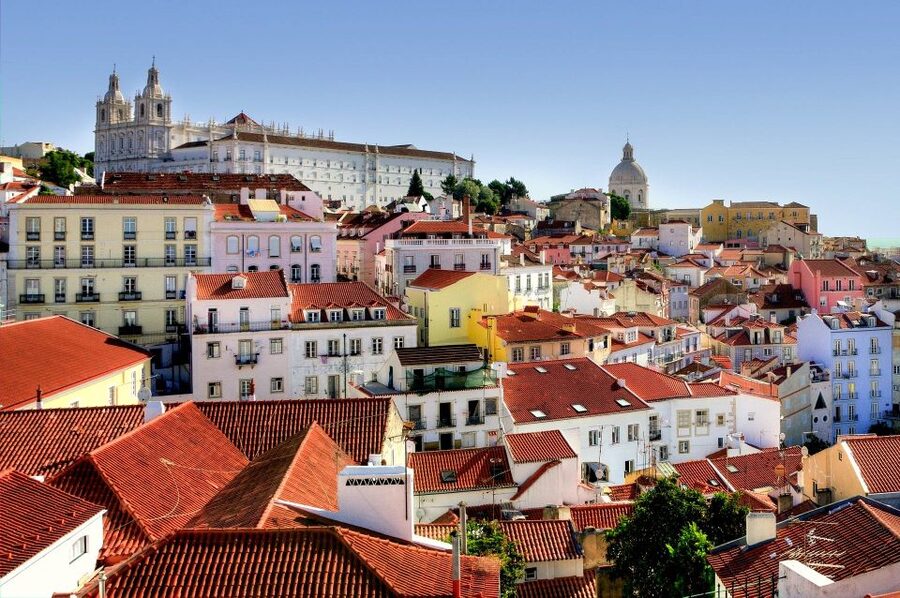
As the tour continues, you make your way through Mouraria and then toward Praça da Figueira and Rossio. These are neighborhoods that many visitors pass through fast, but on this tour they get treated like chapters, not like shortcuts.
The Mouraria section is where the story of neighborhoods becomes more practical. The guide’s job is to help you understand what it meant to live near power, near markets, and near the places where policy and suspicion could quickly turn personal.
Plaça da Figueira and Rossio then act like a hinge. You move from smaller streets and shifting local atmospheres into a larger public stage, which sets you up well for the next major stop.
A few other ways to do Lisbon
- Lisbon: Private Guided Tuk-Tuk Tour with Hotel Pickup
★ 4.9 · 4,552 reviews - From Lisbon: Fátima, Nazaré, Batalha, and Óbidos Guided Tour
★ 4.7 · 3,060 reviews - Guided Tour to Sintra, Pena, Regaleira, Cabo da Roca and Cascais
★ 5.0 · 2,978 reviews - Lisbon: São Jorge Castle E-Ticket and Audio Guide
★ 4.3 · 2,182 reviews
Rossio and the 1506 Pessah massacre: history on a public stage
Rossio is one of Lisbon’s central squares, and the tour uses that openness on purpose. Here, the guide focuses on the 1506 Pessah massacre, placing it within the broader pattern of fear, accusation, and violent crackdown.
What I like about this stop is the framing. You don’t just hear the date and the event. You connect it to the earlier parts of the route, like segregation in Alfama and forced conversion pressures in Baixa.
This is also where the guide’s approach matters. In the best moments, you can tell the guide is comfortable answering questions on the fly. Multiple people rated the tour highly for how questions were handled and for how the guide answered in a clear way without turning the group into a lecture hall.
Alfama on Castle Hill: medieval segregation, identity pressure, and constant change
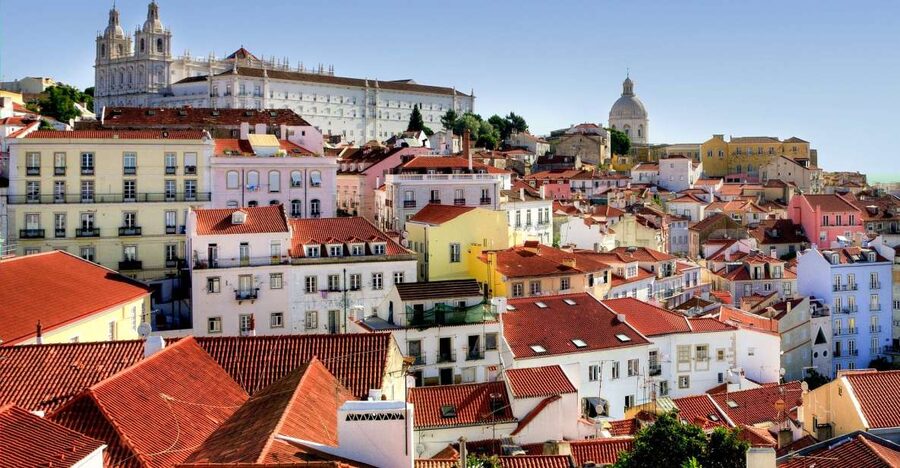
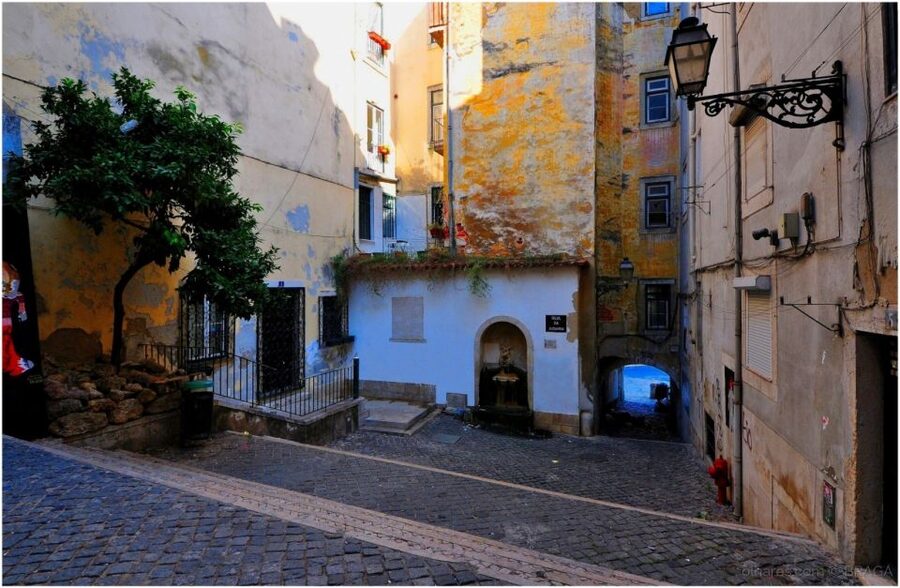
If Lisbon has one big “feel it in your legs” neighborhood, it’s Alfama. This tour includes the Castle Hill zone and Alfama, and that is not an accident. The geography of these streets shaped how communities lived, how they were separated, and how they learned to stay alert.
The tour highlights Alfama as the Jewish quarter and explains the medieval idea of segregation. You’ll hear how neighborhood boundaries mattered, and how they were enforced in ways that affected everyday life.
Then you move toward the story of forced conversions in the Baixa area. This is where the tour gets emotionally heavy, but in a grounded way. You’re shown how policy could redefine identity, and why the line between Jewish life and New Christian life in Iberia could be complicated, especially over generations.
One review note I think you should keep in mind before you go: not much physical evidence remains in Lisbon to point to at every corner. That can be frustrating if you want a “tangible landmark” for every era. Still, the guide’s goal is to give you enough historical context to make the walking meaningful, even when the street scene is quiet.
Lisbon’s modern Jewish presence: from diaspora to IIWW refugees
The tour doesn’t treat Lisbon as a finished chapter. It includes contemporary presence, including the IIWW refugees passage in the 1940s, which you should expect to hear clearly as part of the narrative.
You also get a broader diaspora perspective. The guide talks about how the Jewish diaspora spread from Lisbon across the Atlantic, toward the Mediterranean area, Asia, and northern Europe. That widening of the lens is useful because it prevents the story from turning into a narrow “Portugal only” lesson.
If you’re the kind of traveler who likes the present-day thread, you might notice one common gap. Some people wanted more on current Jewish population and activity. That doesn’t mean the tour ignores the modern layer, but it does mean your expectations should be set: this walk is primarily about the historic route of events and neighborhood life.
Why the guide matters, and how small groups change the experience
This is a small group tour limited to 10 participants, and that size matters. You move at a pace that allows explanation without constant stopping, and you get enough time for questions to be answered.
Several reviews sing the same theme: the guide is highly articulate and speaks clearly. Many people mentioned Amber by name, including praise for her ability to connect Portuguese and Jewish history and to keep the tour engaging from start to finish.
The pace also matters for a 2-hour tour. At two hours, you want depth, not a rushed highlight reel. Reviews repeatedly point to a balance of depth and liveliness, including the way the guide brought moments to life rather than drowning the group in dates.
Price and value: what $57 gets you in 2 hours
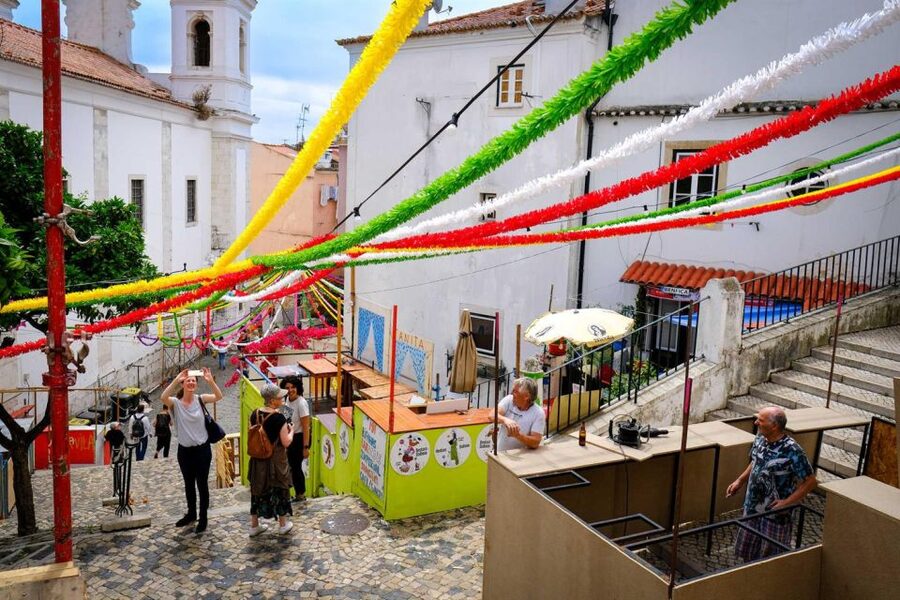
At $57 per person for a 2-hour guided walk with a live English guide, this is a history-focused choice. It’s not a “see a lot of stuff fast” option, and it’s not bundled with food.
So what’s the value? You’re paying for expert interpretation and route knowledge. You’re also paying for group management in a tight, older part of Lisbon where it’s easy to wander without context. In other words, you’re paying to understand what you’re seeing as you walk.
The guide is included, and that is the key. If you want a self-guided experience, you can read up beforehand. But on this route, the real payoff is how someone explains the layers, especially when physical markers are scarce.
What to expect on the ground: walking, hills, and a day-structure fit
This tour includes Lisbon’s Castle Hill and Alfama, plus central squares like Rossio and Praça da Figueira. Even if the route is well-paced, you should expect real walking time and some hills along the way.
It’s also the kind of tour that works best early in your Lisbon day or as a “reset.” You’ll see districts like Baixa, Alfama, and Mouraria with better context afterward, which makes later exploration feel more connected.
What you should bring is simple: comfortable shoes. Also bring the patience to hear serious history in a street setting, because that’s where the meaning lands.
Food and drinks are not included. If you do this near a meal time, plan ahead. You’ll be better off keeping snacks for later or before the tour rather than trying to find something mid-walk.
Who should book this Lisbon Jewish Quarter walk
I think this tour is ideal if you fall into one category: you want Lisbon history tied to real neighborhoods. It’s perfect for people who enjoy stories that connect geography, policy, and identity.
It’s also a great fit for first-time Lisbon visitors who want a second layer after the usual viewpoints. By the end, you’ll understand why places like Praça do Comércio and Rossio matter beyond architecture, and why Alfama and Baixa are central to the Jewish and New Christian narrative.
If you’re traveling with someone who loves genealogy-style questions or historical cause-and-effect, you’ll probably have a strong time. The guide’s ability to answer questions, plus the small group size, helps turn curiosity into real learning.
Should you book? My practical take
Book this tour if you want a structured, two-hour path through Lisbon’s Judiarias and related neighborhood history, including medieval segregation, forced conversions, and the Rossio 1506 Pessah massacre. The price is reasonable for the guide-led interpretation, especially with a group capped at 10.
I’d pause before booking if you mainly want to photograph preserved Jewish sites and want lots of visible remains at every stop. This walk is built around explanation, not a scavenger hunt of monuments.
FAQ
FAQ
How long is the Lisbon Jewish Quarter Guided Walking Tour?
The tour lasts about 2 hours.
What does the tour cost?
The price is listed as $57 per person.
Is the tour guided, and what language is it in?
Yes, it includes a live guide, and the tour is offered in English.
How many people are in the group?
The group is small, limited to 10 participants.
Where does the tour start and where does it end?
It starts at Praça do Comércio, and it ends back at the meeting point.
How do I find the guide at the meeting point?
Your guide will be with a dark red umbrella or a sign. You should confirm by contacting the number linked to your voucher via WhatsApp or iMessages.
Is food or drinks included?
No. Food and drinks are not included.
What areas and sites does the tour cover?
The tour covers major sites related to Jewish presence in medieval and modern Lisbon, including Castle Hill, Alfama, and the Baixa, plus stops along the route such as Praça do Comércio, Praça do Município, Rua do Comércio, Casa dos Bicos, Ribeira, the Resistance museum, Mouraria, Praça da Figueira, and Rossio.
What key historical topics are included?
The tour highlights places and stories like the Exodus origin tied to Praça do Comércio, medieval segregation in Alfama, forced conversions in Baixa, and the 1506 Pessah massacre connected to Rossio. It also includes a modern layer, including IIWW refugees in the 1940s.
Can the tour be tailored to different time frames or starting points?
The tour can be tailored and adapted to different time frames and starting points.
Newly reviewed in Lisbon
- Lisbon: Private Food Tour – 10 Tastings with Locals★ 4.8 · 73 reviews
- Lisbon: Private Custom Tour with a Local Guide★ 5.0 · 6 reviews
- Lisbon: 2 hours Private City Highlights Tuk-Tuk Tour for two★ 5.0 · 5 reviews
- Lisbon: City Sightseeing Tour★ 4.9 · 13 reviews
- Lisbon: Private Christmas Lights Tour by Eco Tuk Tuk★ 4.9 · 51 reviews
- Lisbon: Private Catamaran Charter for up to 18-People★ 5.0 · 7 reviews
- Lisbon: Private Boutique Boat Tour – Sail in Style★ 5.0 · 87 reviews
- Lisbon: Private Boat Trip, Guided Walking Tour, Bike & Tram★ 4.8 · 116 reviews
Walking Tours, compared.
Best of Lisbon Small-Group Guided Walking Tour
Read our review →
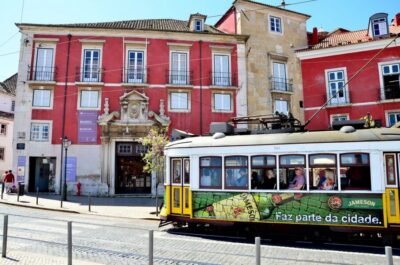
Best of Lisbon Walking Tour: Rossio, Chiado & Alfama
Read our review →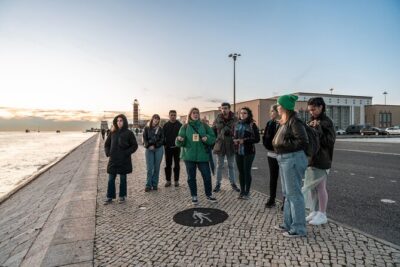
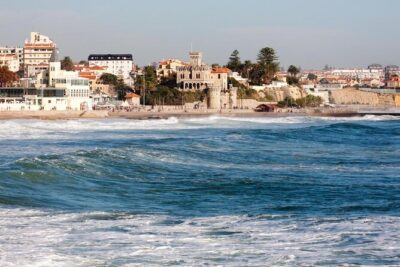
Sintra & Cascais Day Tour with Pena Palace Entry and Gardens Walk
Read our review →
Lisbon Roots – Small group Food & Culture Walking Tour w/tastings
Read our review →